Debit Note: How to Increase an Invoice You Have Already Issued
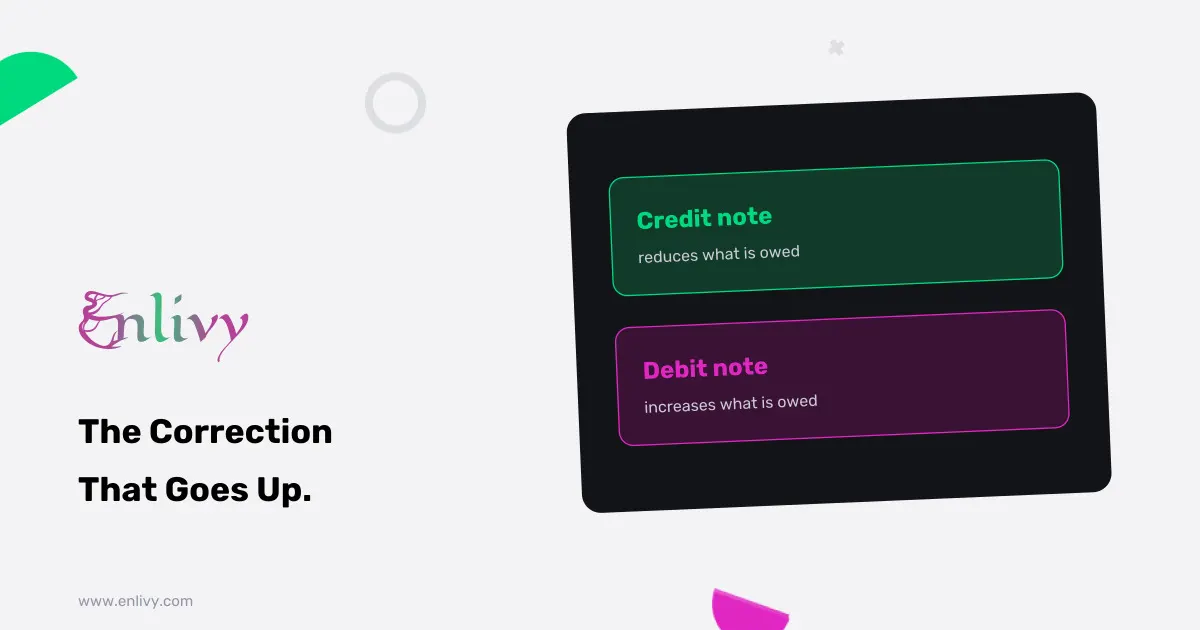
A debit note raises the amount owed on an invoice you cannot change. When to issue one, how it differs from a credit note, and what it must reference.
Tag
41 articles
A debit note raises the amount owed on an invoice you cannot change. When to issue one, how it differs from a credit note, and what it must reference.
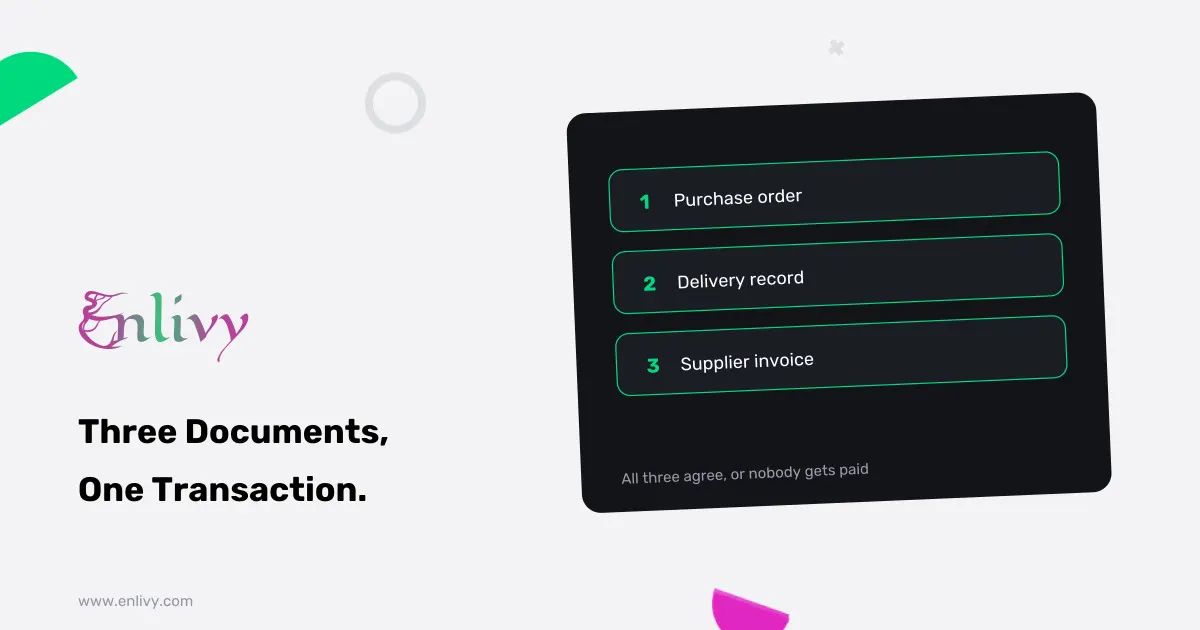
Three-way matching compares the purchase order, the delivery record and the supplier invoice before payment. What it catches, and the version a small firm runs.
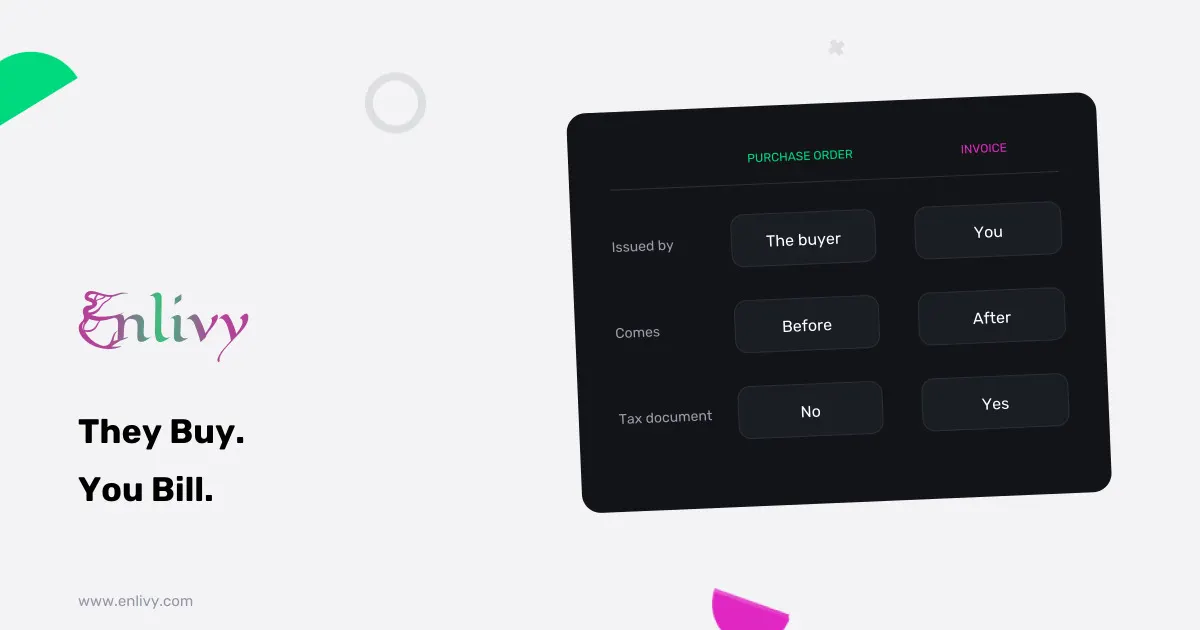
A purchase order authorises a purchase, an invoice collects on it. Who issues each, what they share, and which one wins when the numbers do not match.
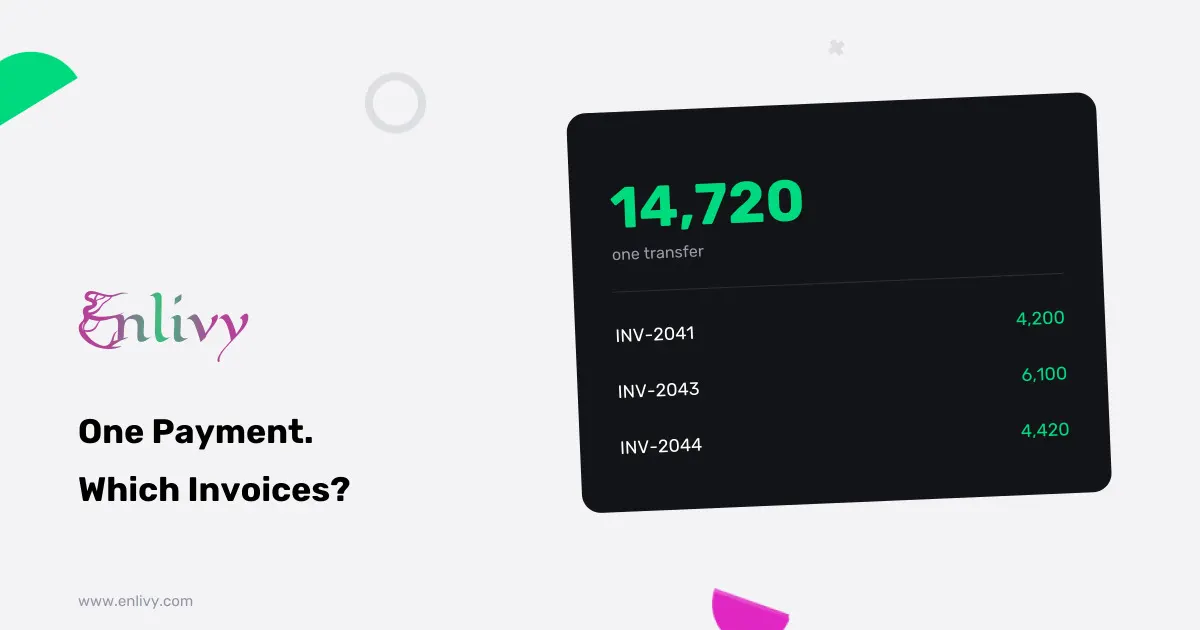
Remittance advice tells you which invoices a payment settles. What it contains, who sends it, and why its absence is why reconciliation takes so long.
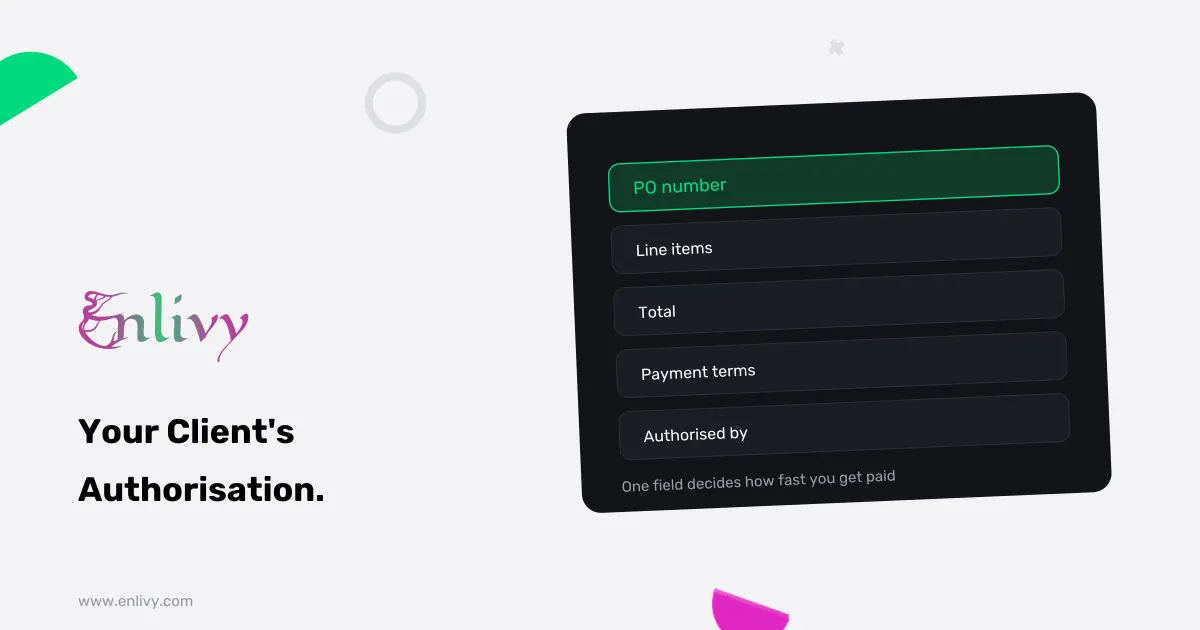
A purchase order is your client's authorisation to buy. What it contains, how it differs from your invoice, and why the PO number decides how fast you get paid.
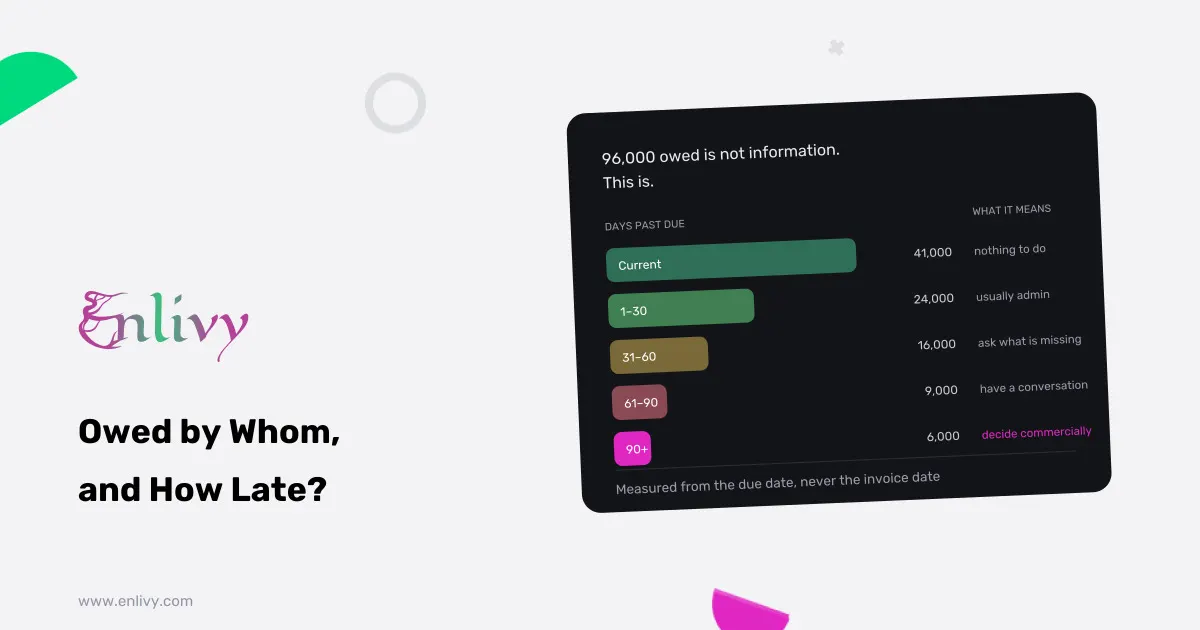
An aged receivables report sorts what you are owed by how late it is. The standard buckets, what each one means, and the four patterns worth acting on.
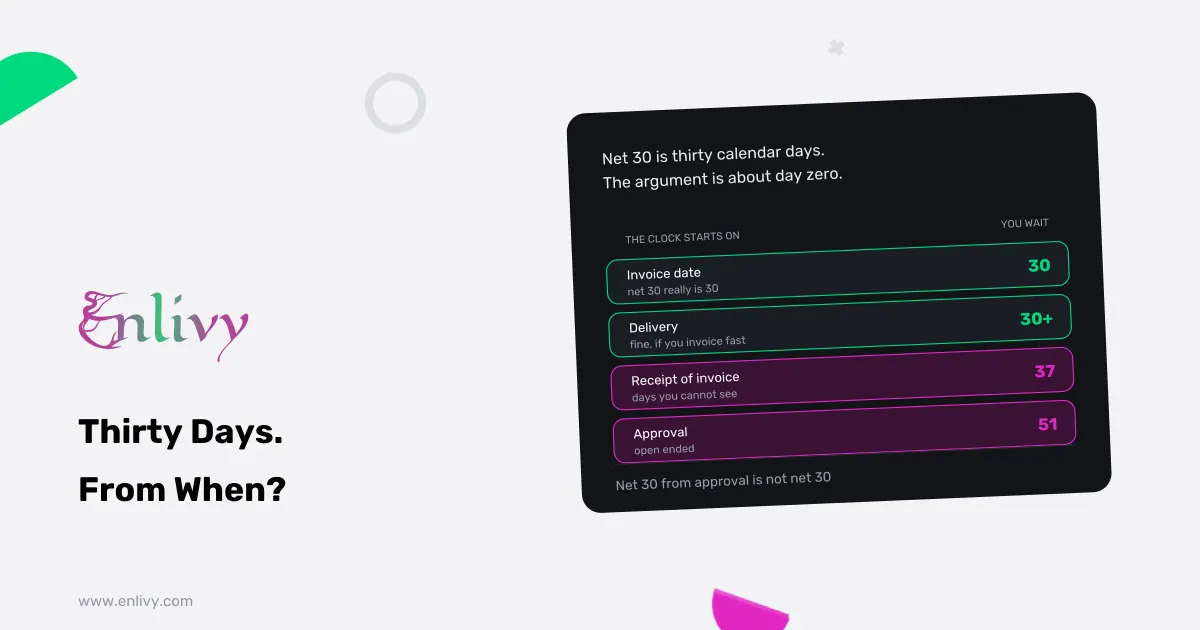
Net 30 payment terms mean payment 30 calendar days from the invoice date. What the clock starts on, what 2/10 net 30 costs, and when to use something else.
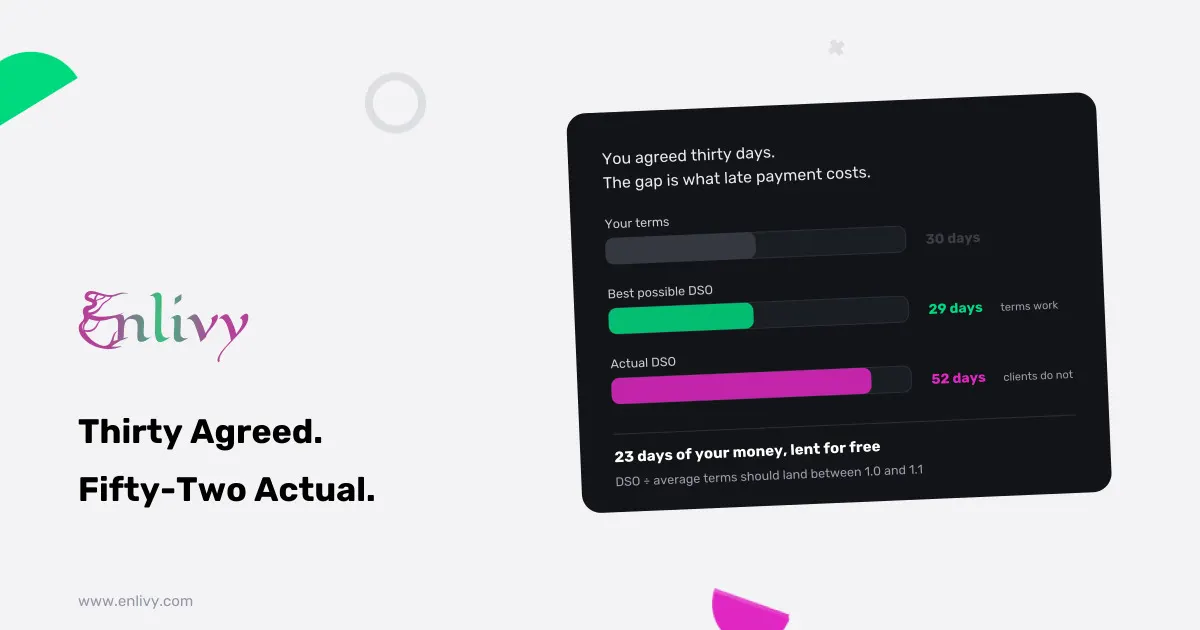
Days sales outstanding measures how long you wait to get paid. Both formulas, why the simple one misleads a growing business, and the benchmarks that matter.
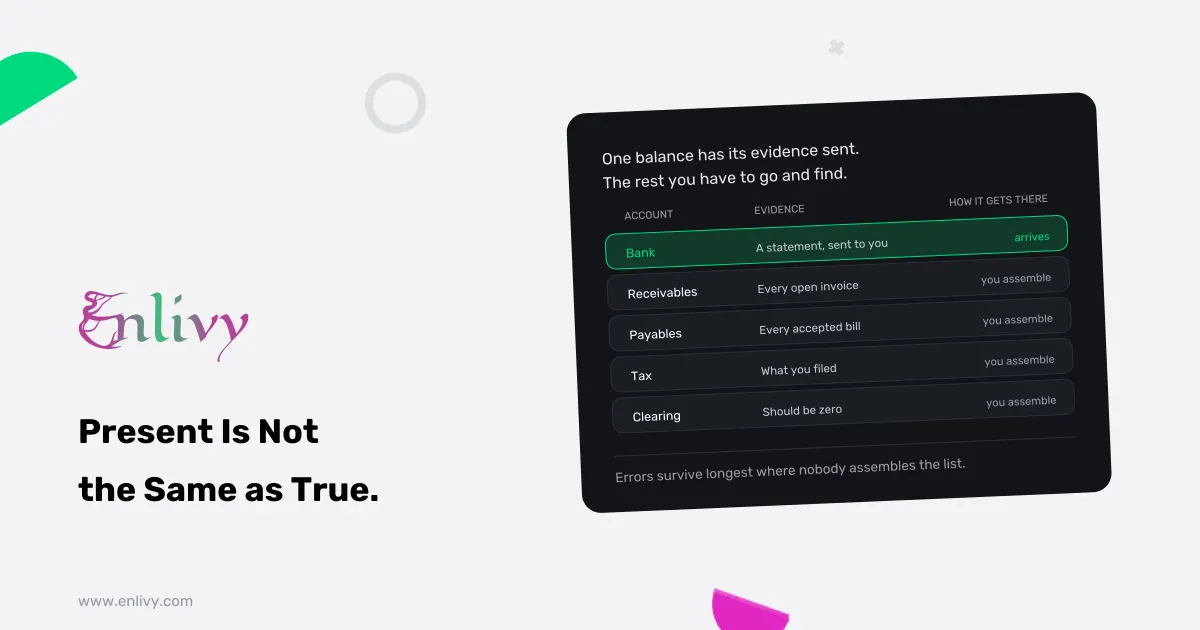
Account reconciliation proves every ledger balance is backed by evidence. Which accounts to reconcile, how often, and the four ways a balance goes wrong.
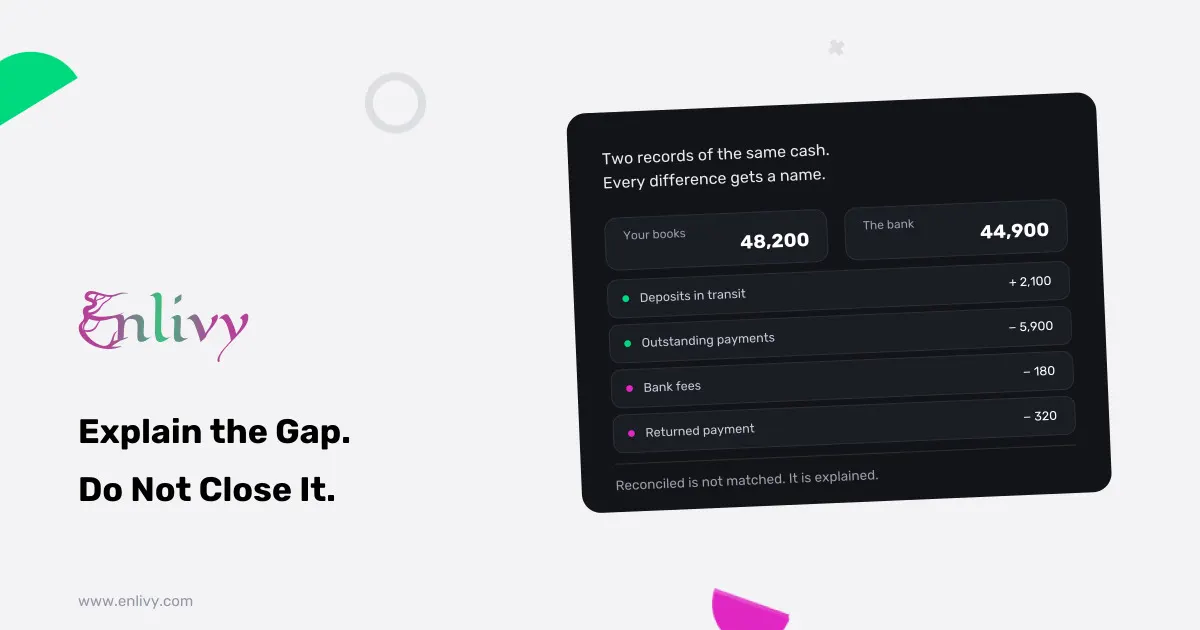
Bank reconciliation matches your books to the bank and explains every difference. The reconciling items, the process step by step, and what breaks it at scale.
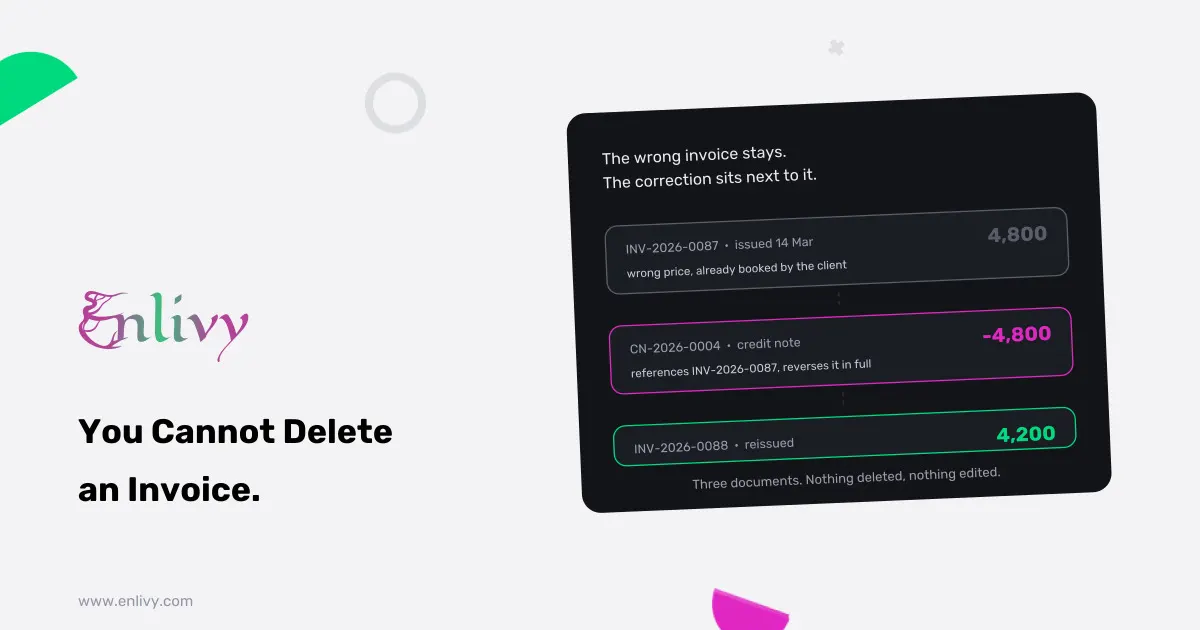
An issued invoice cannot be edited or removed. A credit note reverses it on the record instead. When to issue one, what it must reference, and full vs partial.
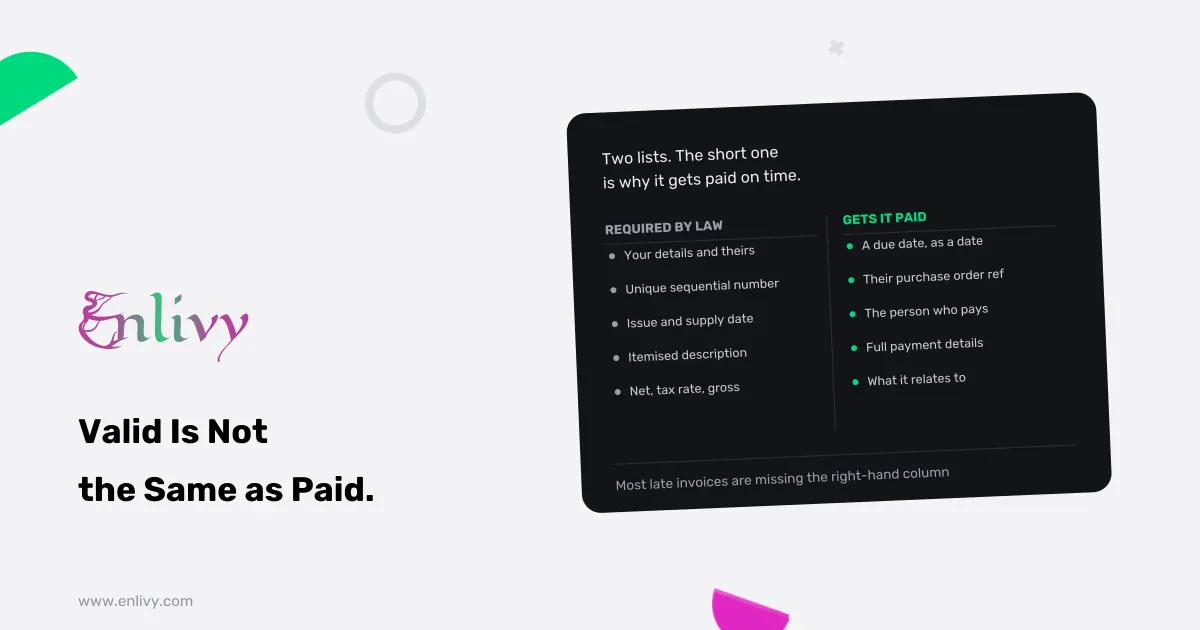
How to write an invoice that clears first time: most late ones are not disputes, they are missing a purchase order, a due date, or the right recipient.
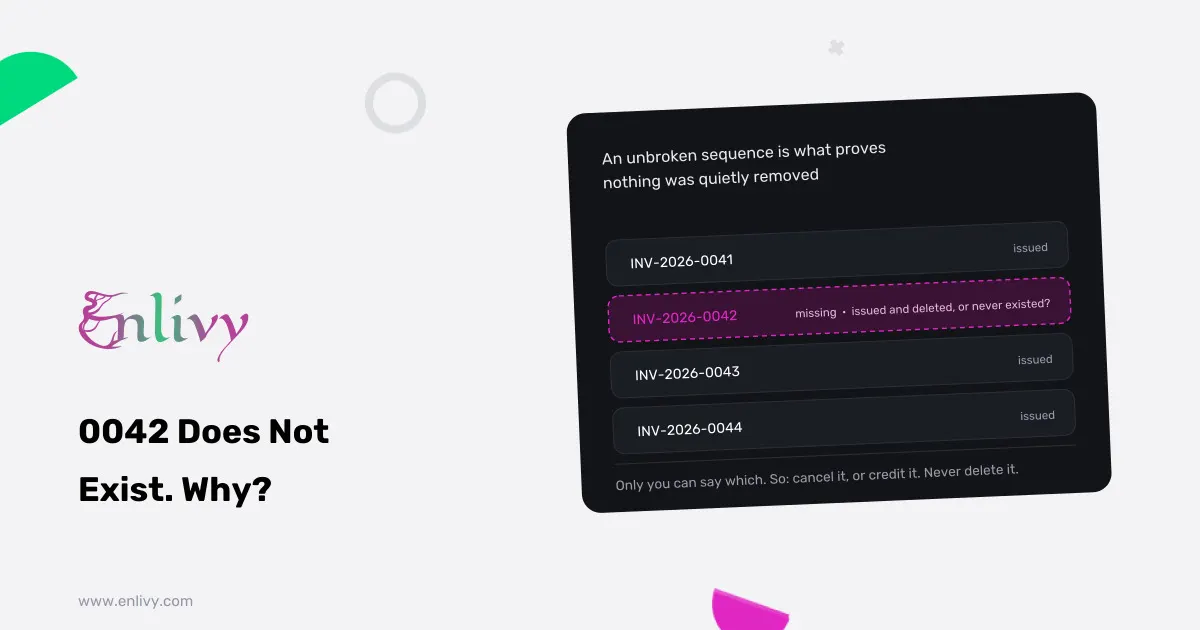
Invoice numbering has to be unique and unbroken. What a legal sequence looks like, which formats survive an audit, and how to fix a gap you already have.
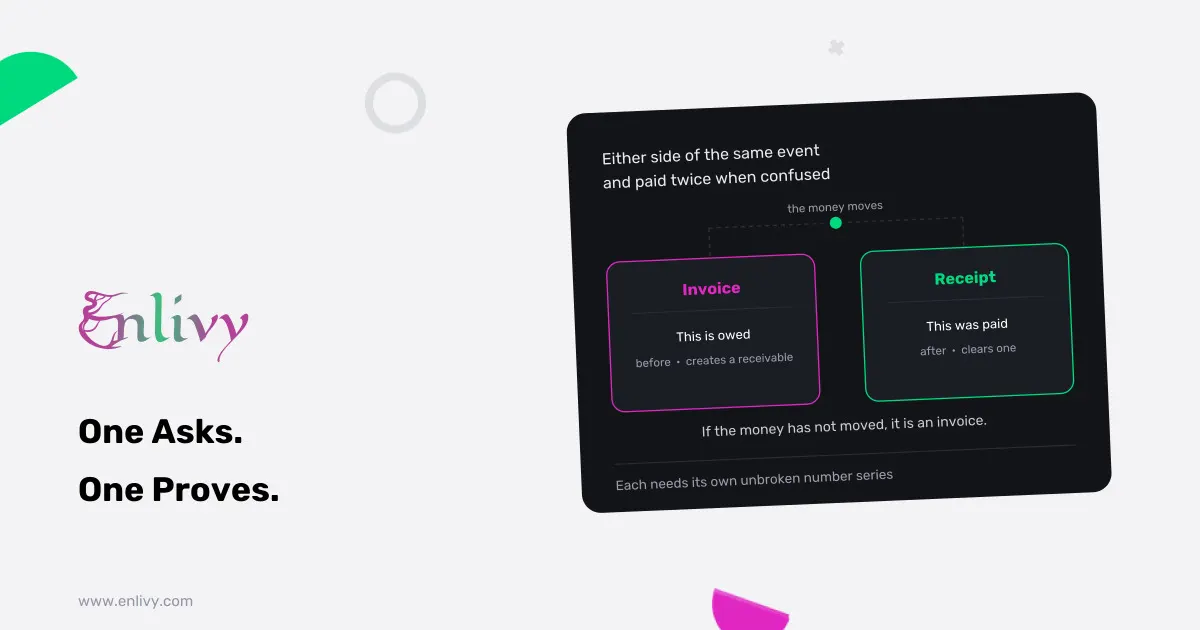
Invoice vs receipt: one asks for money, the other proves it arrived. Why sending the wrong one causes double payments, and what each document must contain.
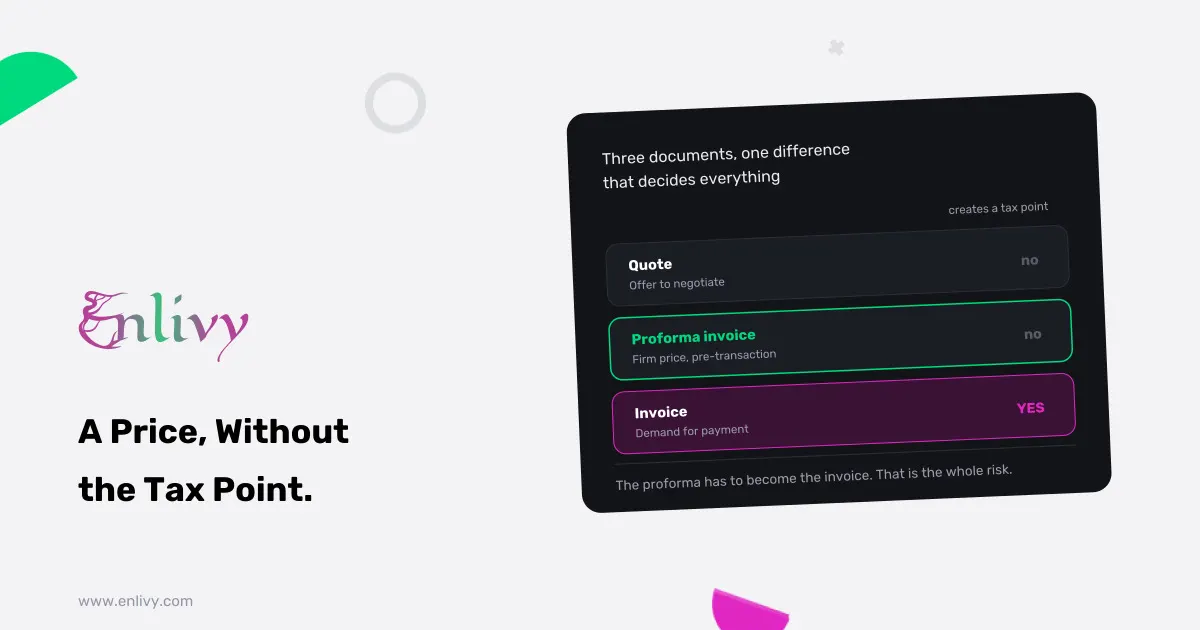
A proforma invoice commits to a price without creating a tax liability. When to send one, what it must say, and the moment it has to become a real invoice.
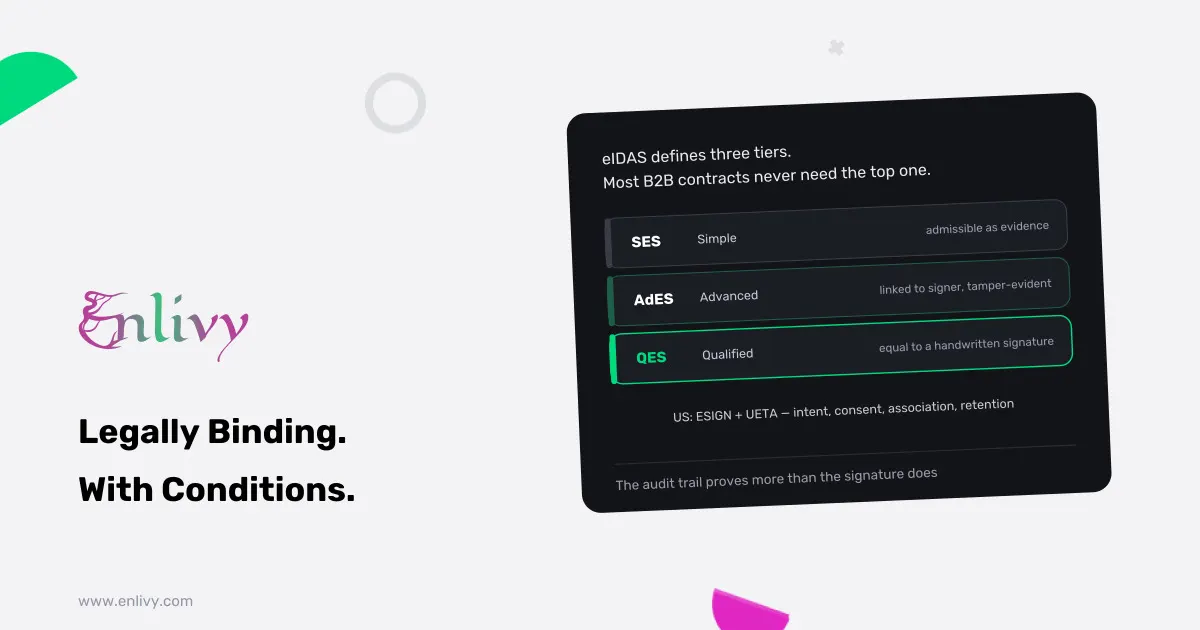
Are electronic signatures legally binding? Yes, in the US and EU, with conditions. What ESIGN and eIDAS require, the three EU tiers, and what stays excluded.
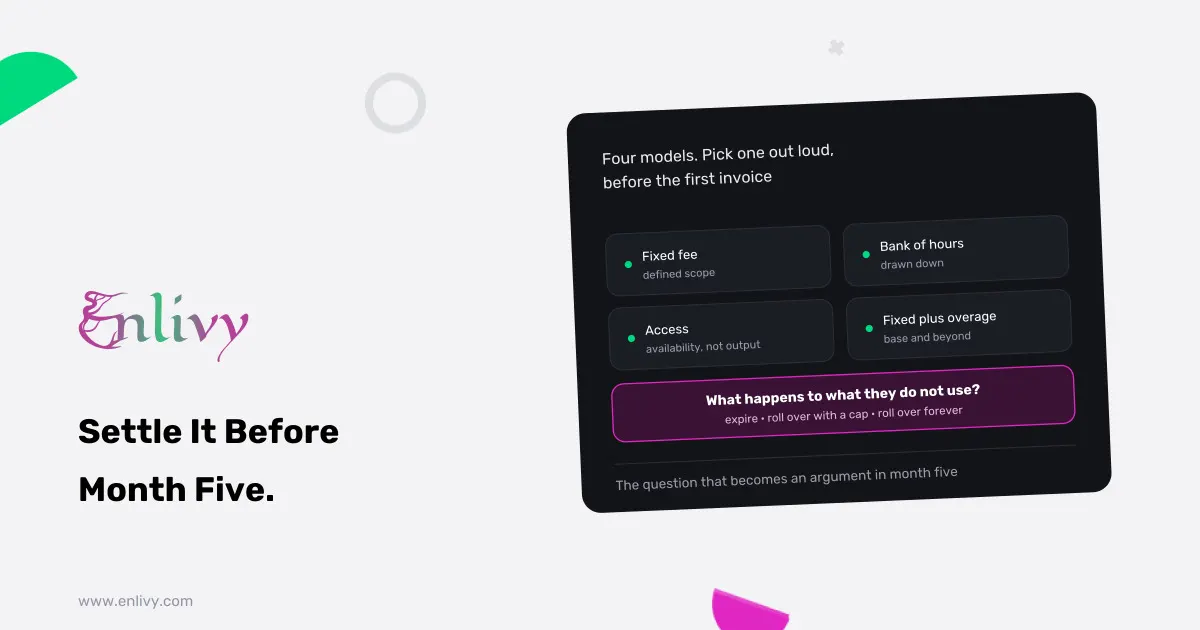
A retainer agreement answers three questions before they get expensive. The four models, the clauses that prevent arguments, and what unused capacity does.
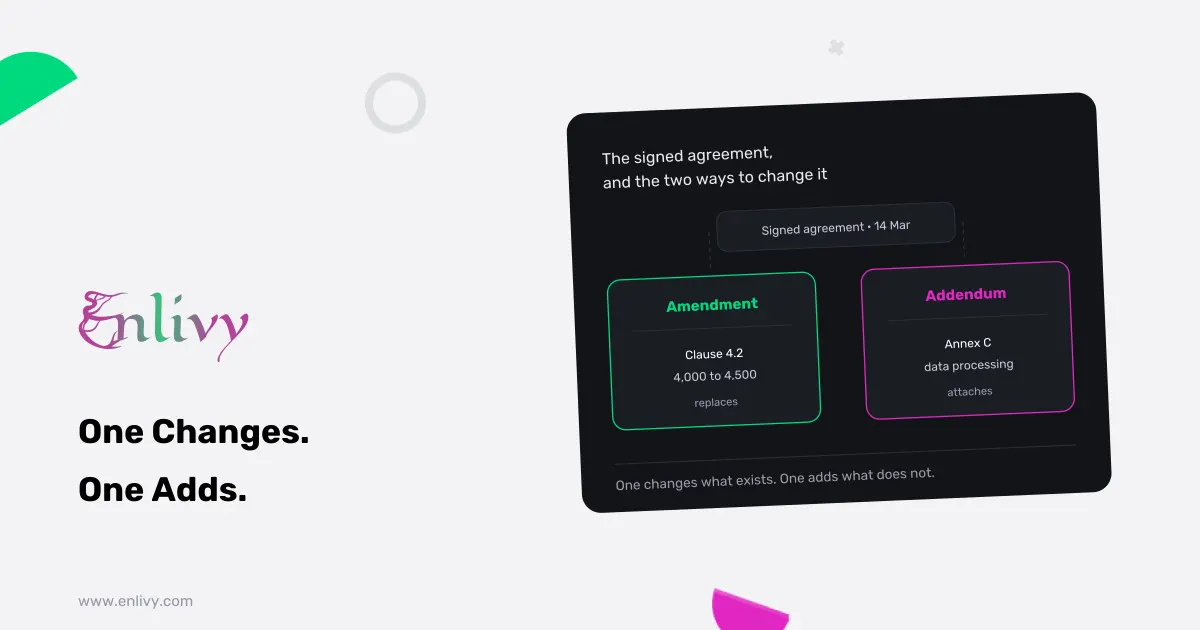
Amendment vs addendum: one changes existing terms, the other adds new ones. Which you need, how renewal clauses fit, and why version history matters more.
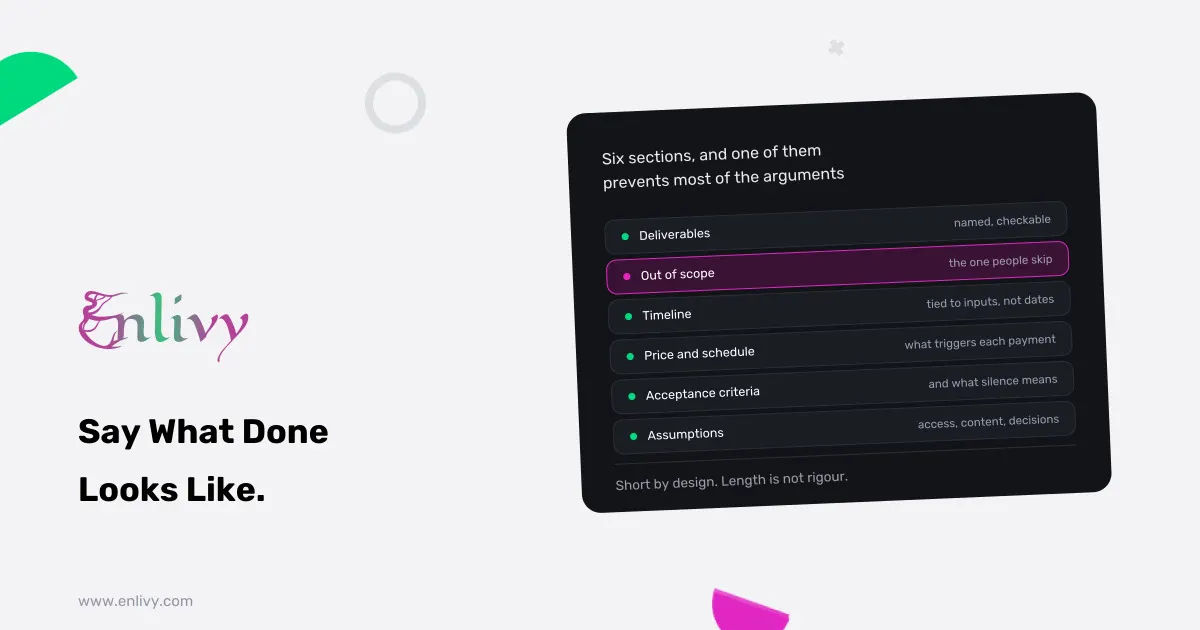
A statement of work fails two ways: too vague to enforce, or long enough to be a second contract. The six sections it needs, and what belongs in the MSA.
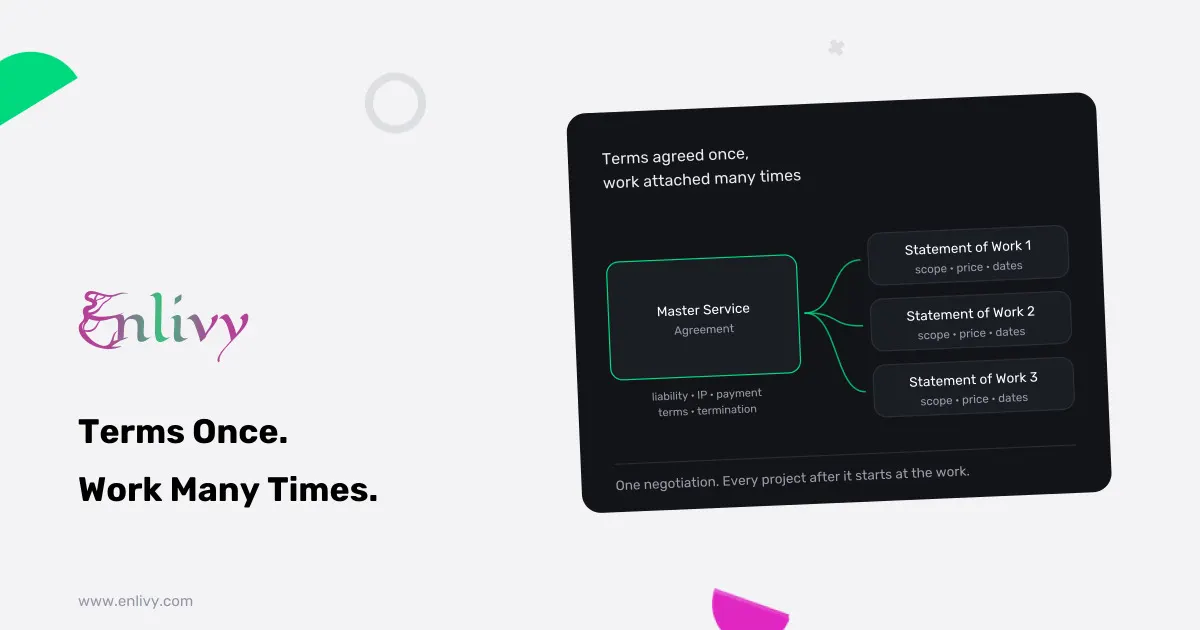
A master service agreement settles the terms once, so each new project starts at the work. What belongs in it, what belongs in the SOW, and when to skip it.
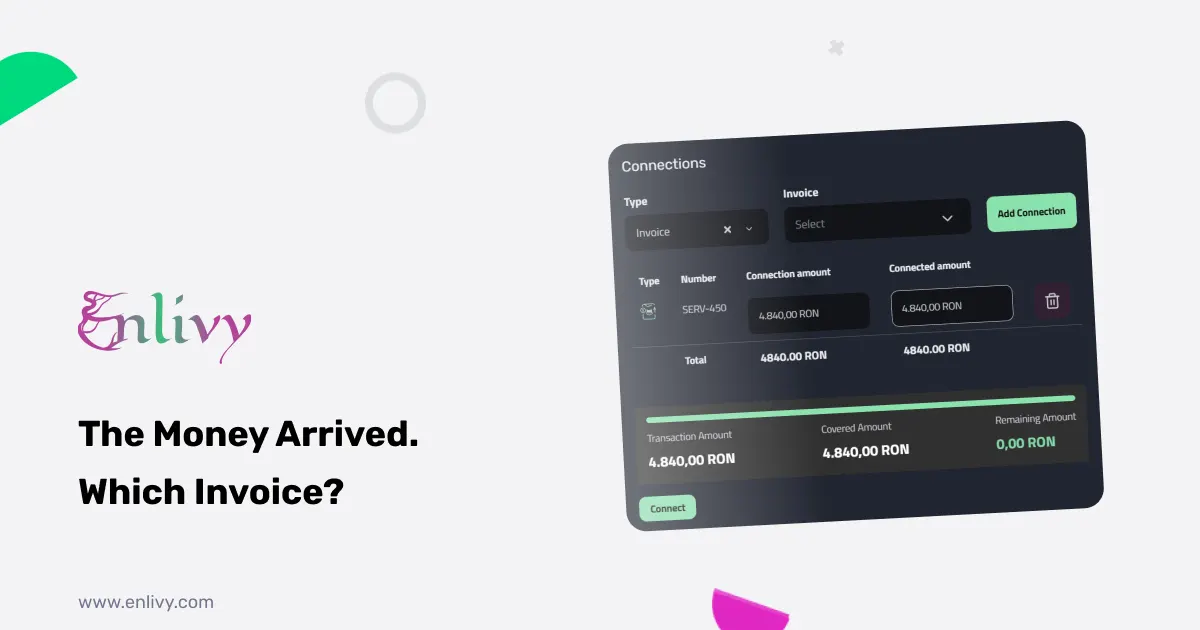
Partial payments, bundled transfers and FX turn reconciliation into detective work. Here is why matching breaks and what it takes to close the last handoff.
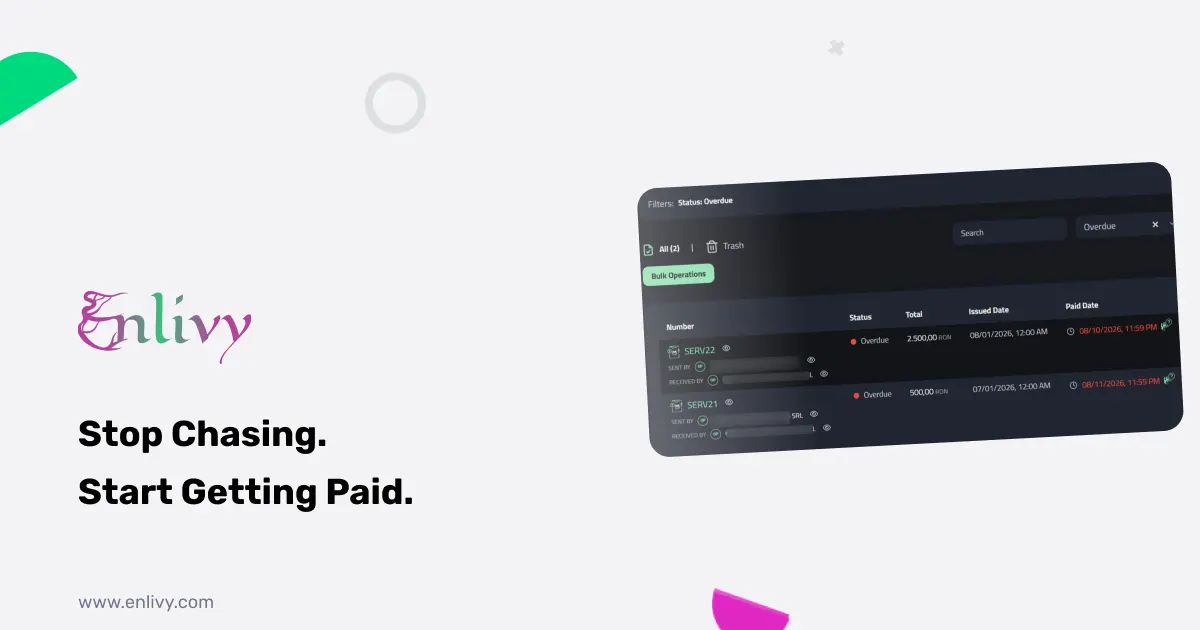
Most late payments are not refusals, they are process failures on the client side. Here is a sequence that gets you paid without spending the relationship.
Agency billing breaks differently: mixed retainers and projects, pass-through costs, and scope captured too late. Here is how to bill without losing margin.
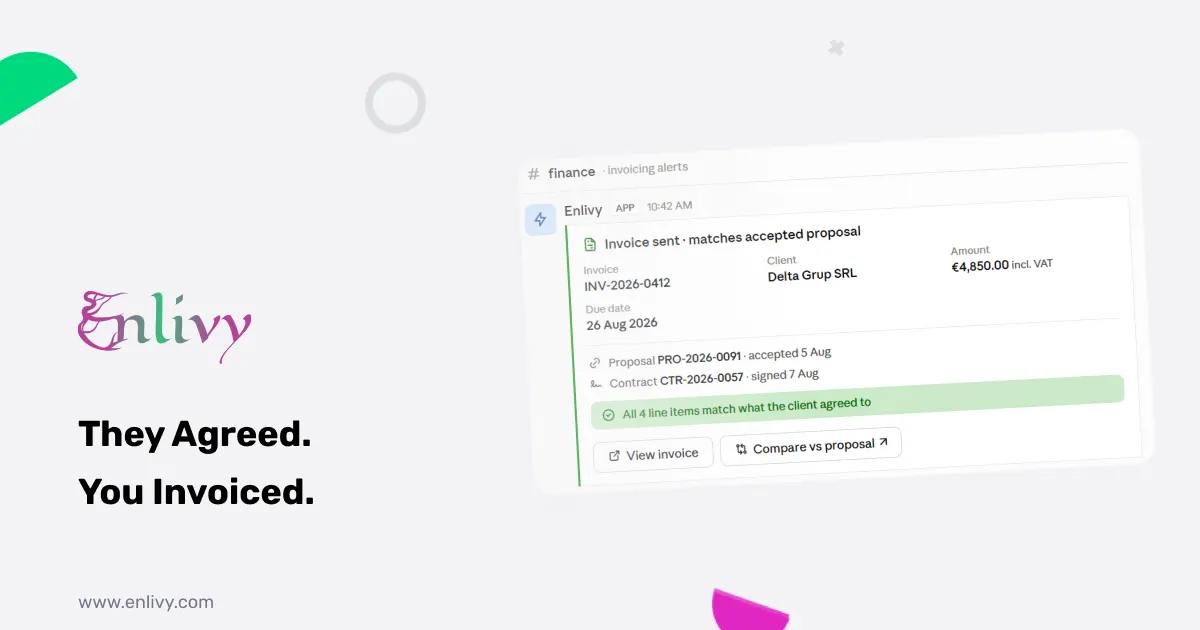
The handoff from an accepted proposal to an invoice is where scope quietly changes. Here is why it drifts, what it costs, and how to make the two agree.
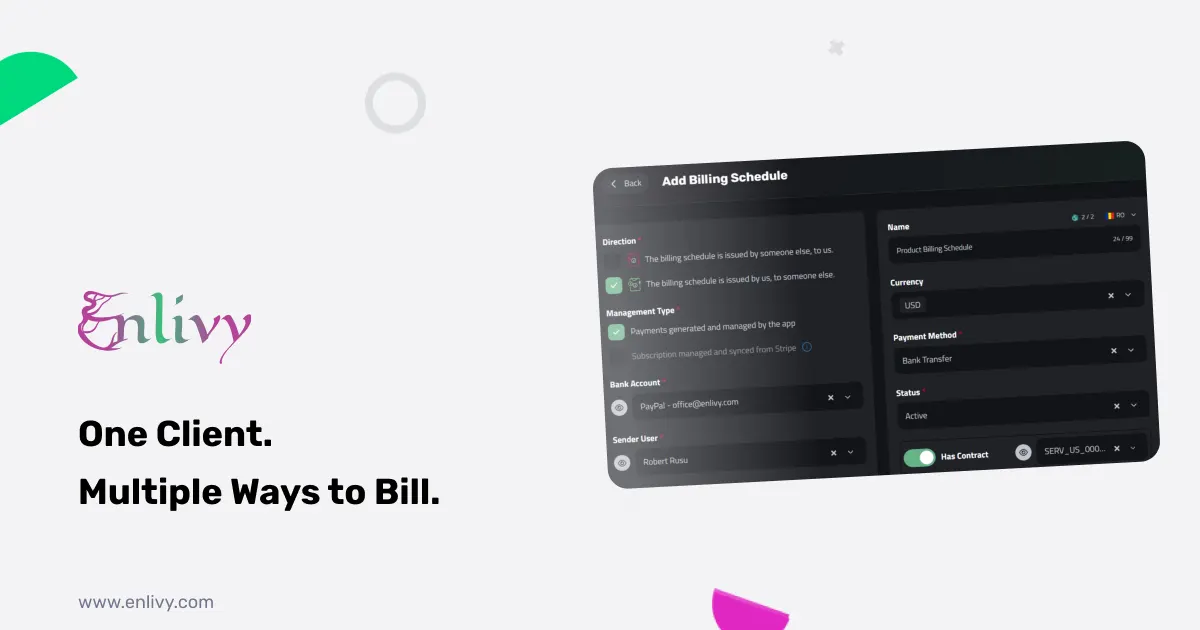
Managed billing schedules or self-serve subscriptions? The two models solve different problems, and picking the wrong one costs you either revenue or hours.
Retainers are the easiest revenue to lose track of. Here is how to set one up so it bills itself, stays auditable, and survives the month you forget about it.
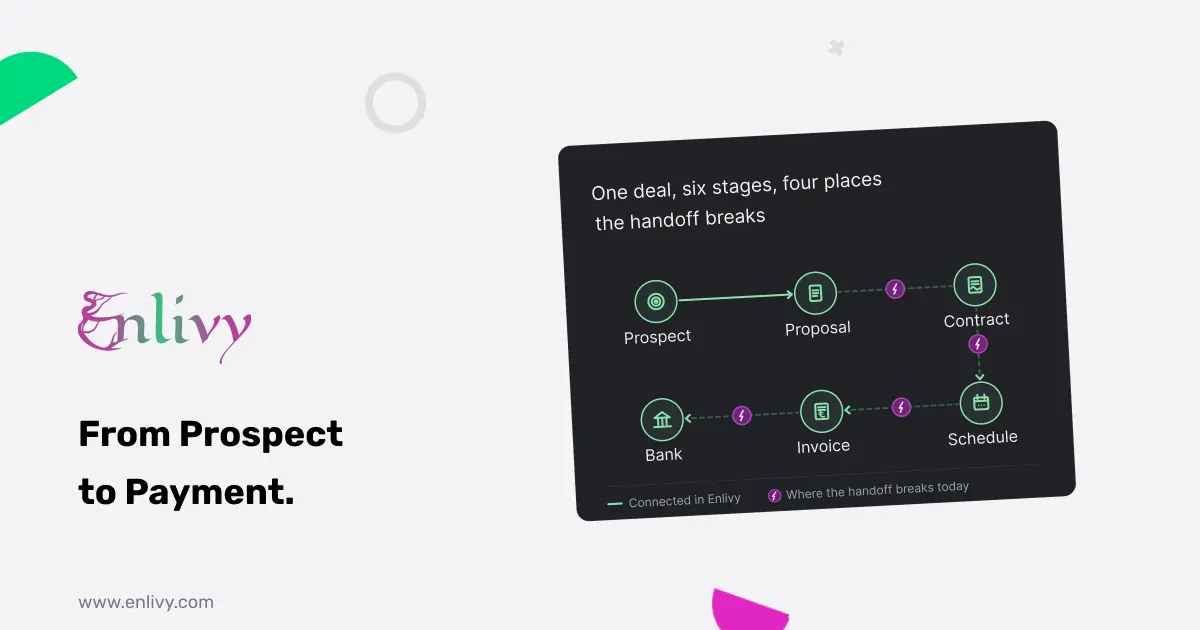
The contract-to-cash workflow is a chain of handoffs, and most service businesses lose money at four of them. Here is where it breaks and how to close each gap.
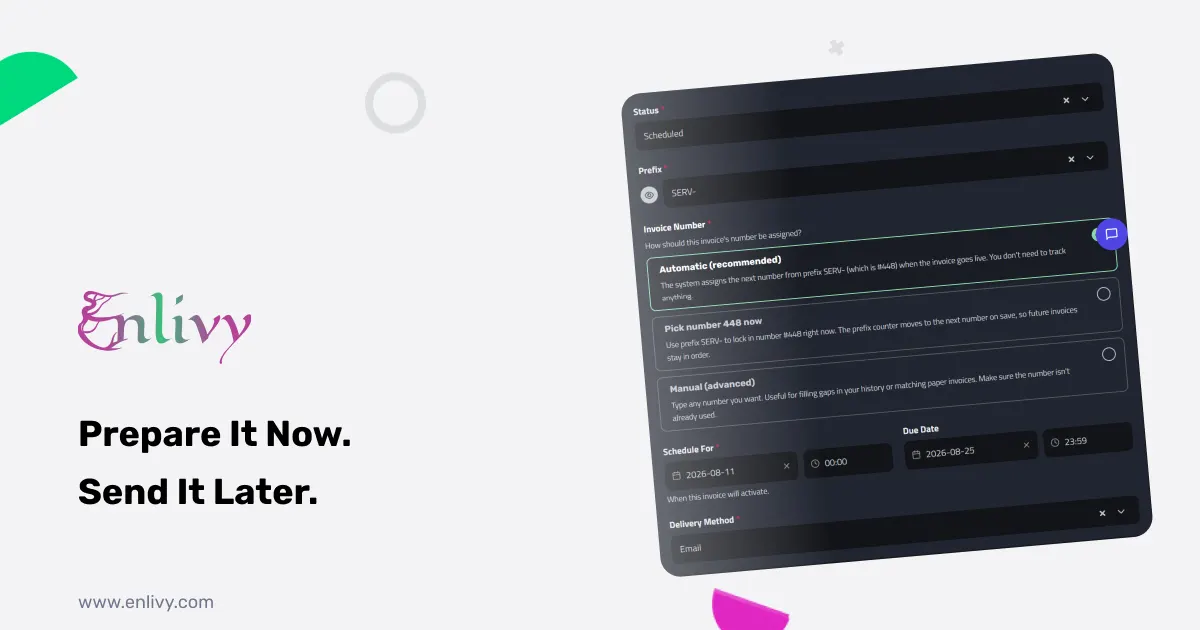
Learn how to schedule an invoice so it is issued and sent automatically on a future date. A clear walkthrough of scheduled invoices in Enlivy, plus when to use them.
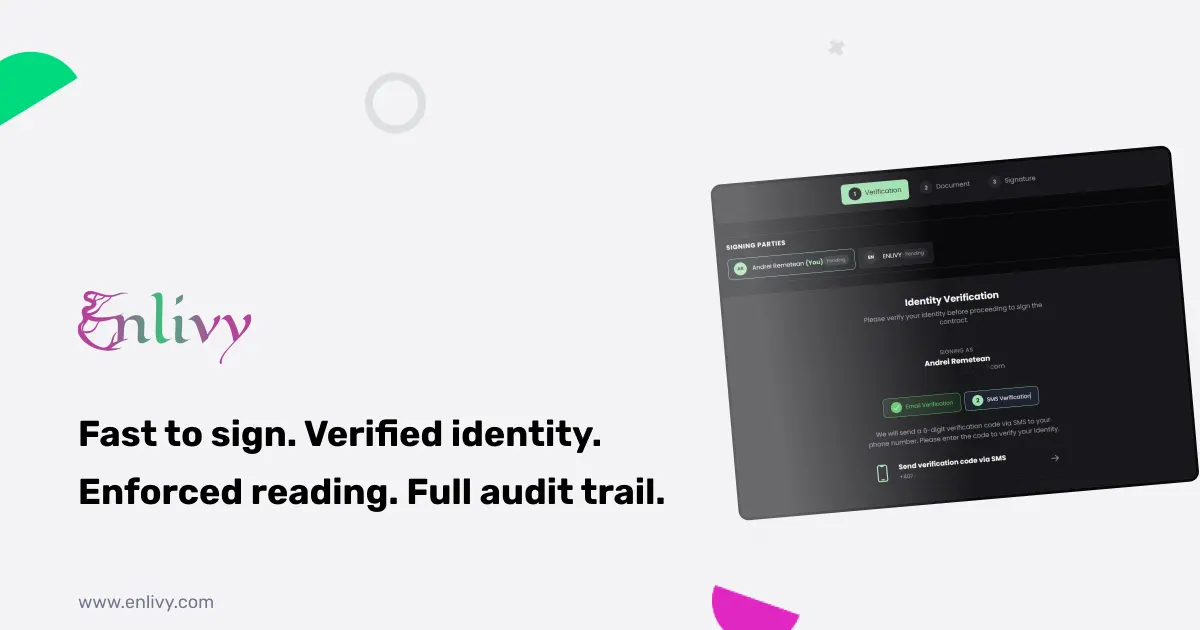
Learn how to sign contracts online securely: identity verification, enforced reading, and a full audit trail. Here is how Enlivy makes signing fast and legally sound.
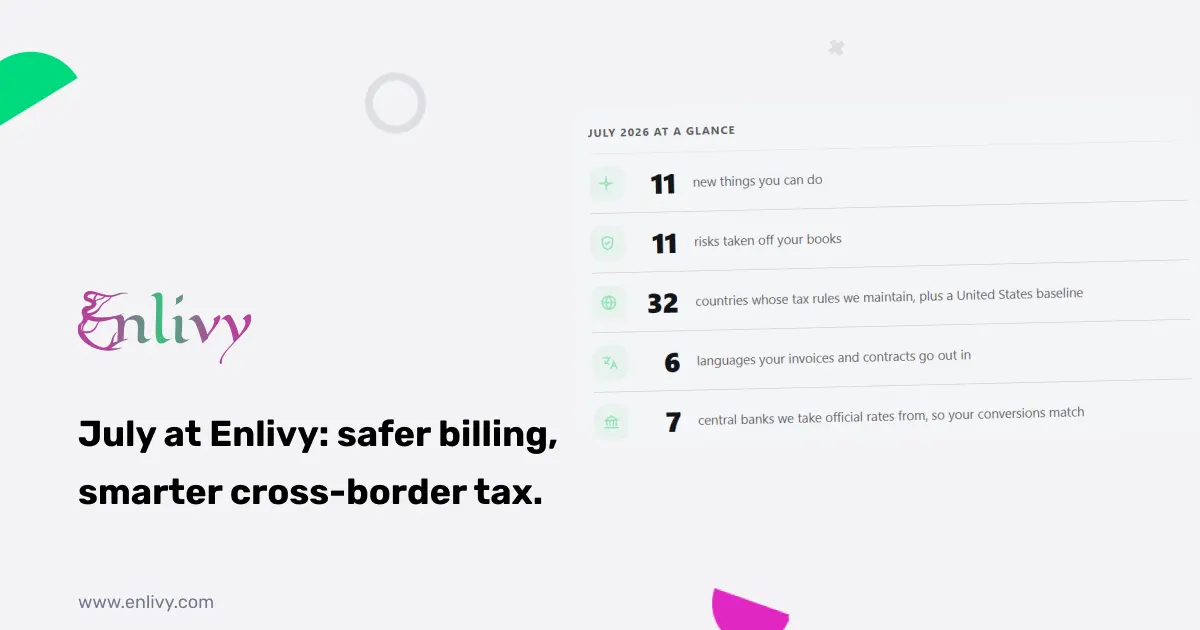
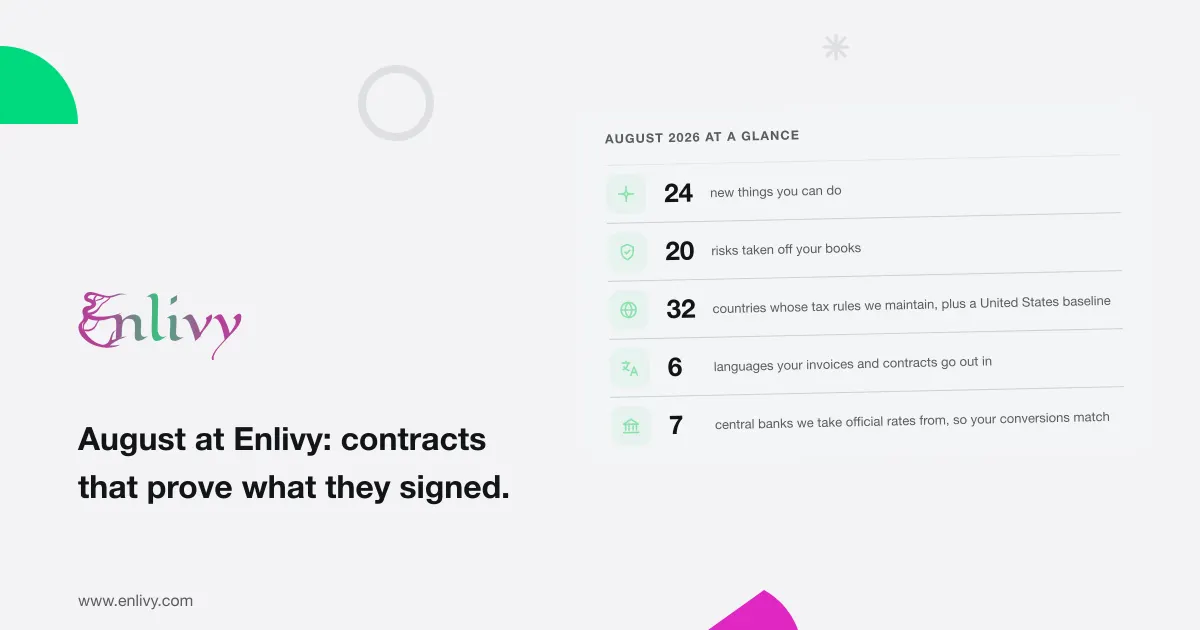
Cross-border tax worked out for you, refunds in one action, and eleven ways your books could have gone wrong, now closed. What changed in Enlivy in July 2026.
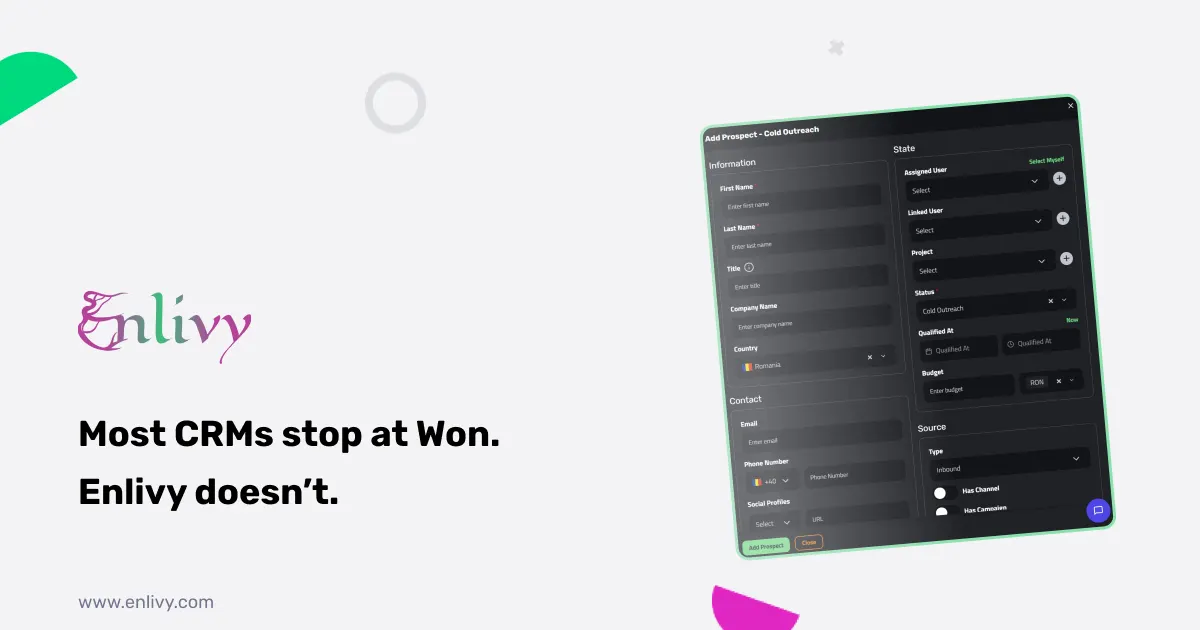
A sales pipeline with invoicing in one place means no re-keying, no lost deals, and no gap between Won and paid. Here is how Enlivy Prospects connects your pipeline to revenue.
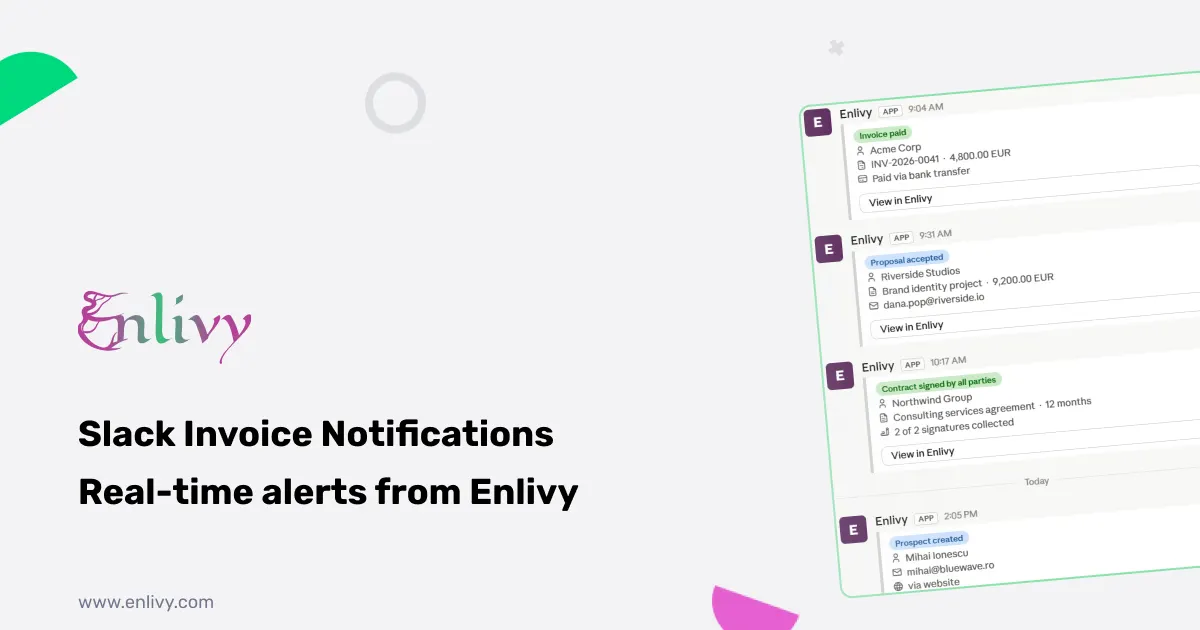
Slack invoice notifications from Enlivy tell your team the moment a client pays, accepts a proposal, or signs a contract. Route any event to any channel, in real time.
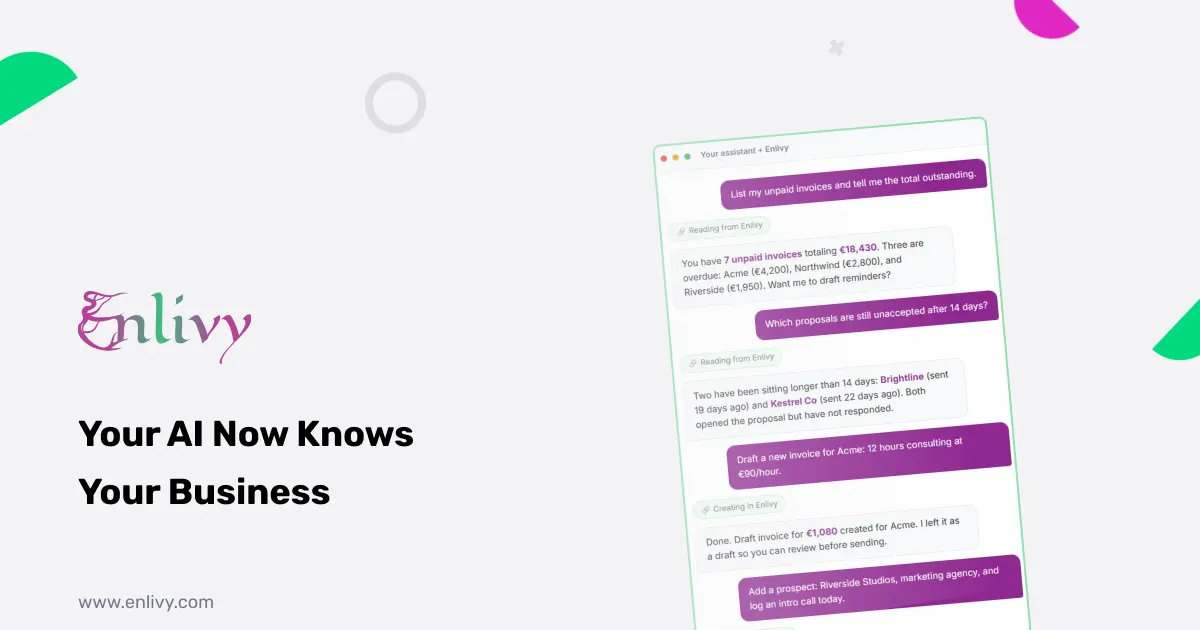
MCP for small business connects your AI assistant to your real data. Here is how the Enlivy MCP integration works, what you can do with it, and why it matters.
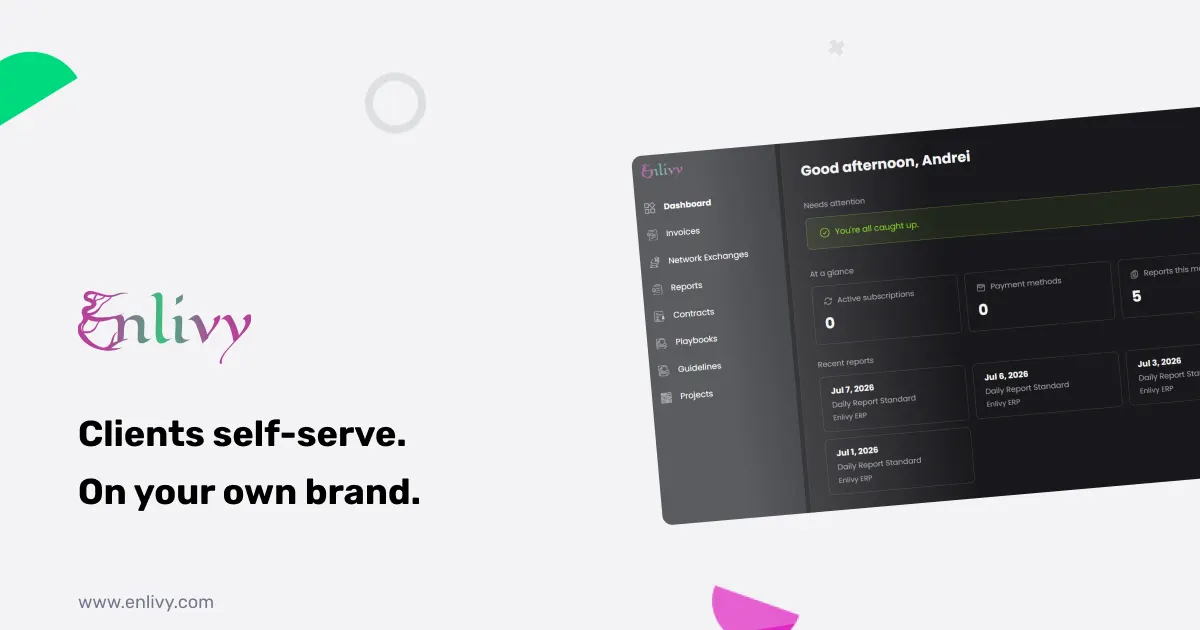
Enlivy's free client portal gives clients one branded place to accept proposals, pay invoices, and sign contracts, with every action synced back to you in real time.
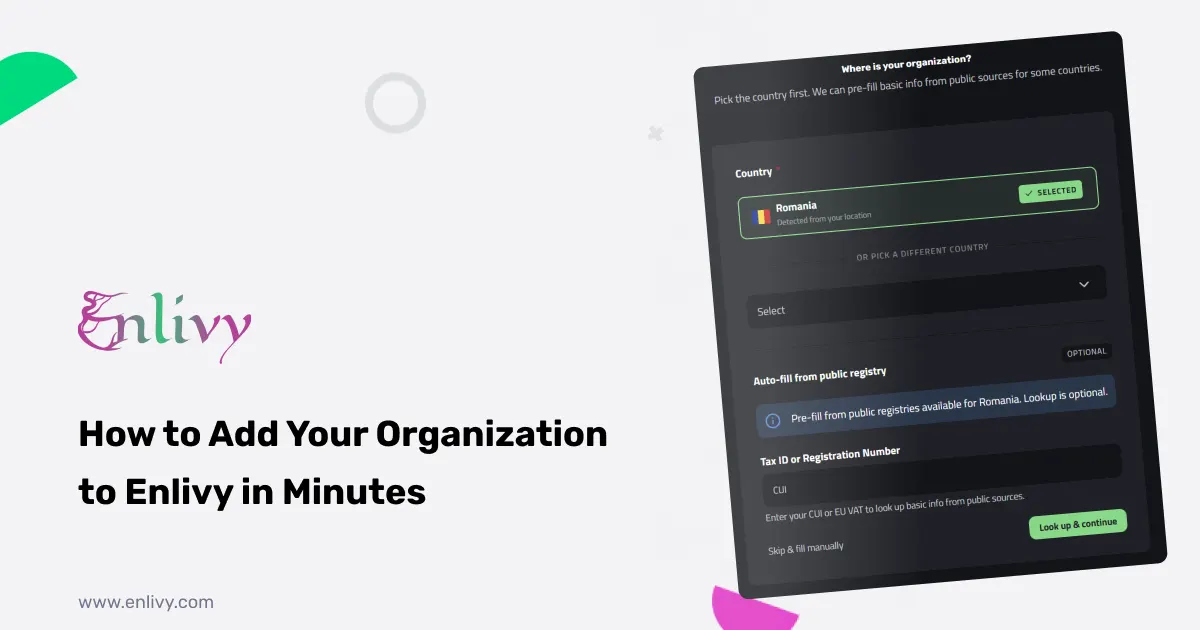
Setting up your business on Enlivy is fast and intuitive. Learn how to add your organization, auto-fill your company details from the public registry, and get started in minutes.
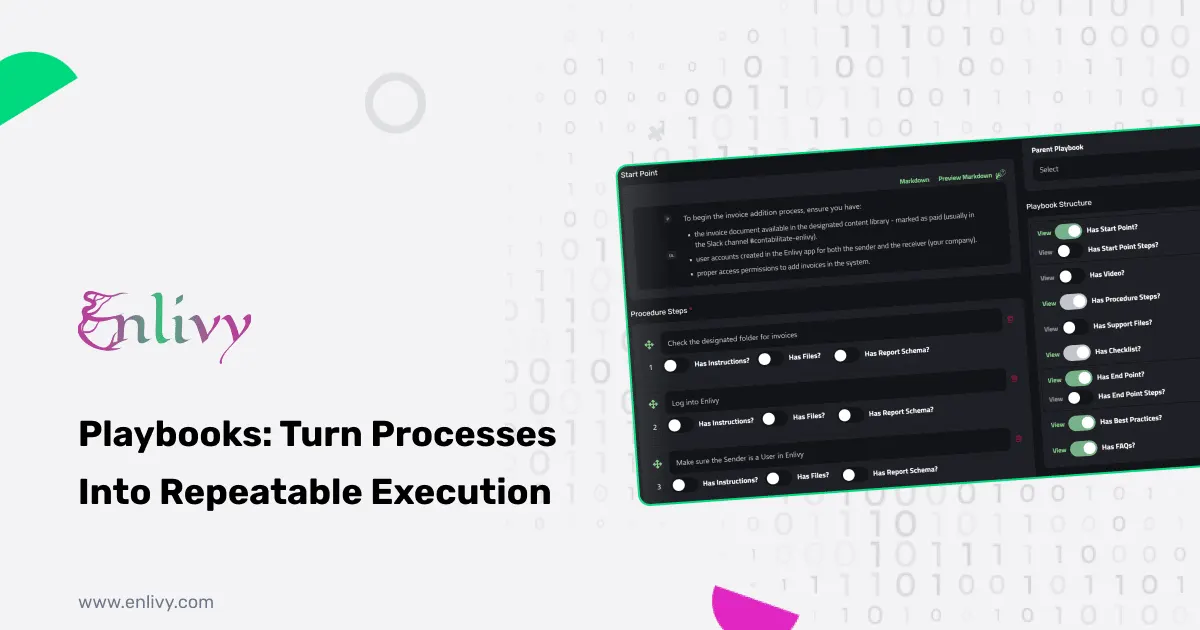
Learn how Playbooks in Enlivy help teams standardize processes, reduce errors, and execute workflows consistently with structured, step-by-step guidance.
How FinOps helps businesses optimize cloud costs and improve financial accountability, plus how an ERP like Enlivy complements it for full financial control.
MRP vs ERP: Understand the key differences between Material Requirements Planning and Enterprise Resource Planning in managing production and business operations.
Enlivy's Playbooks streamline tasks with clear, intuitive steps. Designed to empower, they keep teams on track while adapting seamlessly to your business needs
Why is Enlivy an API-driven solution? Enlivy empowers businesses with full customization, seamless data access, and flexible, code-driven invoicing workflows.
Enlivy is proud to be a Silver Sponsor of WordCamp Romania 2024, supporting the WordPress community with our streamlined business management solutions.