Agency billing is not consultancy billing with a different logo. The chain from quote to cash is the same on paper, but agencies break it in four specific places that a general billing guide never mentions.
The reason is structural. An agency rarely has one clean commercial relationship per client. It has a retainer, plus a project, plus some media spend it fronted, plus two people who were meant to be on another account this month.
Problem one: the same client is three revenue streams
Most clients arrive as a retainer. Then a campaign gets approved as a separate project. Then something extra happens that was neither.
Billed as one number, the client cannot check it and eventually asks you to break it down. Billed as three unconnected invoices, nobody internally can answer what that client is actually worth.
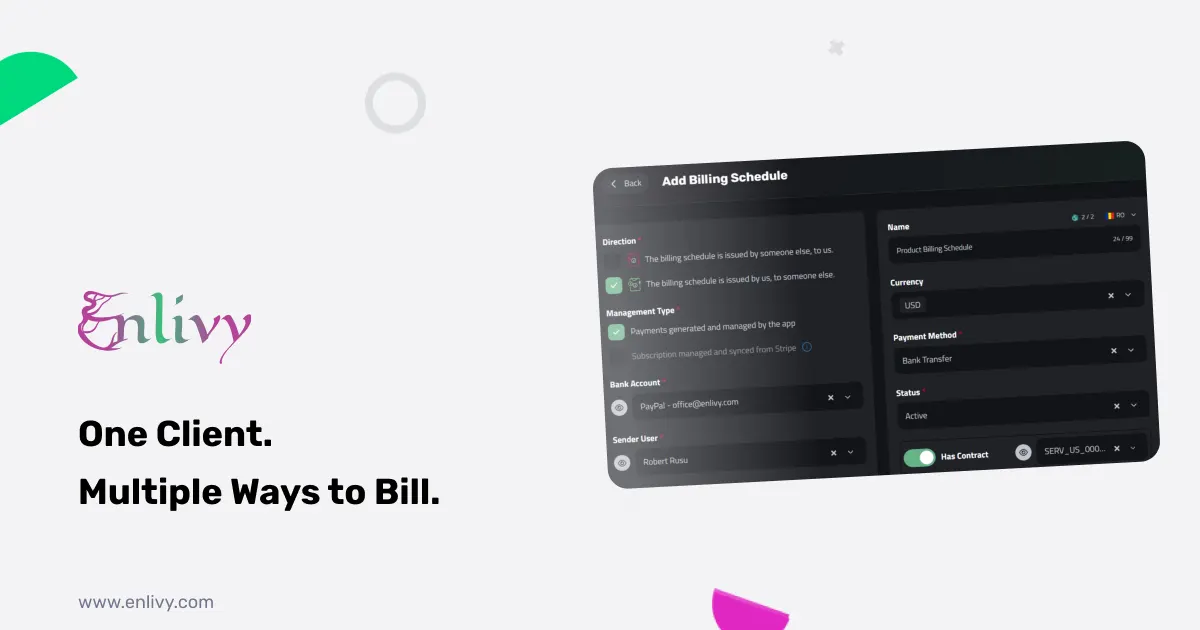
What works is treating each stream as its own arrangement under the same client. The retainer is a recurring relationship with a balance you can see, which is what a billing schedule holds. The project is a one-off or a phased plan. The extra work is an overage line, captured when it happens.
They roll up per client without being merged into a single opaque figure. If the retainer half is the part that keeps slipping, the mechanics are in how to bill a retainer client, and the choice between managing that arrangement yourself and letting the client manage it is covered in recurring billing for service businesses.
Problem two: pass-through costs eaten as margin
Media spend, stock licences, subcontractors, print. Money the agency pays out and is supposed to recover.
This is where agency margin quietly disappears, because the recovery depends on somebody remembering an expense that happened three weeks ago in a different tool. The invoice goes out without it, and nobody notices because the invoice still looks right.
Two habits fix most of it. Keep the rebillable things defined in the product catalog so they are line items with a rate rather than something reconstructed from an email. And keep receipts attached to the client they belong to as they arrive, so the question at billing time is “which of these do we rebill” rather than “what did we spend”.
The tax treatment on pass-through costs is also its own trap, especially cross-border, which is a reason to resolve VAT from the client record rather than per invoice.
Problem three: scope creep captured after it is unbillable
An agency says yes to small things constantly. That is most of what makes clients stay.
The failure is not saying yes. It is that the yes happens in a chat message on a Tuesday and gets written down, if at all, at month end when somebody tries to reconstruct the month. By then the client has forgotten agreeing to it, and you either bill it and argue or absorb it and lose the margin.
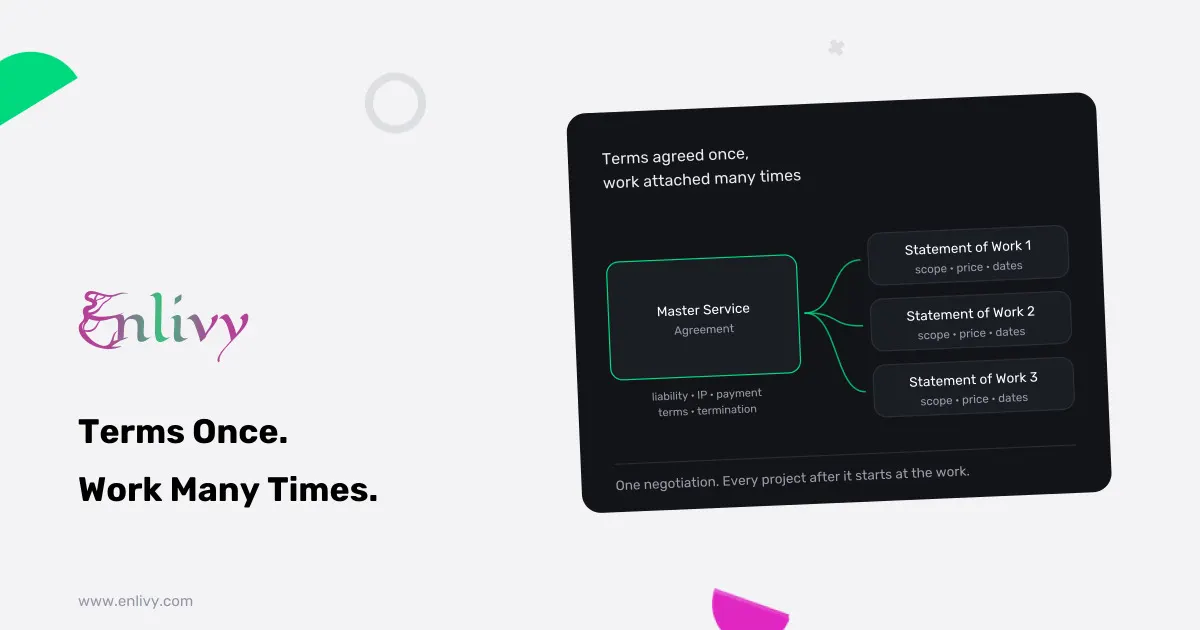
The only reliable fix is that extra work becomes a billable record at the moment it is agreed, not at the moment you invoice. Where the extra is large enough to need a yes in writing, it should go out as a proposal the client accepts rather than a message, and if it changes the terms it should amend the contract.
This is the same drift covered in proposal to invoice, just arriving from the side rather than through the front door.
Problem four: the client’s approval chain is not your approval chain
A consultancy usually bills one person. An agency bills a marketing manager whose finance department needs a purchase order, whose procurement system needs a specific reference, and whose legal team wants two signatures on the statement of work.
None of that is your process, and all of it delays your cash.
Two things help. Contracts should reach each signer through their own link, signed in whatever order suits the client, rather than circulating as an email attachment where the final version is whichever one somebody printed. And the client should be able to find their own documents and invoices in a client portal instead of asking your account manager to resend things to their finance team.
Knowing what makes an online signature hold up matters more here than in most service work, because agency contracts get read by people who did not negotiate them.
What an agency needs the system to answer
Not “can we send an invoice”. Any tool sends invoices. The questions that decide whether an agency is profitable are:
- What is this client worth this quarter, across retainer, projects and overage?
- What did we front on their behalf and have we recovered it?
- Which invoices are unpaid, and which bank lines settled the paid ones?
- What did they actually agree to, in writing, with a date?
If those take four systems to answer, the answer arrives after the decision that needed it.
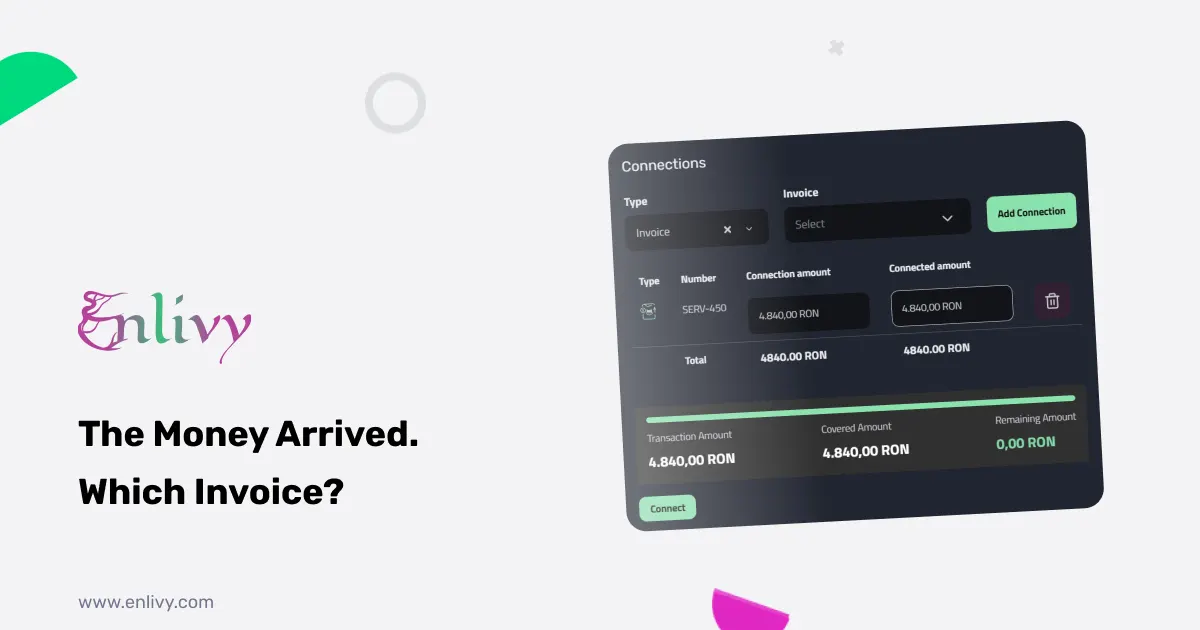
The last two come down to the end of the chain: bank transactions linked to the invoice they settle, with the accounts syncing every few hours on the Banking pack rather than through a monthly export. And in the EU an invoice is not finished until it has gone through the right e-invoicing network, which is now mandatory in a growing list of member states. Enlivy sends it to ANAF e-Factura when a Romanian company invoices a Romanian client, and for other markets it exports a PEPPOL BIS 3.0 file or a national e-invoice XML that you submit yourself.
Where the pipeline fits
Agencies often run new business separately from delivery, which is how a won deal arrives at the billing team as a forwarded email.
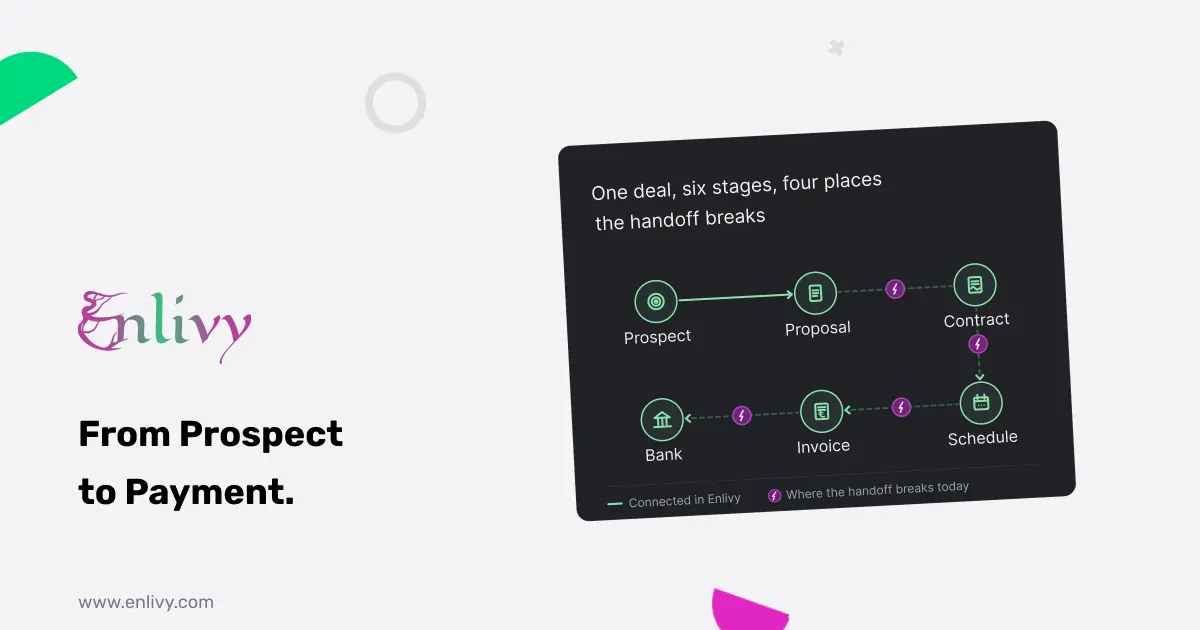
If the pipeline and the invoicing are the same record, the deal that was won is the deal that gets billed, with the numbers it was won on. That is the whole argument for keeping prospects in the same system as everything downstream, and it is the first handoff in the broader contract-to-cash workflow.
A practical order to fix this in
Do not rebuild everything at once. For an agency the order that recovers money fastest is:
- Pass-through costs, because that is margin you have already lost and can stop losing this month.
- Retainers on a schedule, because an unbilled month is never recovered.
- Scope captured at the moment of agreement, because it compounds.
- Approval chains, because it is a cash-timing problem rather than a revenue one.
Enlivy runs the whole chain and sells it as separate feature packs, so you can take the billing and contracts parts without replacing your delivery tooling. Agencies moving off a single-purpose tool usually compare it against what they already have: Bonsai, Dubsado and HoneyBook are the closest, Harvest if you came from time tracking, and all of the comparisons name where the other tool wins.
Put one client with a complicated mix of retainer and project work through it, which is the only test that tells you anything: the project side fits a free account, and the retainer needs the Billing Schedules pack.