A balance in your accounts is a claim. It says you are owed 62,000, or that you hold 3,400 in unbilled work, or that you owe 8,900 in tax. The number is present. Whether it is true is a different question, and that question is what account reconciliation answers.
The distinction sounds pedantic until a balance turns out to contain something that stopped being real in March.
What it is, and how it differs from bank reconciliation
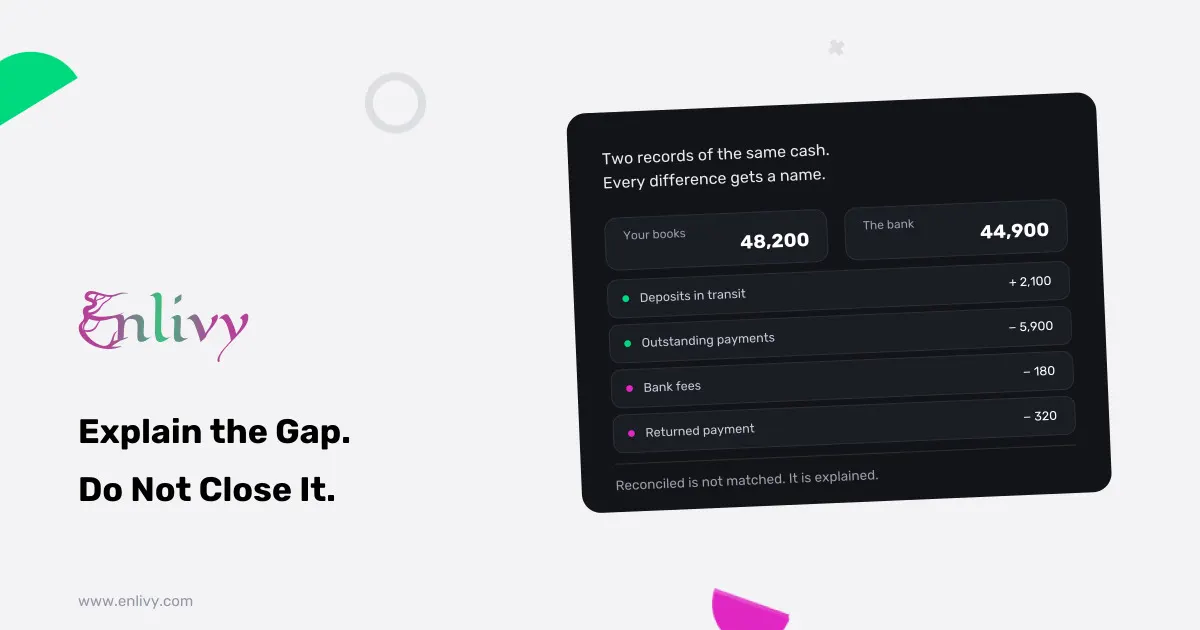
Account reconciliation is the practice of proving that a ledger balance is supported by evidence you can point at.
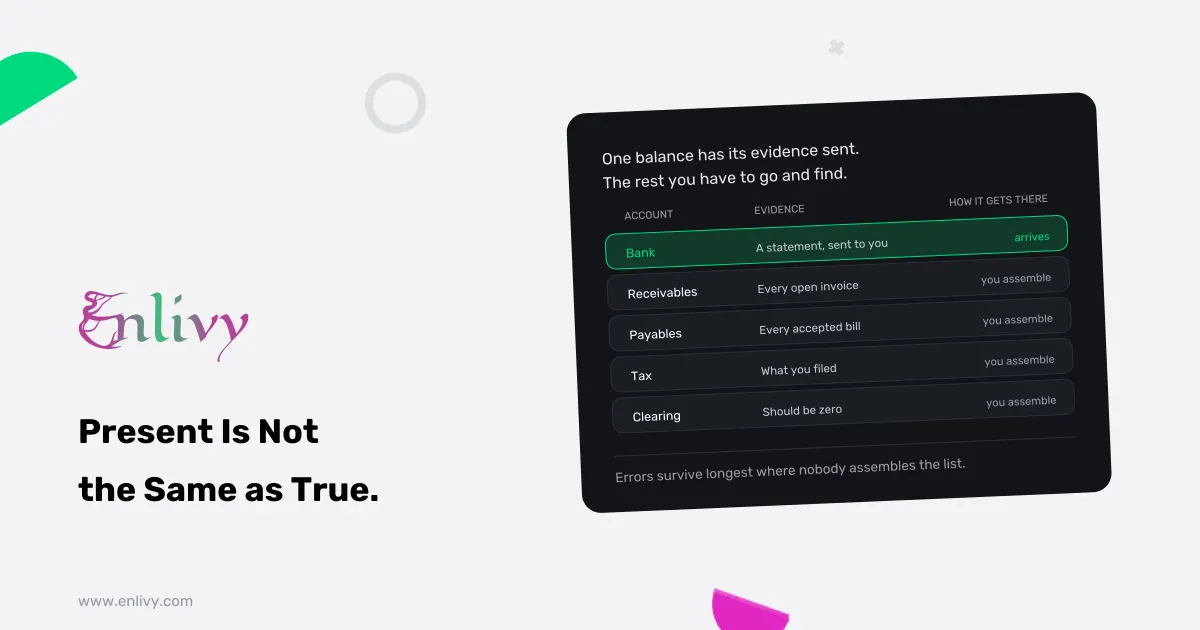
Bank reconciliation is one instance of it, and the easiest one, because the evidence arrives on its own. The bank sends a statement whether you want it or not, so the comparison is against something external and independent.
Every other account is harder in exactly one way: you have to assemble the evidence yourself.
| Bank reconciliation | Account reconciliation | |
|---|---|---|
| Compared against | A bank statement | Whatever evidence supports the balance |
| Evidence arrives | On its own | You assemble it |
| Frequency in practice | Monthly, usually done | Often skipped entirely |
| Where errors hide | Rarely for long | For years |
That asymmetry is why most businesses reconcile the bank and nothing else, and why the accounts nobody reconciles are where old mistakes accumulate quietly.
Which accounts actually need it
Not all of them, and pretending otherwise is how the practice gets abandoned. Five earn the effort in a service business.
Accounts receivable. The balance should equal the sum of open invoices, invoice by invoice. If it does not, either an invoice is missing or a payment was recorded against the wrong one. This is the single highest-value reconciliation in a service business, and it is what makes the aged receivables report worth reading.
Accounts payable. Same logic in the other direction: the balance should equal the bills you have accepted and not yet paid.
Tax accounts. VAT collected and reclaimed should tie to what you filed. This is where a small treatment error compounds silently across quarters, and where getting the rate right from the client record rather than per document prevents most of it.
Deferred and accrued revenue. Money received before the work, or work done before the invoice. Common wherever there are retainers and payment plans, and almost always understated, because the trigger to adjust it is a date rather than a transaction.
Clearing and suspense accounts. These should end each period at zero. A suspense account with a persistent balance is not an account, it is a list of unanswered questions.
The four ways a balance goes wrong
Reconciliation is faster when you know what you are looking for.
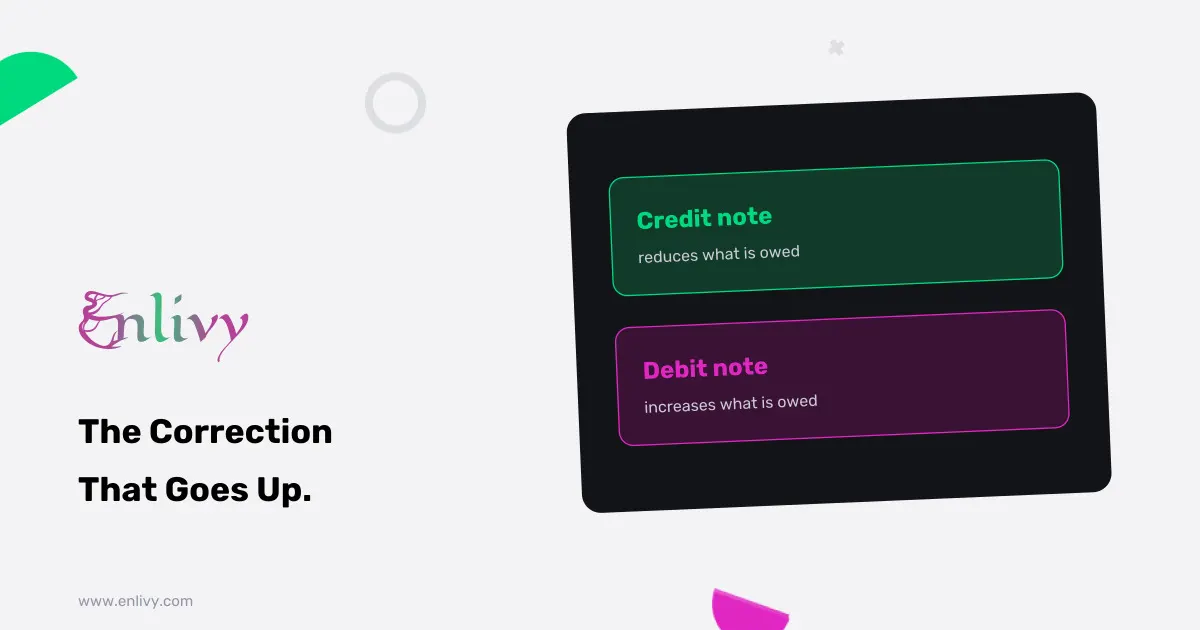
Something is missing. A transaction happened and was never recorded. Cash-side items are caught by the bank statement. Non-cash items, like an accrual or a credit note issued outside the system, are not caught by anything except this.
Something is recorded twice. Usually an import run more than once, or a payment entered manually and then imported.
Something is in the wrong place. The amount is right and the account is wrong. Nets to zero overall, which is exactly why it survives: your total is correct and two balances are not.
Something is stale. The entry was right when made and stopped being right. A receivable from a client who will never pay is the clearest example, and it is why the aging profile matters more than the total.
The first three are errors. The fourth is not, and it is the one that makes a reconciled balance still misleading.
How to reconcile an account
The mechanics are the same whichever account you are working on.
-
State what the balance should equal. Write the rule down: receivables equal the sum of open invoices, VAT payable equals collected minus reclaimed for the period. If you cannot state the rule, you cannot reconcile the account, and that is worth discovering before you start.
-
Produce the supporting list. The invoices, the bills, the filings. This is the step that takes the time, and it is the step that disappears when the records are already connected.
-
Compare totals. If they agree, the reconciliation is done and takes minutes.
-
When they disagree, work the four categories. Missing, duplicated, misposted, stale. Sort the difference by size and start at the top; one large item is more likely than forty small ones.
-
Fix the cause, not the number. A journal that forces the balance to agree makes the report correct and the underlying data wrong. Next period the same difference reappears, plus interest.
-
Record who and when. A reconciliation nobody signed is one nobody can rely on later.
How often
Tie the frequency to the consequence of being wrong.
Cash accounts, weekly or continuous. Covered in bank reconciliation.
Receivables, weekly. The balance drives collections, and collections are time-sensitive. A month-old receivables position is a month-old chasing list.
Payables and tax, monthly. Aligned with the filing rhythm.
Deferred revenue, monthly. It only moves on period boundaries anyway.
Clearing accounts, every period, without exception. They are supposed to be empty. Checking is quick and a non-zero balance is always meaningful.
What makes it slow, and what actually fixes it
The complaint is usually that reconciliation takes too long. The cause is almost never the comparison itself.
The evidence lives somewhere else. Invoices in one system, payments in another, bills in an inbox. Most of the time is spent assembling the list rather than checking it.
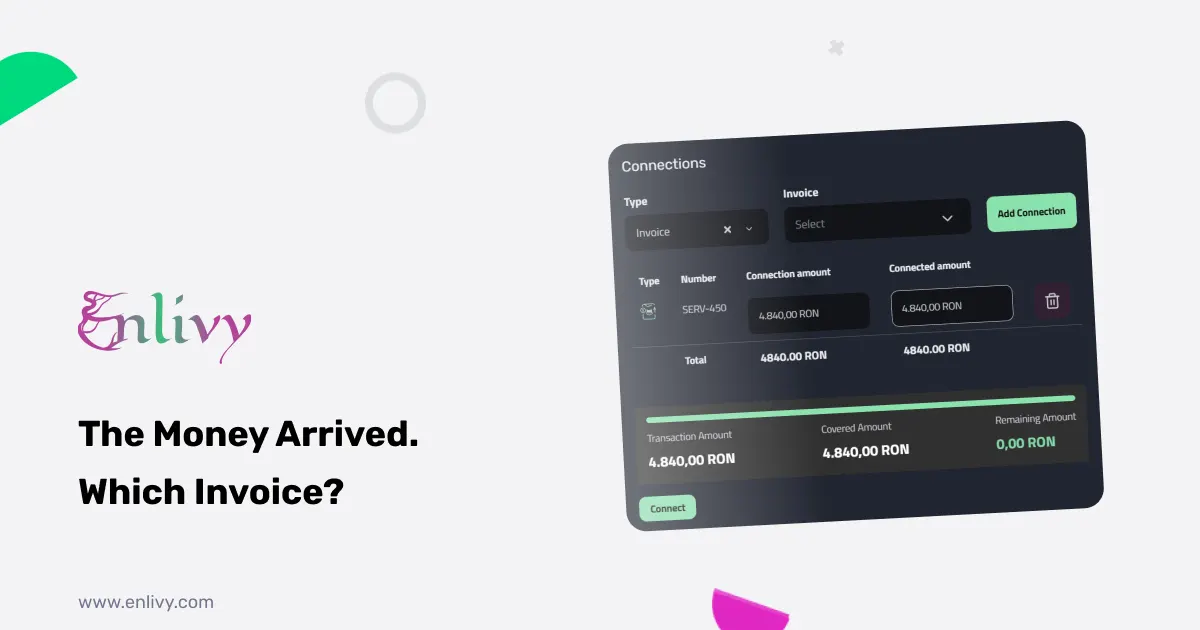
The link between money and document is missing. If a payment is categorised rather than attached to an invoice, then every reconciliation reconstructs a relationship that was known at the time and thrown away.
Nobody owns it. Reconciliation without a named owner and a date happens in the week before an audit, which is the most expensive possible moment.
The structural fix is the second one. When the payment, the invoice and the document it supports are the same record, receivables reconciliation stops being an exercise and becomes a read. That is the same property that makes matching payments to invoices tractable, and the reason an invoice event trail matters when a total is questioned a year later.
What it makes possible
A reconciled ledger is not the goal. It is what three other things depend on.
Collections you can defend. Chasing from an unreconciled receivables balance means eventually chasing somebody who paid, which costs more than the invoice.
A metric that means something. Days sales outstanding is computed from the receivables balance. Reconcile it and the number describes reality; skip it and the number describes your data quality.
A close that is a read, not a rebuild. When the evidence is attached as you go, the export the accountant needs comes out of the same records rather than out of a reconstruction.
Where this sits in the wider chain
Account reconciliation is the proof step at the end of the path from an agreement to cash, laid out in the contract-to-cash workflow.
Most of what makes it hard is decided upstream. An invoice that did not match the accepted proposal invites a partial payment. Terms that were never written down produce deductions. A retainer with no arrangement behind it produces twelve invoices nobody can group.
Enlivy keeps each document linked to the payments that settle it and sells the parts as separate packs. You can start free.
For teams weighing this against a general ledger tool, the comparisons against Xero, QuickBooks and Zoho Books cover where each of them stops.