A purchase order is a document a buyer sends a seller to authorise a purchase. It names what is being bought, how much of it, at what price, and on what terms. Once you accept it, it becomes a binding agreement between the two of you.
That definition is in every guide on the subject. What most of them leave out is the situation you are probably in: you did not write the purchase order, you received one. Almost everything published about POs is written for the person issuing them. This is written for the person on the other end.
What is actually on a purchase order
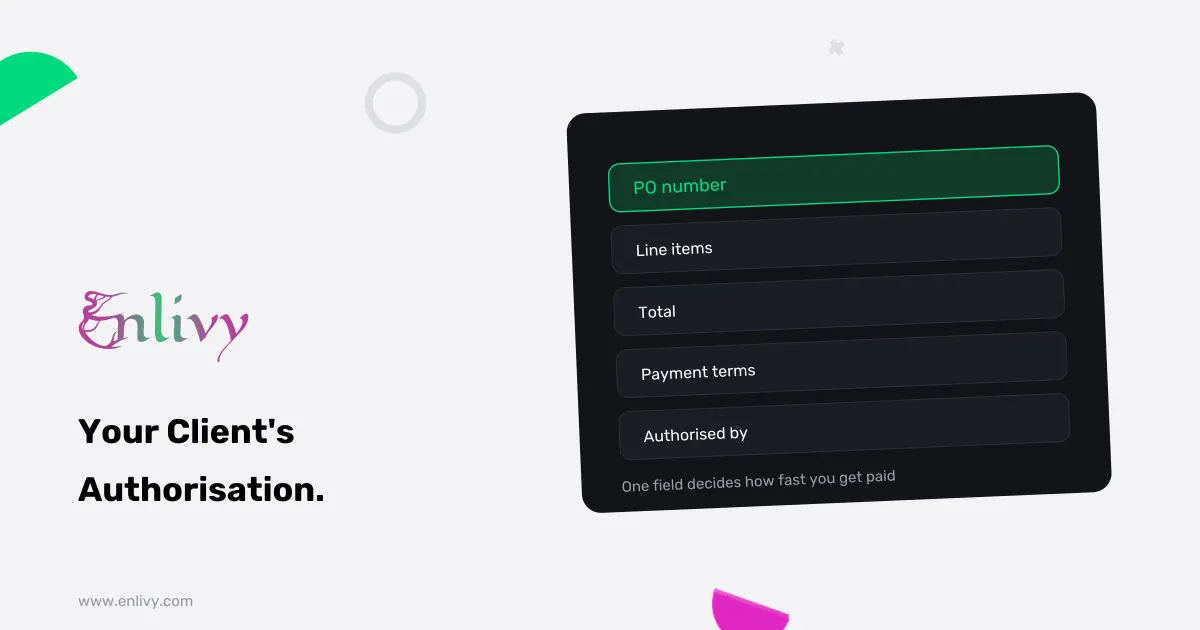
A PO issued by a company of any size carries the same core fields:
- A PO number. The buyer’s internal reference. It matters more than it looks, and we will come back to it.
- Buyer and seller details. Legal names, addresses, tax registrations.
- Line items. Description, quantity, unit price, total. On a services PO this is often a single line for a whole engagement.
- Delivery or performance dates. When the work is expected.
- Payment terms. Net 30, net 45, or a schedule.
- An authorising name. Whoever inside the buyer signed off the spend.
Larger buyers add cost centres, project codes, and a set of standard terms on the back page that nobody reads until there is a dispute.
Why your client uses one at all
Purchase orders exist because of a problem inside the buyer’s organisation, not yours. Somebody has to control what gets spent, and a PO is how spending gets approved before it happens rather than argued about afterwards.
For you, that has one useful consequence. A PO is proof that the money was approved. An email from a contact saying “yes, go ahead” is a person’s intention. A purchase order is the company’s commitment, with a budget line behind it.
That is why chasing an unpaid invoice against a valid PO usually goes better than chasing one without. The approval already happened.
The purchase order is not your invoice
These two documents get confused constantly, and the confusion causes real delays.
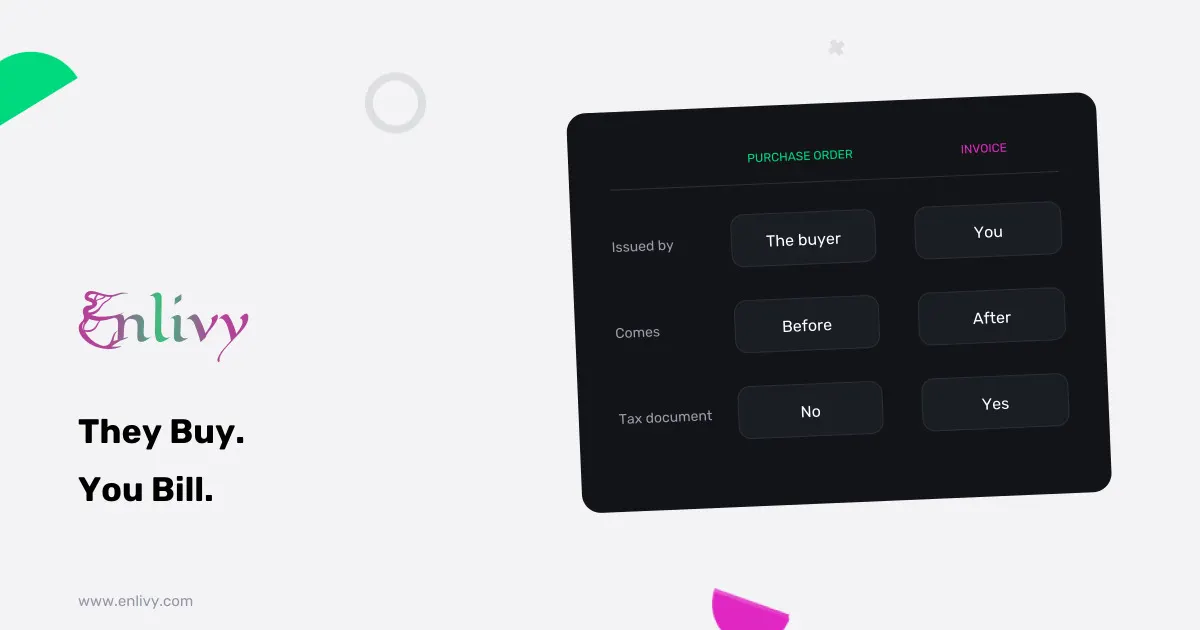
The buyer issues the purchase order. You issue the invoice. The PO says “we agree to buy this”. The invoice says “we delivered it, now pay”. One authorises, the other collects.
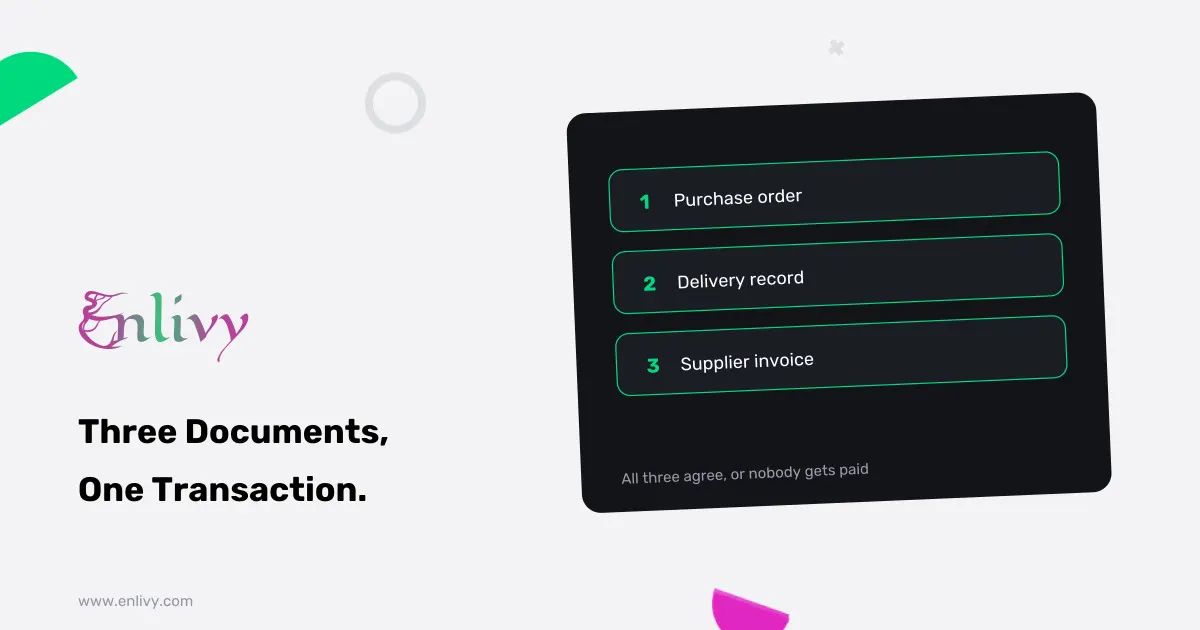
They also live in different systems and different departments. The PO comes out of procurement. Your invoice goes to accounts payable, who will try to match it against that PO before paying anything.
We cover the full comparison in purchase order vs invoice, including which document wins when the two disagree.
What to check before you start work
Everything expensive that happens later starts here, so this is the part to slow down on.
Do the line items match what you actually agreed? Buyers rekey scope from an email or a proposal, and things get lost. If your proposal said four workshops and the PO says three, the PO is what accounts payable will pay against.
Is the total right, and does it include or exclude tax? A PO issued net of VAT against an invoice issued gross is one of the most common reasons an invoice gets rejected. If you sell across borders, the EU VAT number rules decide who accounts for the tax.
Are the payment terms the ones you negotiated? A buyer’s standard PO often carries their standard terms, not yours. If your contract says net 15 and their PO says net 60, you have a conflict that is far easier to fix now than after delivery. What those terms actually mean is in net 30 payment terms.
Does the PO cover the whole engagement or one phase? On retainers and long projects, buyers frequently issue a PO per quarter. If you invoice past the PO’s value, the excess sits unpaid until somebody raises a new one.
Where the PO number belongs
One small operational detail decides whether you get paid on time.
Put the PO number on the invoice. Not in the email body, not in an attachment, on the invoice itself, in a field the buyer’s system can read.
Accounts payable teams match incoming invoices to open purchase orders. An invoice with no PO number, or the wrong one, does not fail loudly. It falls into an exceptions queue where somebody has to look at it by hand, and that queue is measured in weeks, not days.
This is the single cheapest thing you can do to shorten your days sales outstanding. It costs one field.
Keep it distinct from your own numbering. Your invoice numbers are your sequence and must stay unbroken; the PO number is the buyer’s reference riding along beside it.
When there is no purchase order
Plenty of clients never issue one, and that is normal for smaller buyers. It does not leave you unprotected, it just moves the protection somewhere else.
Without a PO, the documents that hold the agreement are your master service agreement for the standing terms and your statement of work for the specific scope. Between them they do the same job: written scope, written price, written terms.
If a client asks you to start before either exists, a proforma invoice is the usual way to put numbers in front of them without issuing a real tax document.
A purchase order is not automatically a contract
This catches people out, and it catches them out late.
A PO becomes binding when you accept it. Acceptance can be explicit, by confirming in writing, or implied, by starting the work. Until then it is an offer.
The trap is that a PO often carries the buyer’s standard terms on the back. If you accept it without reading them, you may have agreed to their liability caps, their payment terms and their termination clause rather than yours. Where you already have a signed agreement in place, say in writing that the PO is issued under it. That one sentence keeps your terms in force.
If the scope changes later, change it properly: an amendment or addendum to the agreement, and a revised or additional PO from the buyer.
How the PO fits your money chain
For a service business, the sequence runs like this:
- You send a proposal, the client accepts it
- A contract is signed, electronically or otherwise
- The client’s procurement raises a purchase order against it
- You deliver, then issue an invoice carrying the PO number
- Accounts payable matches invoice to PO and pays
- The payment lands, and you match it against the open invoice using the bank transaction
Step 5 is where most delays live, and step 3 is where most of the causes are planted. The whole sequence, without the PO, is laid out in the contract to cash workflow.
When the payment finally arrives covering several invoices at once, the document telling you what it covers is a remittance advice, and matching it properly is what keeps aged receivables honest.
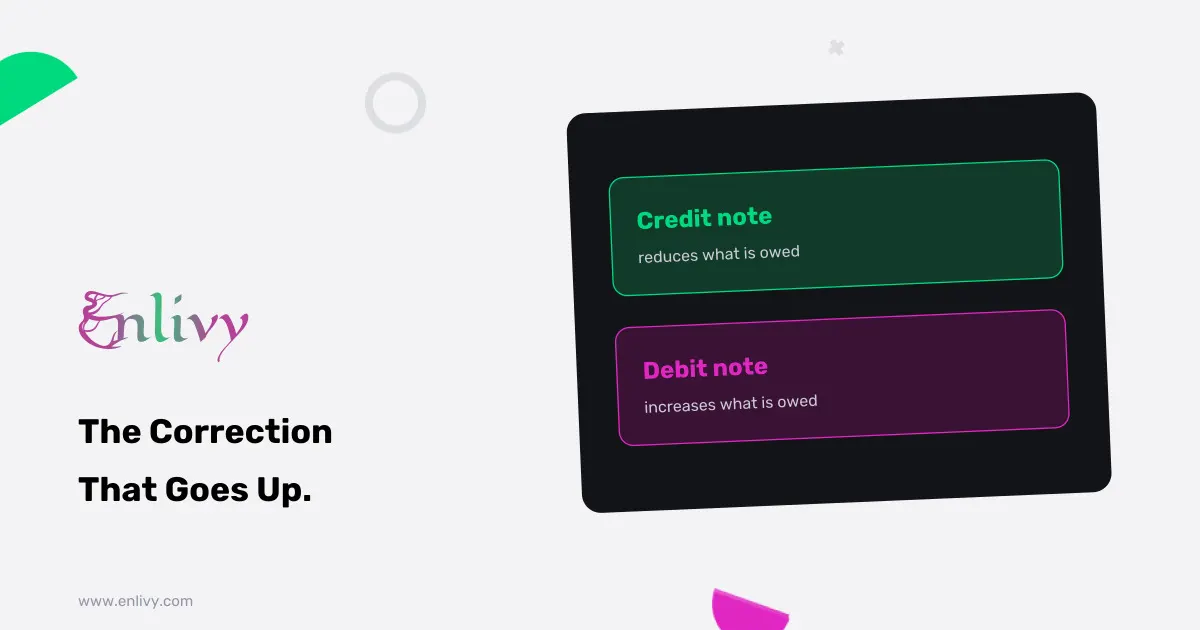
And if the invoice turns out wrong, you cannot delete it: a credit note takes the amount down, a debit note takes it up, and both must reference the PO as well as the original invoice.