Most advice about recurring billing was written for software companies. It assumes thousands of self-serve customers on identical plans, and it optimizes for churn and card failures.
Service businesses do not look like that. They have twenty clients, not twenty thousand, and every one of them negotiated something slightly different. Advice built for the first case tends to produce the wrong system for the second.
There are really two models, and the choice between them is the whole decision.
Model one: you manage the arrangement
Here the recurring relationship is something your team sets up and watches. A retainer at an agreed monthly fee. A project split into three payments. An annual contract billed quarterly.
The client agreed to it once, in a contract, and does not expect to manage anything afterwards. They expect an invoice to arrive.
What this model needs is a record of the arrangement itself rather than a pile of invoices. Amount, cadence, start, what has been billed, what has been paid, what is still owed. That is what a billing schedule holds: the subscription, retainer or payment plan as one live relationship with its invoices and receipts attached to it.
The failure mode of this model is forgetting. Nothing alerts you when a retainer does not bill, so the arrangement has to run on a schedule rather than on somebody’s memory. Scheduling the invoice is what makes it survive holidays and handovers.
Use this when the terms were negotiated, the client count is small enough to name, and changes go through a conversation rather than a settings page.
Model two: the client manages the subscription
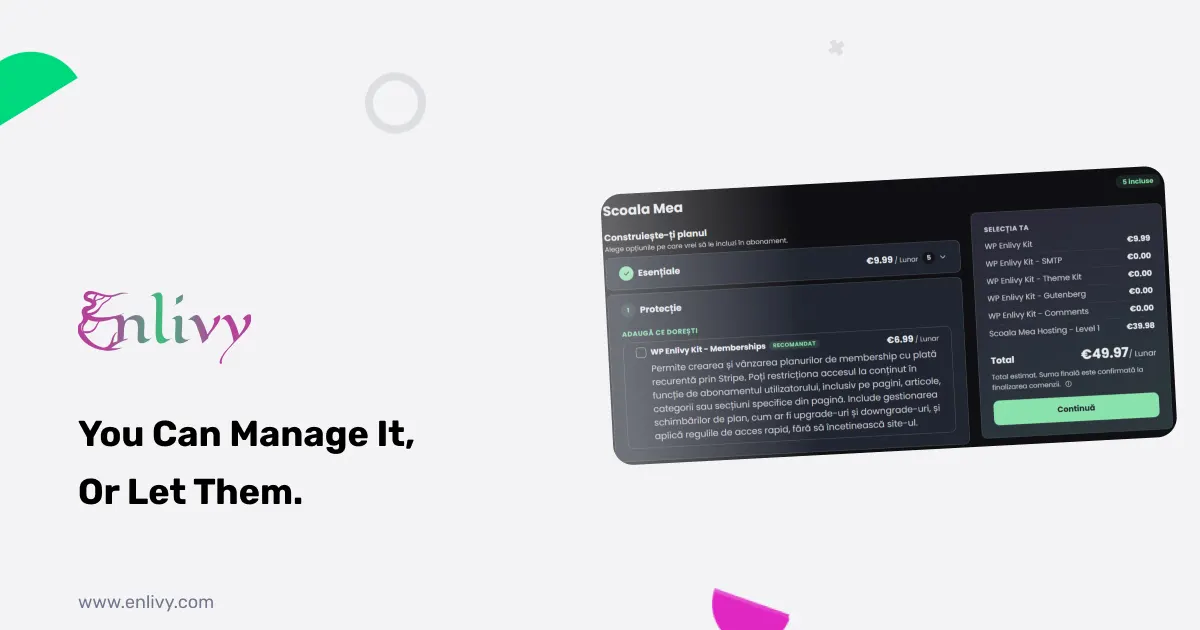
Here you publish a plan and the client subscribes to it. They pick a cycle, they can move up a tier, they can pause, they can cancel, and they keep their own card on file.
This is the software-company shape, and plenty of service businesses now have a piece of their revenue that genuinely works this way: a support plan, a tooling subscription, a productized service with tiers.
What it needs is different. The plan has to exist as a purchasable thing, the cycle has to be flexible, changes mid-period have to be prorated correctly, and the client needs somewhere to do all of that without emailing you. That is subscription billing from weekly to yearly, managed by the customer: with the Billing Schedules pack, changes are previewed in a branded portal and each renewal is charged to the client’s saved card through your own Stripe account.
The failure mode here is not forgetting. It is proration and card failures, both of which have to be handled by the system because there are too many of them to handle by hand.
Use this when the offer is standardized, you want it bought without a negotiation, and you would rather not be the person who changes someone’s plan.
Most service businesses need both
This is the part that gets missed. The two models are not competing options, they are different parts of the same business.
A typical agency has six named clients on negotiated retainers and a long tail of smaller accounts on a standard support plan. The first six belong in managed schedules. The long tail belongs in self-serve subscriptions, because handling twenty small plan changes by hand is how an ops person’s week disappears.
The mistake is forcing one model onto both. Running your negotiated retainers through a self-serve subscription tool means every custom term becomes a workaround. Running your long tail through managed schedules means someone is manually editing plans all week.
What both models require underneath
Whichever you use, three things have to be true or the recurring part stops being an advantage.
What you sell is defined once. If the line item is retyped per invoice it will drift, and twelve months later the client has twelve descriptions of the same service. A product catalog supplies the same definition to the proposal and the invoice.
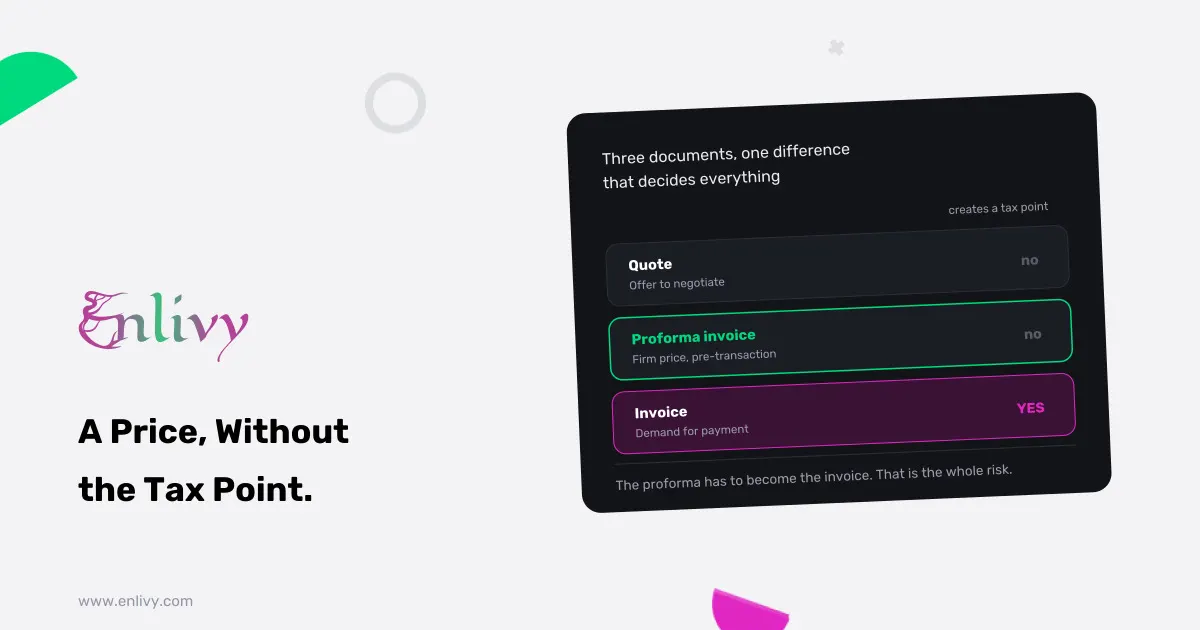
The tax treatment is resolved, not guessed. Recurring billing multiplies any mistake by the number of periods. Getting VAT and tax rates right per client country and registration status matters more here than on a one-off invoice, and a Romanian company’s invoice to a Romanian client also has to be sent to ANAF e-Factura to count at all.
Every payment is linked to its invoice. Recurring revenue means recurring reconciliation. If matching money to invoices waits for month end it becomes the largest recurring cost you have. Linking each bank transaction to the invoice it settles as it comes in keeps that cost small, card payments collected through your own Stripe account mark their invoice paid, and with the Banking pack, syncing the accounts directly removes the monthly CSV as well.
How the two models start
They also begin at different points in the contract-to-cash workflow.
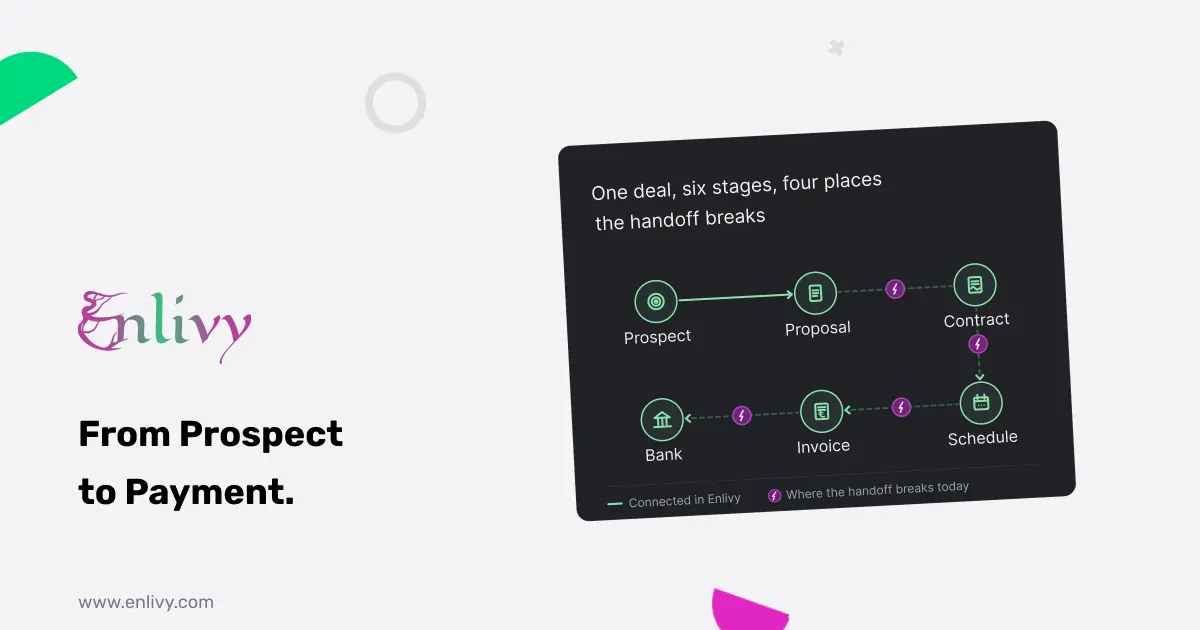
A managed arrangement starts at a signature. The proposal the client accepted creates the invoice with the same lines, and the contract when its package carries a contract template. The billing schedule should start that same day, which is the single change that stops retainers from going unbilled. The practical mechanics are in how to bill a retainer client.
A self-serve subscription starts at a checkout. There is no negotiation to inherit, so what matters is that the plan is clear and the client can see and change their own arrangement afterwards.
A short way to decide
Ask one question about the revenue in front of you: would a change to this arrangement involve a conversation?
If yes, it is a managed schedule. If no, it is a subscription the client should be able to manage themselves.
Businesses that answer “both, depending on the client” are the normal case, and that is the argument for having the two models in one system rather than two products that each hold half the revenue.
Enlivy runs both on the Billing Schedules pack, one of its separately priced feature packs, and building the packages clients buy from is free. If you are weighing it against a dedicated subscription tool, the Chargebee comparison is the closest match, and Ignition is the closer one if your billing starts from proposals. Create your account and add the Billing Schedules pack to put one real client through it.