An invoice is not revenue. It is a claim, and until the money moves it is a claim you are financing yourself.
Most advice about late payment assumes the client is avoiding you. In service work that is rarely true. The invoice is usually sitting in an approval queue, missing a purchase order number, or in the inbox of someone who left. The client is not refusing. Nothing is happening, which looks identical from your side and is fixed completely differently.
Find out which of the four it is before you write anything
Almost every unpaid invoice is one of these, and the right move depends entirely on which:
It never arrived at the right person. You sent it to your day-to-day contact, who is not in finance. It was never forwarded. Nobody is at fault and nobody knows.
It arrived but is missing something. No purchase order reference, wrong entity name, wrong VAT treatment, a line item their system will not accept. It is sitting in a rejected pile you cannot see.
It is in a queue that runs on a schedule. Some clients pay twice a month. An invoice that missed the run is not late in their world, it is simply next.
They cannot pay right now. The genuinely difficult case, and the rarest.
Guessing wrong is what damages relationships. A firm reminder sent to a client whose finance team never received the invoice reads as an accusation about something they did not do.
The sequence that works
Written as days from the due date, not from the send date.
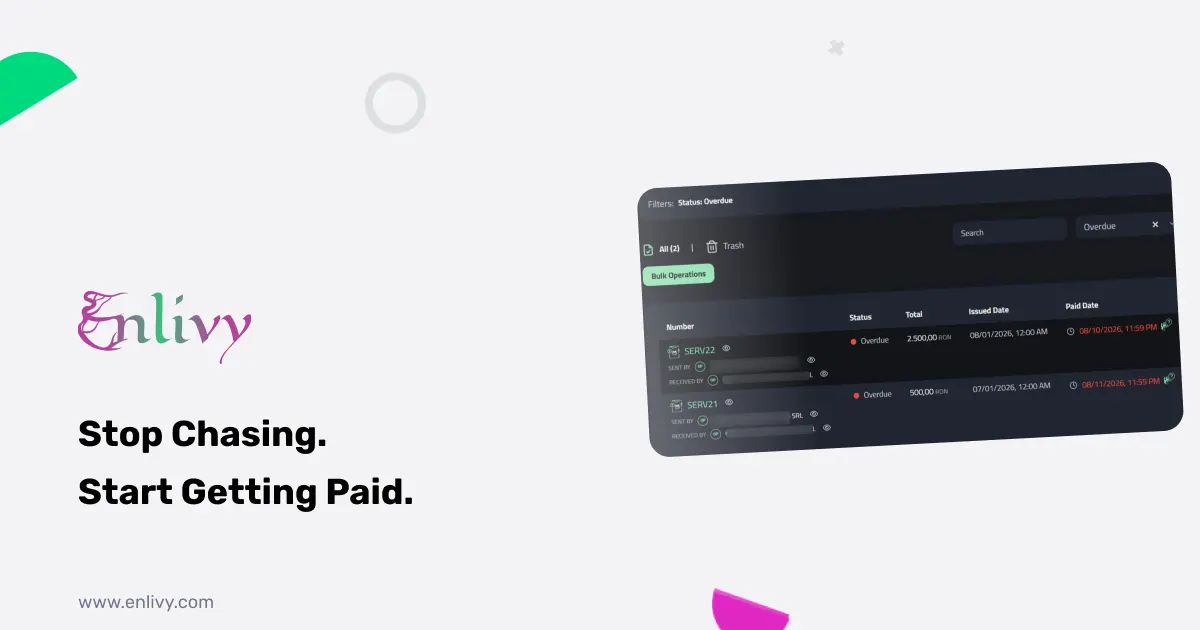
Day 0, the due date passes. Do nothing yet, but know it happened. This only works if unpaid invoices are visible without a person going looking, which is what a billing schedule with a live balance gives you for recurring work and what the invoice list gives you for everything else.
Day 3, a factual note. Not a chase. One short message to your usual contact asking whether the invoice reached their finance team, with the invoice attached again. Most payments recover here, because most of the problem is category one.
Day 10, ask what it needs. If it has arrived and still has not moved, the question is not “when will you pay” but “is anything missing on it”. This surfaces category two, and it is the question that gets you a PO number instead of an apology.
Day 20, escalate politely and in writing. Copy someone in finance directly. State the invoice number, the amount, the due date and the payment terms from the signed agreement. Not a threat, a record.
Day 30 onwards, decide commercially. Pause new work, apply the terms you agreed, or accept a payment plan. Whatever you choose, put it in writing.
The escalation only holds if the terms exist somewhere they can be quoted from. That is a reason to have payment terms in the signed contract rather than the footer of a PDF, and it is worth understanding what makes an online signature hold up before you rely on one in an argument.
Remove the reasons before they happen
Chasing is the expensive fix. These are cheaper.
Send it to finance in the first place. Ask, at contract stage, who receives invoices and whether a purchase order is needed. It takes one question and removes the most common failure entirely.
Make the invoice acceptable on arrival. The wrong entity name or the wrong VAT treatment will bounce an invoice through a client’s system with no notification to you. Resolving tax from the client record rather than per document removes most of this, and a Romanian company’s invoice to a Romanian client also has to go through ANAF e-Factura to count as delivered at all.
Let the client answer their own questions. A large share of “we never got it” is genuinely true and takes an email round trip to resolve. A client portal where they can see their own invoices and documents removes that trip, and it works at 11pm on a Sunday when your account manager does not.
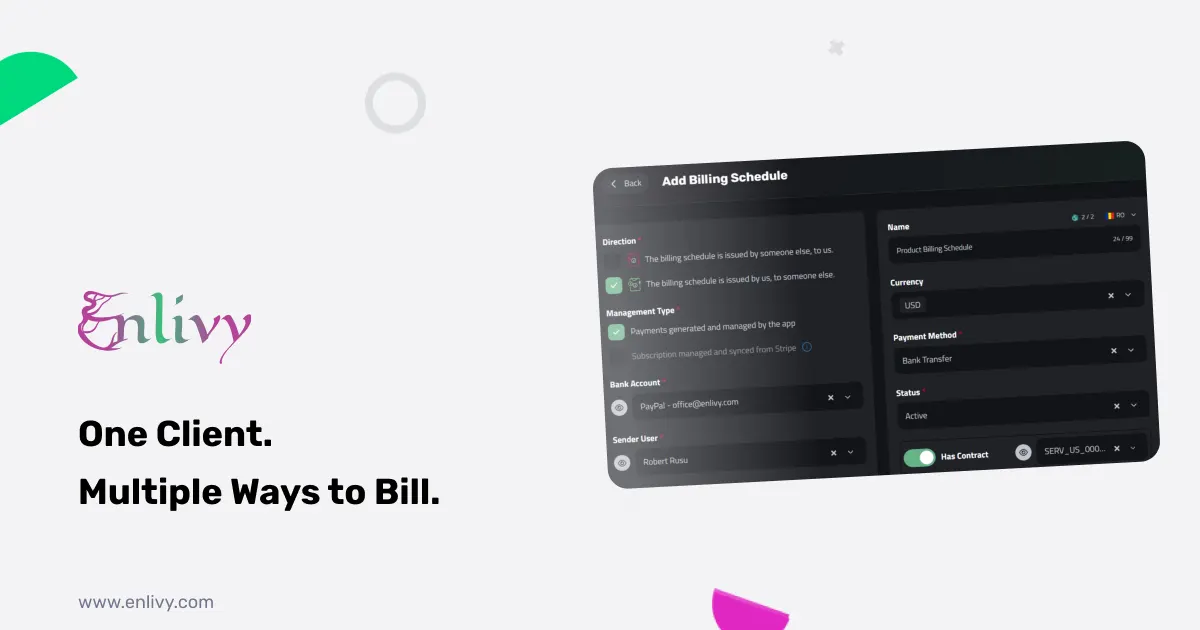
Bill on a rhythm the client can predict. Invoices that arrive on the same day each month get absorbed into a payment run. Invoices that arrive whenever someone remembers get handled individually, which is slower. Scheduling the invoice is as much a collections tactic as an admin one.
Know the moment it is paid
The other half of chasing is stopping. Nothing costs goodwill faster than a reminder for an invoice that was paid four days ago.
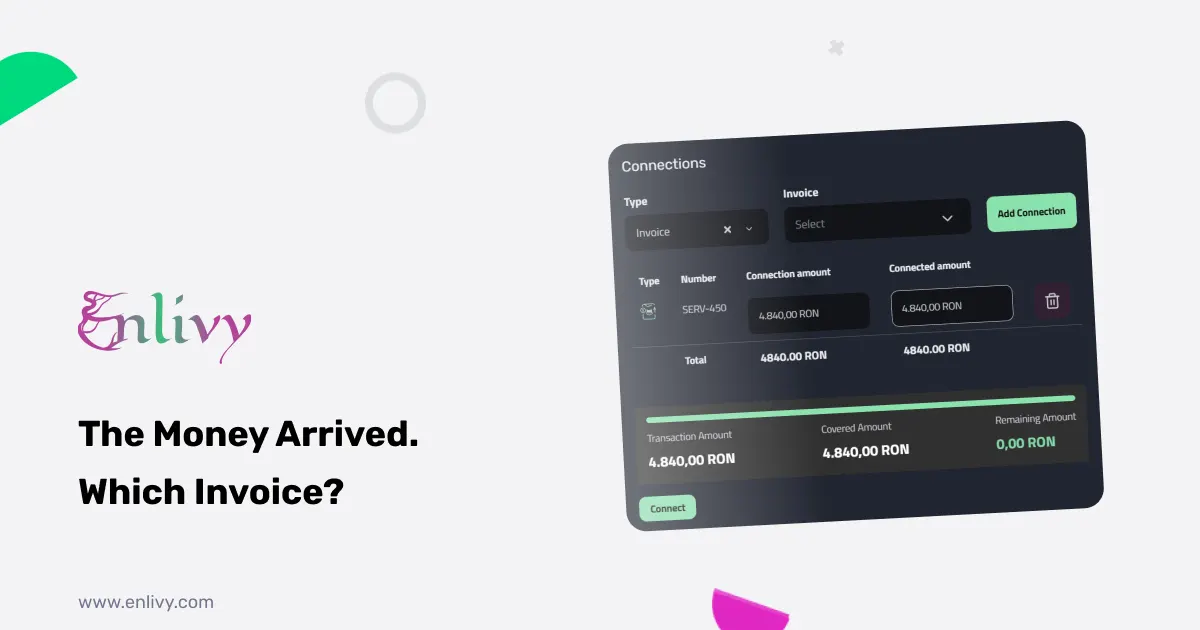
That means the payment has to be matched to the invoice quickly rather than at month end, which is the job of linking bank transactions to what they settle. If you would rather be told than look, Enlivy can post to Slack when an invoice is marked paid, with any paid pack.
One honest note on tooling. Enlivy can send optional payment reminders by email before and after the due date, once you connect your own mailbox, but the questions and the escalation above are yours to write. What it does beyond that is make the state visible: what is outstanding, against which arrangement, and settled by which bank line. In our experience the visibility is the part most service businesses are missing, and those messages are better written by a human anyway.
What this is actually about
Late payment is a cash flow problem long before it is a collections problem. A business with thirty days of runway and forty-five day terms is not badly managed, it is under-capitalised by its own billing process.
So the questions worth asking each month are not about individual invoices:
- What is outstanding in total, and how old is the oldest?
- Which clients are consistently late, and is that priced in?
- How long from work delivered to money received, on average?
Those come out of the same records the chasing does, through a data export your accountant can use.
Where this sits in the chain
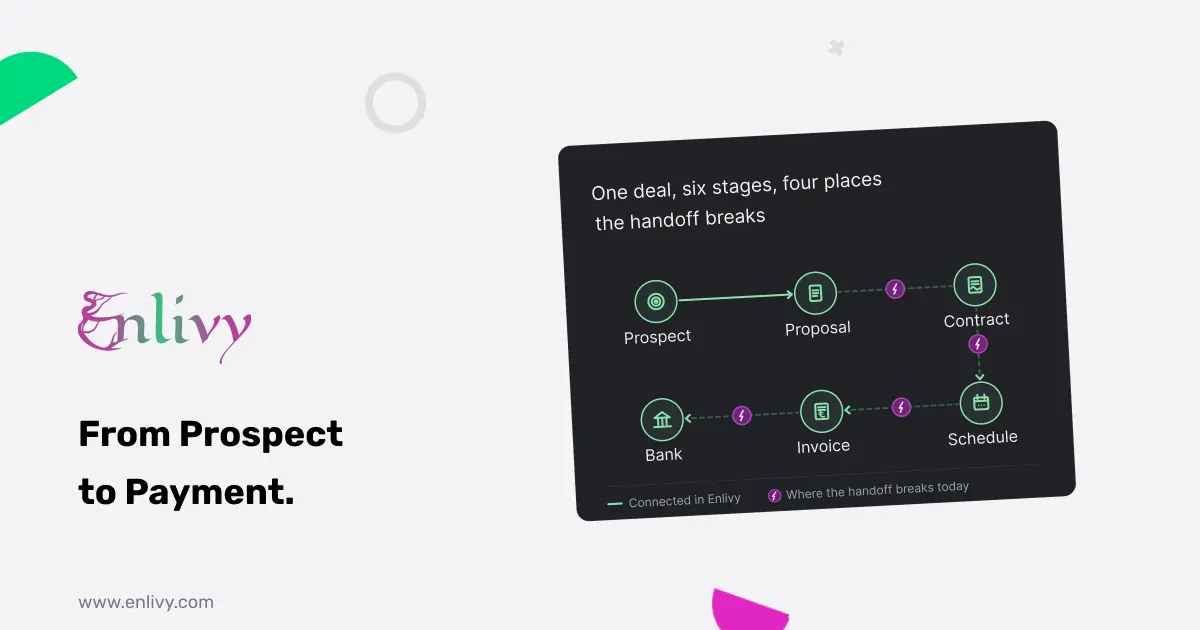
Getting paid is the end of the contract-to-cash workflow, and most of what makes it painful was decided earlier: terms that were never agreed in writing, an invoice that did not match the accepted proposal, or a retainer nobody could reconcile. Agencies have their own version of this, where the pass-through costs are the part that quietly never gets recovered.
Enlivy holds the whole chain and sells it as separate feature packs, so you can take the billing and banking parts without replacing anything else. You can start free with up to 5 invoices a month and see how your real invoices read in it before deciding; connecting the bank takes the Banking pack.