Every business automates the front of the chain. Pipelines, proposals, contracts, scheduled invoices. Then a payment arrives and somebody opens a bank statement next to a spreadsheet and starts matching numbers by eye.
This is the last handoff in the contract-to-cash workflow and it is the one most service businesses still do by hand. It is also the handoff that decides whether any of the earlier automation was worth anything, because an invoice is not revenue until you can point at the money.
Why matching is harder than it looks
If every client paid one invoice in full, on time, in your currency, with the invoice number in the reference, nobody would need software. Real payments are not like that.
Partial payments. A client pays 60% now and the rest after a milestone. The invoice is neither open nor closed, and a system that only understands paid and unpaid cannot represent it.
Bundled transfers. Three invoices settled with one round number, often with a deduction nobody warned you about. You are now solving a small arithmetic puzzle to work out which three, and whether the deduction was a credit note or an error. The document that proves a payment landed is a different one again, which is the subject of invoice vs receipt.
Missing references. The payment reference says “INVOICE” or the client’s own internal code. Matching falls back to amount and date, which works until two clients owe you the same amount.
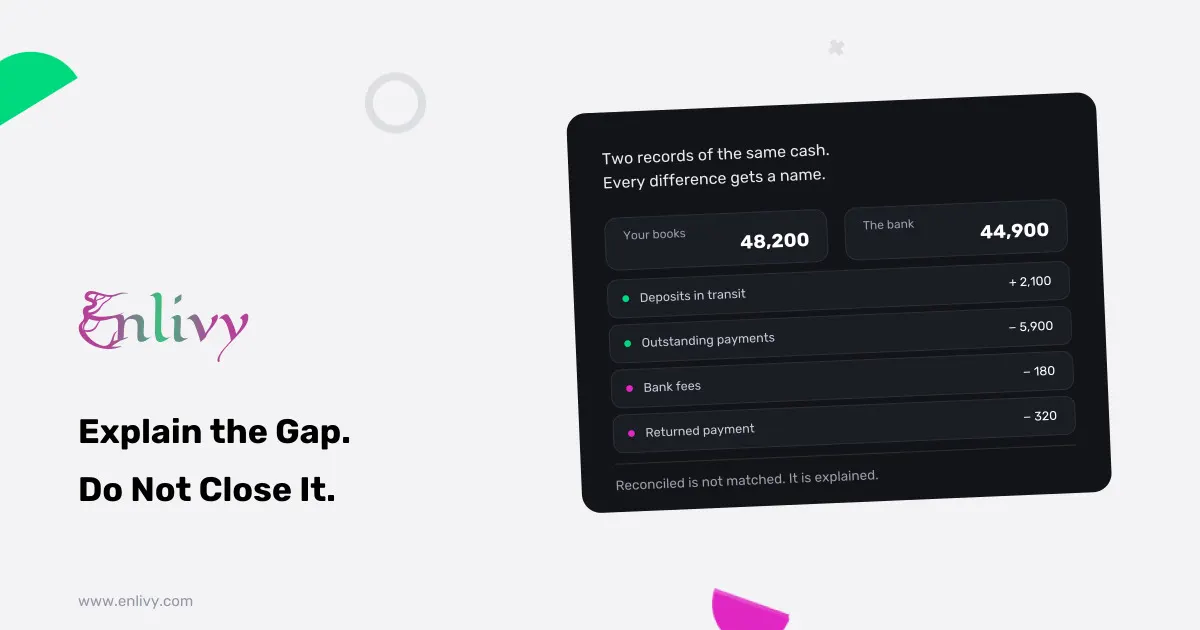
Currency. The invoice was in EUR, the payment arrived in RON, and the amount that landed is not the amount you billed because of the rate and the bank’s fee. Both numbers are correct and they do not agree.
Timing. The money left the client on the 28th and arrived on the 2nd. Month end falls between them, so the invoice looks unpaid in one period and paid in the next.
None of these are exotic. Most service businesses hit all five in a normal quarter.
What it costs to leave it manual
The obvious cost is the hours, and it is the smallest one.
The formal name for this work is bank reconciliation, and the wider discipline of proving any balance against its evidence is account reconciliation.
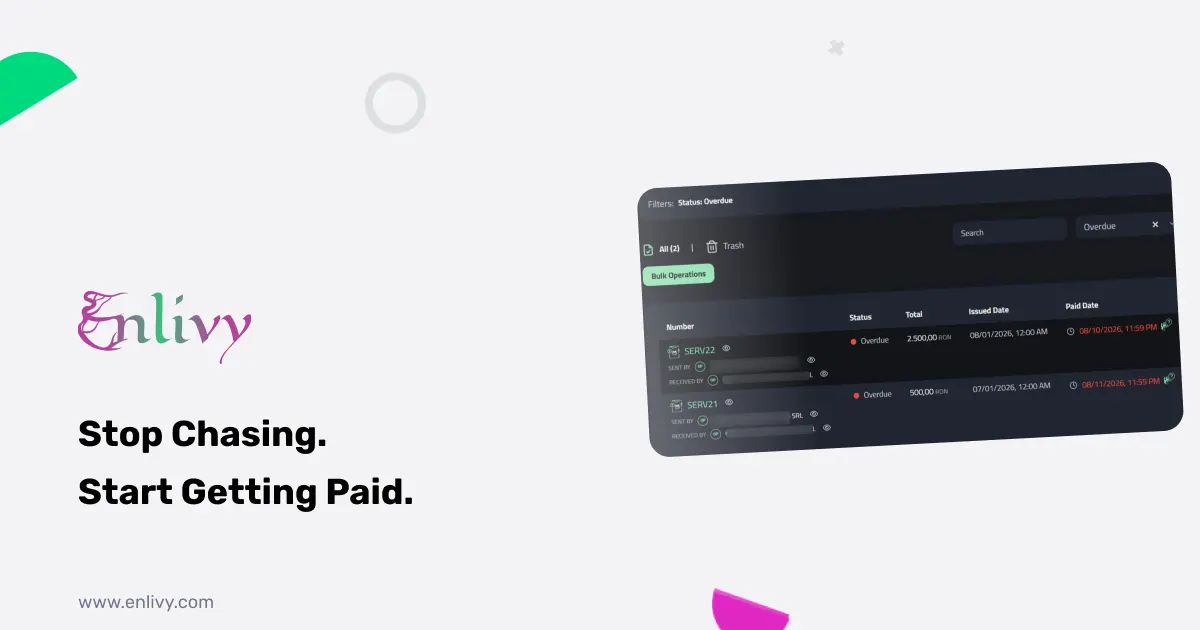
The real cost is that you do not know your cash position between reconciliations. If matching happens monthly, then for most of the month the answer to “has this client paid” is somebody’s impression. You chase invoices that were settled, which is the fastest way to spend goodwill, and you fail to chase ones that were not.
The second real cost is that it cannot be delegated. Manual matching depends on knowing that Acme pays in bundles and Northwind’s reference is always wrong. That knowledge lives in one person, and it leaves when they do.
What closing the handoff actually requires
Three things, and the order matters.
The transactions have to be there without being fetched. Downloading a statement once a month guarantees you are working with stale data. With the Banking pack, accounts that sync directly every few hours change reconciliation from an event into a state.
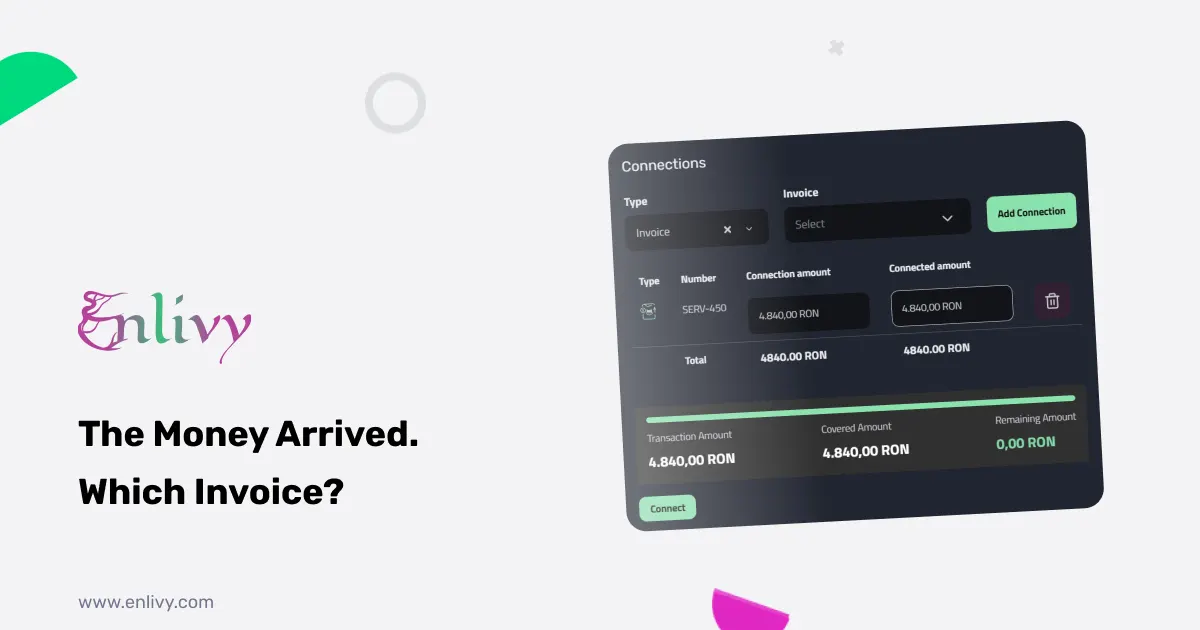
A payment has to be able to point at a document. Not a category, not a note, the actual invoice. When each transaction is linked to the invoice, receipt or payslip it belongs to, a partial payment stops being ambiguous, because each linked payment shows how much of the invoice it covered.
When a payer does tell you what a transfer covers, that note is a remittance advice, and it is the difference between allocating a grouped payment in a minute and reconstructing it from arithmetic.
Money out has to be recorded as carefully as money in. Reconciliation is not only about getting paid. Subcontractors, software, media spend and salaries all move money, and a bank line with no document behind it is the same problem in the other direction. Receipts as a structured record of every payment in both directions is what keeps the cashflow picture honest.
The cases worth setting up deliberately
Partial payments. Decide once whether a partially paid invoice stays open with a balance or is split. Whichever you choose, be consistent, because the alternative is that each person handles it differently and the reports mean nothing.
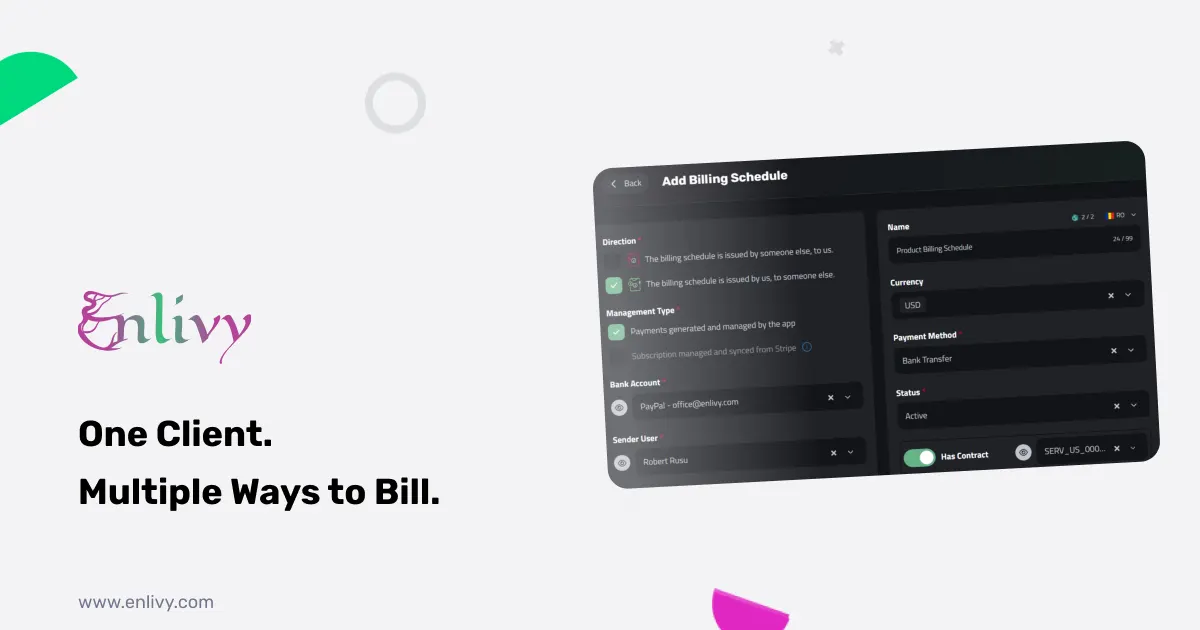
Recurring revenue. A retainer produces twelve payments a year against twelve invoices, and they will not all be clean. This is much easier when the invoices already belong to one billing arrangement with its own balance, because the question becomes “is this retainer square” rather than “which of these twelve is unpaid”. The practical setup is in how to bill a retainer client and the choice of model in recurring billing for service businesses.
Cross-border. Decide who absorbs the FX difference and the transfer fee before it happens, and put it in the contract. Deciding it invoice by invoice is how a client ends up permanently short by 2%.
Disputed amounts. When a client pays less than the invoice, the reason matters more than the number. If a total is ever questioned, the event trail shows who changed what and when, which is a better answer than anyone’s recollection.
What good looks like
A practical test. Pick a payment that landed last week and answer three questions:
- Which invoice or invoices did it settle?
- Is anything still outstanding on them?
- Did the amount that arrived match the amount billed, and if not, why?
If all three are answerable in under a minute, without opening a bank portal, the handoff is closed. If any of them requires exporting a statement, it is not, and the gap will get worse as volume grows.
Where the rest of the chain sits
Matching is the end, but it inherits every earlier decision. An invoice that did not match the accepted proposal is one a client may pay short. Terms that were never agreed produce deductions you cannot argue with. And knowing what is genuinely unpaid is what makes chasing an invoice something you do with confidence rather than apology.
For agencies there is an extra layer, because money you fronted on a client’s behalf has to be recovered as well as billed, which is covered in quote to cash for agencies.
Once matched, the same records feed the export your accountant needs, so month end stops being a reconstruction.
Enlivy runs the banking side as its own feature pack, so you can close this handoff without changing how you invoice. If you are weighing it against a bookkeeping tool, the Xero and QuickBooks comparisons both say plainly where those win. You can also start free, import a month of transactions from a CSV, and see how much of it you can match; connecting the account itself needs the Banking pack.