Remittance advice is a note a payer sends telling you which invoices a payment covers. It is not a receipt and it is not a legal requirement. It is a courtesy that happens to be the difference between a five-minute reconciliation and an afternoon of detective work.
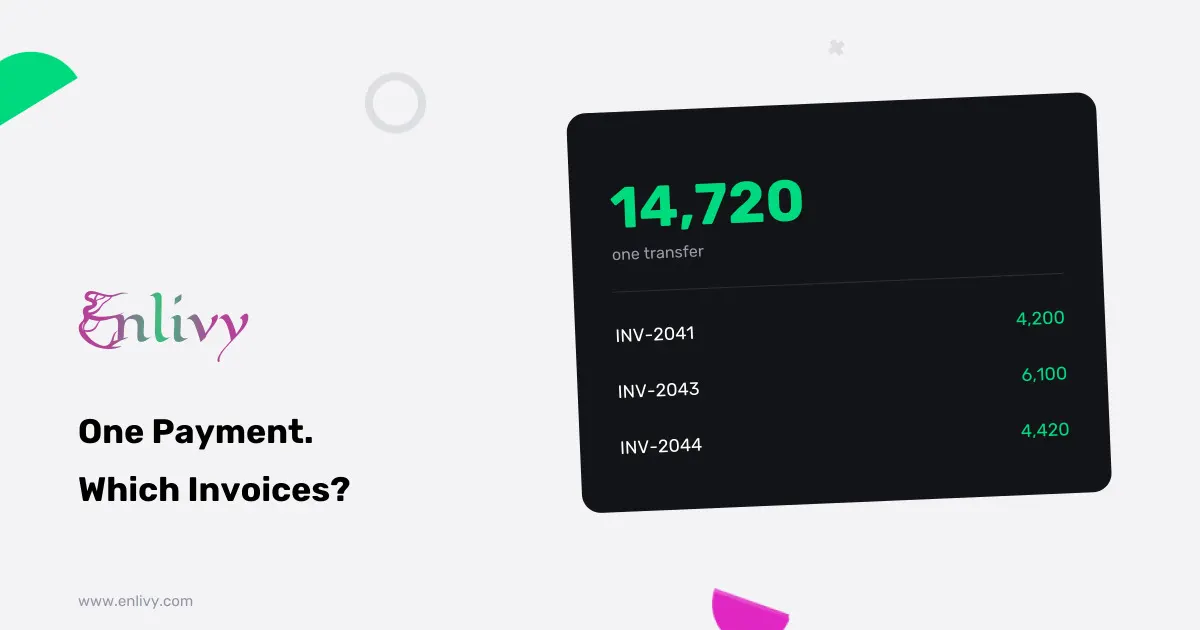
A payment of 14,720 arrives in your account. Your open invoices are 4,200, 6,100, 4,420 and 8,900. Which ones did they just pay? Without a remittance advice, you are guessing from arithmetic.
What it contains
A remittance advice, at minimum, names:
- The payer, and often the payer’s own reference
- The payment date and total
- Each invoice number the payment settles, with the amount applied to each
- Any deductions, such as a credit note applied, a withholding tax, or a short payment with a reason
The last one is where the value is. A payment that arrives 340 short of the invoice total is either an error, a disputed line, a bank charge or a credit you had forgotten. The remittance advice is what turns that question into a fact.
Who sends it, and who does not
Large buyers send remittance advice automatically. Their accounts payable systems generate it as part of the payment run, usually by email, sometimes as a PDF nobody can parse and occasionally as a structured file.
Small buyers rarely send anything. A transfer appears with a reference field containing the client’s name, an invoice number, both, or nothing useful at all.
That split matters for how you plan. You cannot make remittance advice a dependency, because most of your clients will never send one. What you can do is make the absence survivable.
Remittance advice is not a receipt
These get mixed up, and the difference is directional.
The payer sends remittance advice. It says “here is what we just paid you and what it was for”.
The seller issues a receipt. It confirms money was received. In Enlivy, receipts cover both directions, including the ones you issue for paid invoices.
They describe the same event from opposite ends. We cover the neighbouring confusion in invoice vs receipt.
Why its absence costs you more than it looks
Every unmatched payment is a small unanswered question, and they accumulate in a specific, expensive way.
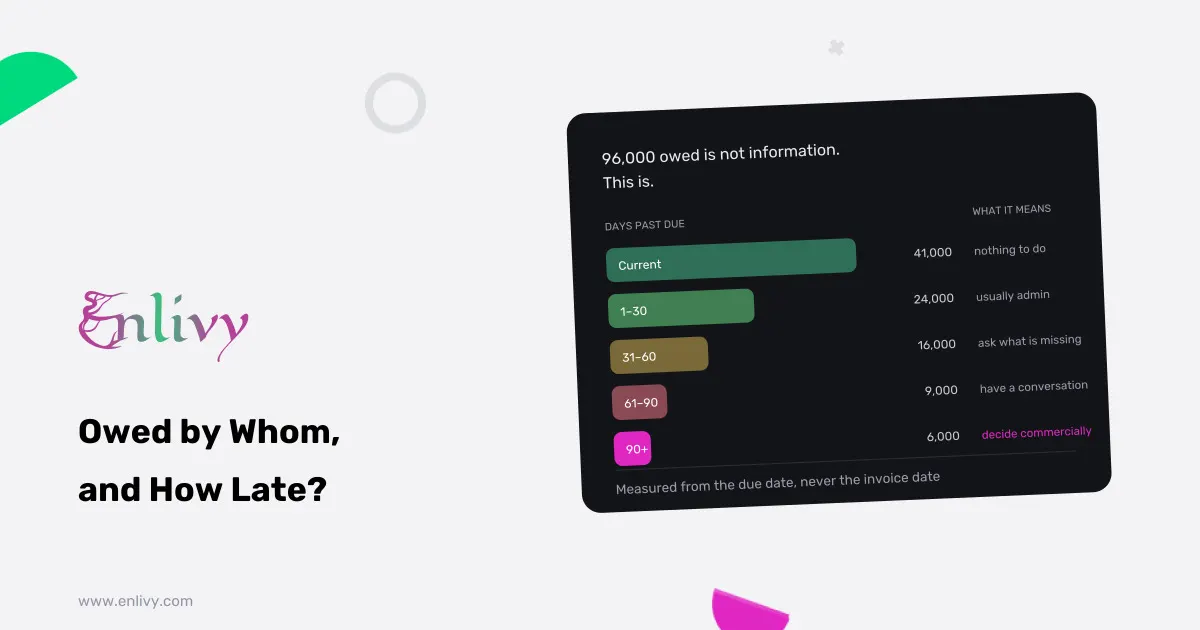
Your receivables stop being true. An invoice that was paid three weeks ago still shows as open because nobody connected the payment to it. Chase from that list and you spend goodwill on clients who already paid. The report that goes wrong is aged receivables.
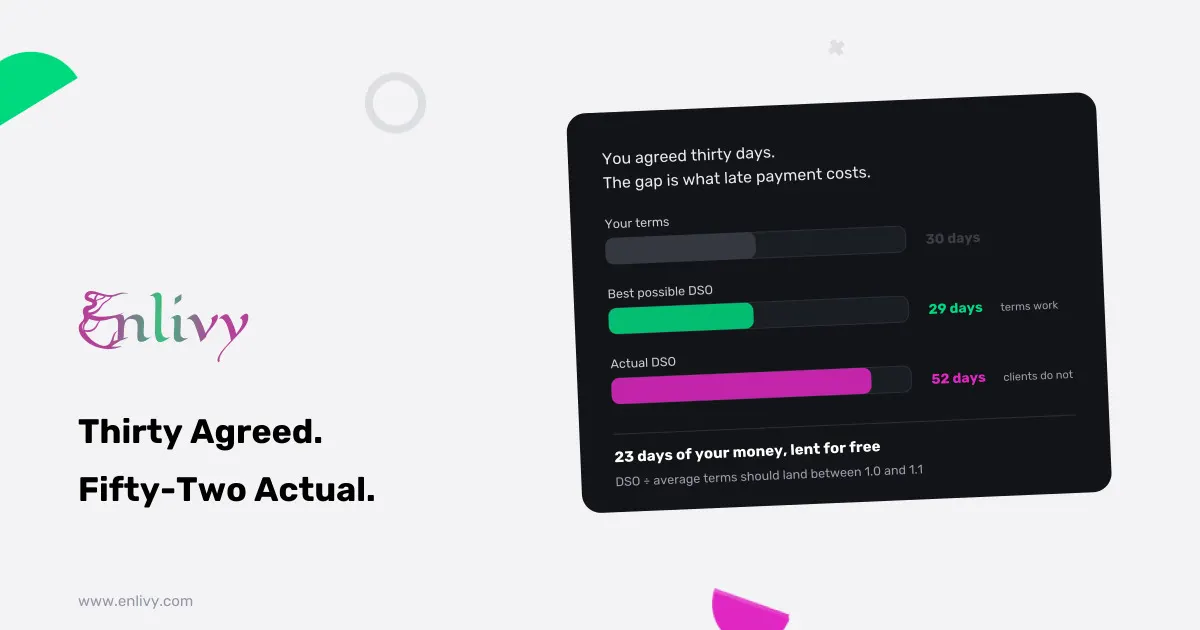
Your DSO reads worse than reality. Days sales outstanding is calculated from open receivables. Unmatched cash inflates it, and you end up solving a collections problem you do not have.
Month end takes longer every month. Reconciling the bank means explaining every difference between your books and the statement. Unapplied payments are differences with no name. That work is bank reconciliation, and the wider discipline of proving balances against evidence is account reconciliation.
The three payment patterns that break matching
Almost all reconciliation pain comes from three shapes, and remittance advice exists to explain exactly these.
The grouped payment. One transfer settles six invoices. The bank shows one line. Without a breakdown, you are solving a subset-sum problem by hand.
The partial payment. A client pays 3,000 against a 4,200 invoice. Is the rest coming, is it disputed, or did they apply a credit note you issued last month? A credit note applied silently looks identical to a short payment.
The cross-period payment. Money arrives in April for an invoice raised in February, alongside one raised in March. Which period does each belong to?
The formats it arrives in, and why most of them are useless
There is a hierarchy here, and knowing where a client sits on it tells you how much work you are about to do.
Structured payment messages. In the best case the remittance data travels inside the payment itself. ISO 20022 messages carry structured remittance fields, and a bank feed that exposes them lets the invoice reference arrive attached to the money rather than in a separate email. This is the direction European banking is moving, and it is why a feed beats a statement.
A file. Some enterprise payers send a CSV or a fixed-format file per payment run. Ugly, but machine-readable, and worth accepting if a large client offers it.
A PDF attached to an email. The most common form and the least useful. The data exists, laid out in a table nobody can import, arriving in whichever inbox the payer happened to have on file.
A line of text in an email. Better than nothing, and surprisingly frequent from mid-sized firms.
Nothing at all. The default for small clients.
The practical read: the format determines whether matching is automatic or manual, and you generally do not get to choose it. What you can control is the reference on your own invoice and the quality of your bank feed.
What to do when the advice does not arrive
Most of your clients will not send one. These are the practical substitutes, in order of how much they help.
Ask for the invoice number in the payment reference. Put it on the invoice itself, near the bank details, as an instruction. It works more often than people expect, and it costs nothing. Your invoice numbering scheme should be short enough to fit a bank reference field, which is an argument against very long formats.
Match against the bank feed rather than a statement PDF. When bank transactions arrive as data and one payment can be linked to several invoices, with an amount on each, a grouped payment becomes a visible allocation rather than an arithmetic puzzle. The process is described in matching payments to invoices.
Give the client somewhere to look. A client portal showing what is open and what is settled removes a good share of the emails that start with “which invoice was that”.
Ask, once, in writing. For a grouped payment from a client who pays that way every month, one email establishing the pattern is worth more than repeated guessing.
Send one yourself
You are a buyer too, and this is the cheapest goodwill available in accounts payable. One email naming the invoices you just paid saves your supplier every problem described above, and it takes about as long as it took to read this sentence.
The same courtesy runs the other way on documents you receive. A supplier invoice arriving against a purchase order you raised gets checked before it is paid, and that check is three-way matching.
Why it is the easiest document to skip
Remittance advice does not move money, create an obligation or satisfy a tax authority. Nothing breaks the day you stop sending it, and nobody chases you for one.
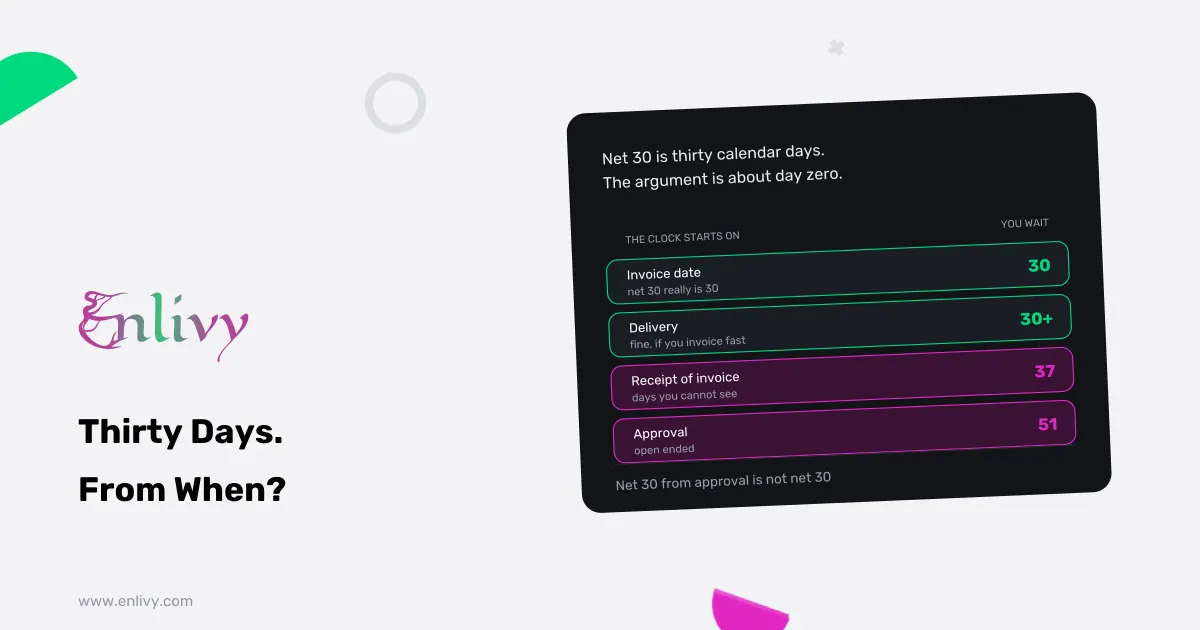
It only explains money that has already moved. That is exactly why it gets treated as optional, and exactly why its absence shows up somewhere else entirely: in a receivables report you cannot trust, and in a month end that runs longer every quarter. The invoice half of the same problem is how to write an invoice, and the terms deciding when the money should have arrived are in net 30 payment terms.