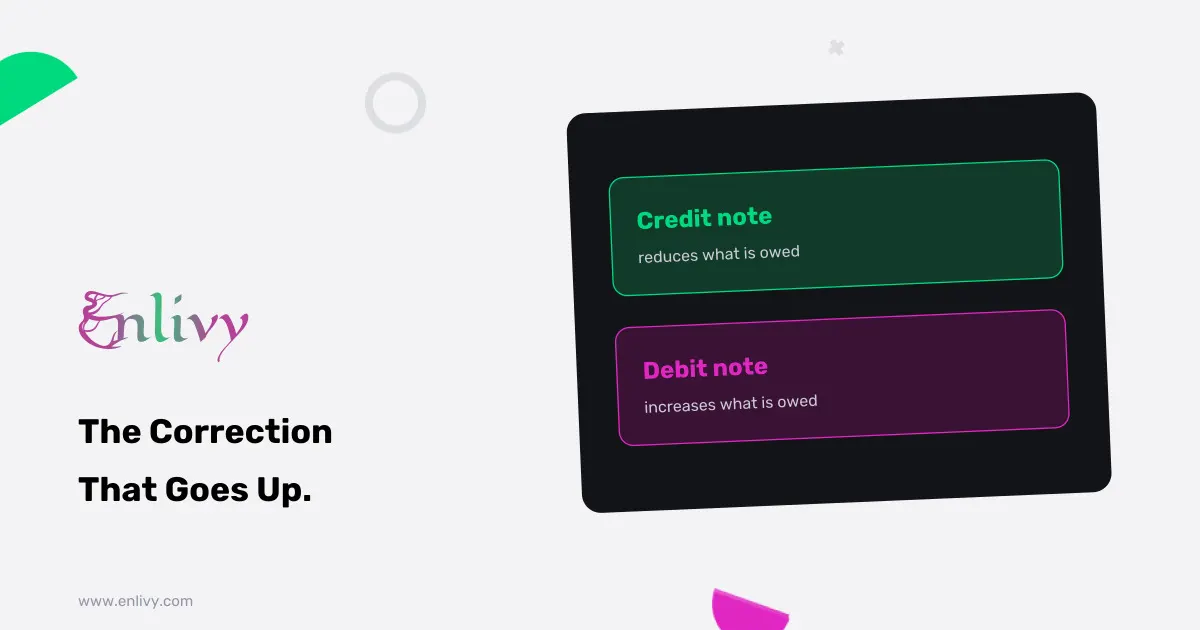
A debit note is a document that increases the amount owed on a transaction that has already been recorded. You issue one when an invoice you have sent turns out to be too low and you cannot simply change it.
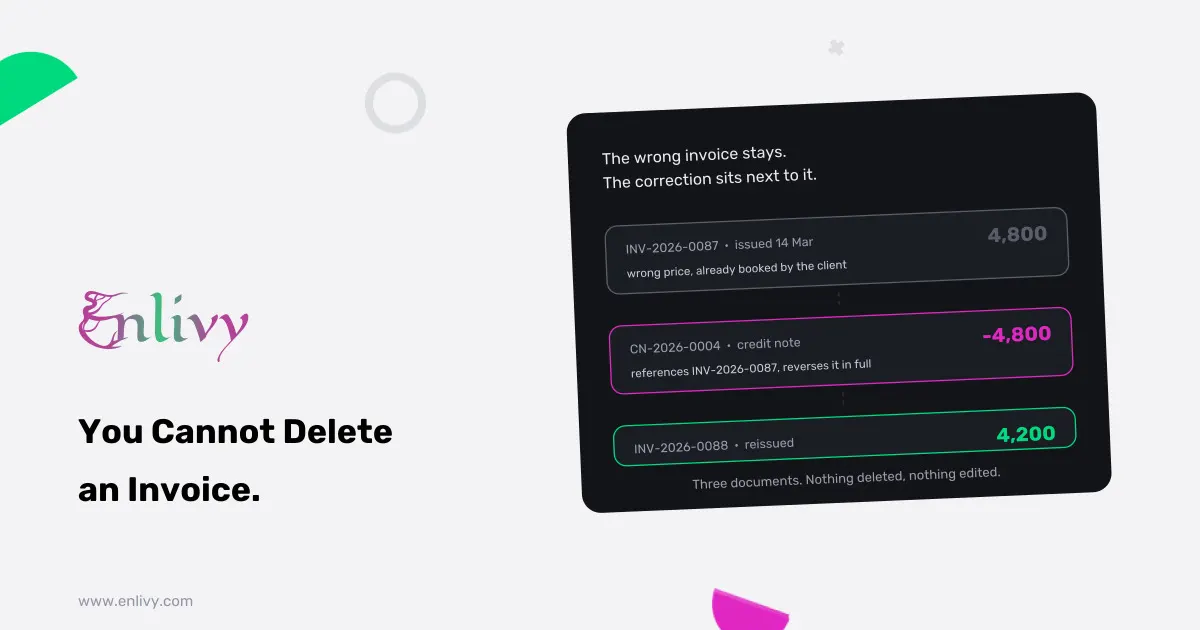
The reason you cannot change it is the point. An issued invoice is a sequential accounting record, not a draft. Editing it after the fact breaks the audit trail and, in most jurisdictions, breaks the law. So corrections travel as separate documents that point back at the original: a credit note downward, a debit note upward.
Credit note or debit note
The pairing is simpler than most explanations make it.
| Credit note | Debit note | |
|---|---|---|
| Effect | Reduces what is owed | Increases what is owed |
| Typical cause | Overcharge, return, cancellation, discount | Undercharge, missed line, price correction |
| Who usually issues it | The seller | The seller, or the buyer as a claim |
We cover the downward correction in full in credit note. This article is the other direction, which is rarer and slightly more awkward, because you are asking for more money after the fact.
The confusing part: buyers issue them too
Most articles on the subject quietly disagree with each other here.
A seller’s debit note increases an invoice. You undercharged, and this is the additional amount.
A buyer’s debit note is a claim, not an accounting entry in your books. A client sends you a debit note saying they are reducing what they will pay, because goods arrived damaged or a service was not delivered. It notifies you of an intended deduction.
The second kind does not change your ledger by itself. It is a notification that a dispute exists, and it is normally settled by you issuing a credit note if you agree. If you do not agree, nothing has changed except that you now know why the payment will be short.
That distinction matters when a payment arrives lighter than the invoice and you are trying to work out why. The document that explains a short payment is usually a remittance advice, and a buyer’s debit note is one of the reasons it will name.
When to issue one
Genuine cases are narrower than you might expect.
A line was left off the invoice. The work was delivered, it was in scope, and it did not make it onto the document.
The price applied was wrong. An old rate, a miscalculated quantity, a discount applied that should not have been.
Additional costs agreed after invoicing. Expenses, extra hours, a rush charge, where the client has agreed to them.
A tax correction that increases the total. The wrong VAT treatment was applied. Cross-border work is where this happens most, and the rules are in the EU VAT number guide.
When not to. Scope that grew without agreement is not a debit note, it is a conversation followed by an amendment or addendum and then a new invoice. Issuing a debit note for unagreed work is how you turn a scope discussion into a billing dispute.
What it must contain
A debit note carries the same fields as an invoice, plus one that matters more than any of them.
- Its own sequential number, in its own series or the invoice series, consistently applied
- The issue date
- Both parties’ details, exactly as on the original
- A clear reference to the original invoice number and date
- The reason for the adjustment, in plain language
- The additional amount, with tax shown separately
The reference is the field that makes it valid. A debit note without a link to the invoice it corrects is not a correction, it is a second invoice, and it will be treated as one by your client’s accounts payable and by an auditor.
Numbering is where this most often goes wrong in practice. Whichever series you use, it must be unbroken and unreused. That discipline is covered in invoice numbering.
What it does to your books and your reporting
A debit note is not a note. It is an accounting document, and it moves the same numbers an invoice moves.
Revenue increases. The additional amount is income in the period the debit note is issued, not the period of the original invoice. That matters at a year end boundary, where an undercharge discovered in January against a December invoice lands in the new year.
Tax follows it. The VAT on the additional amount is due on the debit note, reported in its own period. This is the part most often missed when somebody tries to handle an undercharge informally.
Receivables increase. The client now owes more, and that additional amount ages from its own date. If it goes unpaid it appears in aged receivables as its own line rather than merging into the original invoice, which is correct but easy to misread as a duplicate.
Your DSO moves. A debit note raises the receivable without a new sale behind it, so days sales outstanding drifts upward slightly. Not a problem, but it explains a number that wobbles for no obvious reason.
And when the payment eventually arrives covering the invoice and the debit note together, it becomes another grouped payment to unpick. Matching it is the work described in matching payments to invoices, and it reconciles through the same bank transactions as everything else.
How it lands with the client
Practical, because this is a document that asks for money somebody thought they had finished paying.
Send it with an explanation, not alone. The reason field on the note is minimal by design. The email is where the sentence goes.
Expect it to restart the clock. If the original invoice was net 30 from issue, the additional amount usually runs its own term from the date of the debit note, not the original. That is worth checking against your contract, and what the terms mean is in net 30 payment terms.
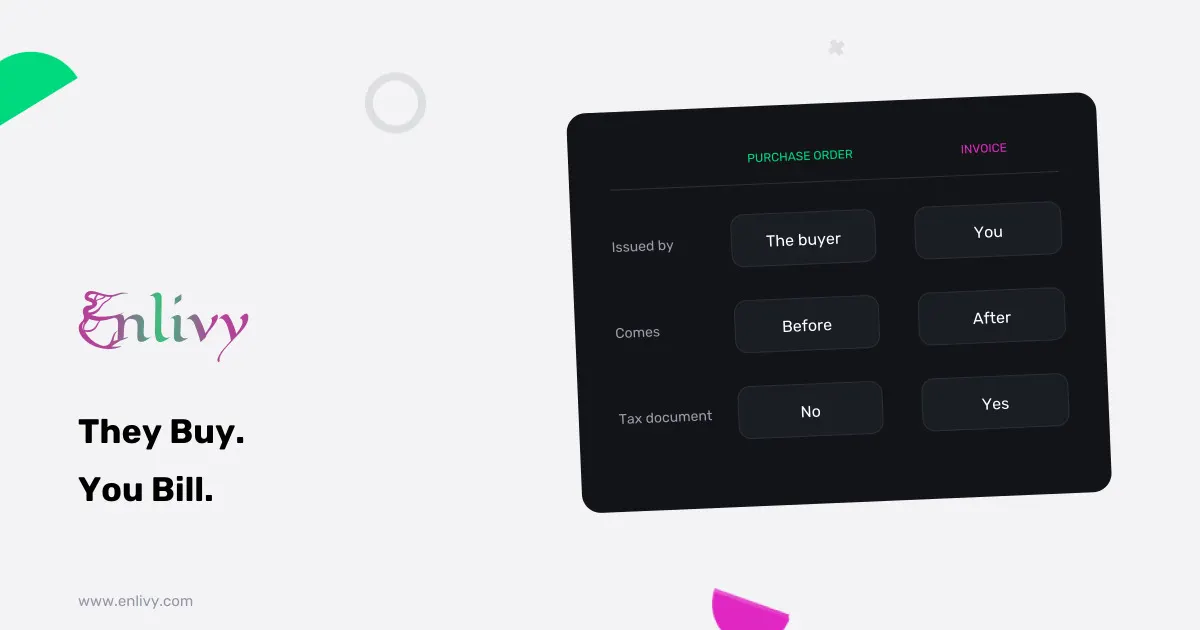
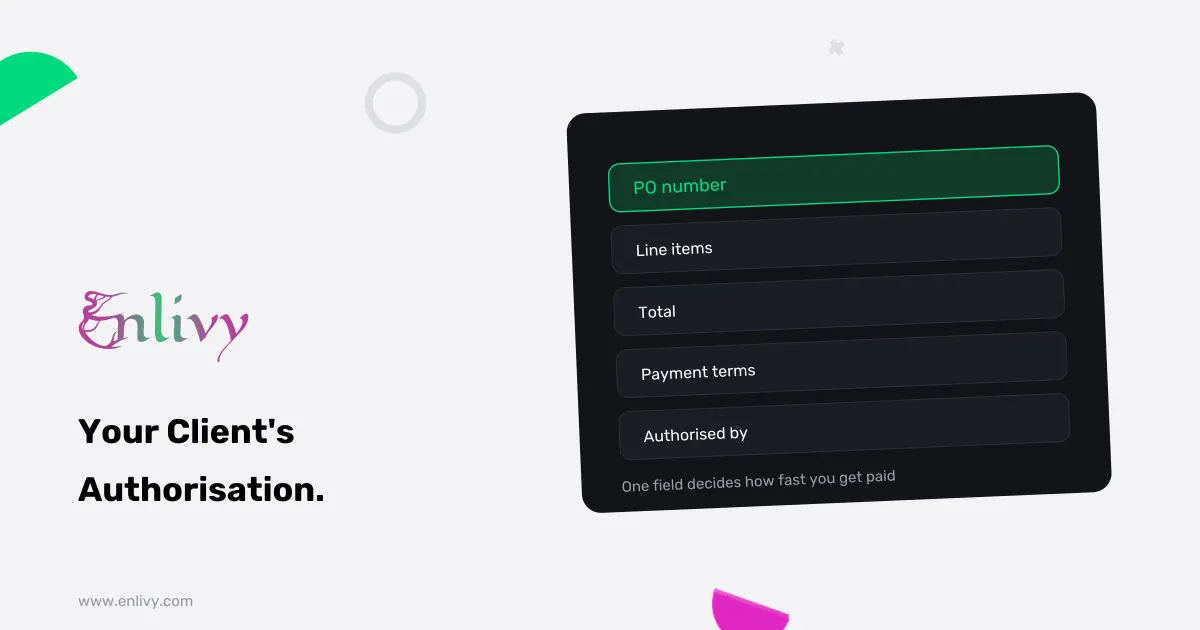
If a purchase order is involved, it probably needs revising too. An invoice plus a debit note exceeding the PO value will not clear the client’s matching check. That mechanism is described in purchase order vs invoice and in three-way matching.
The cheaper habit
Most debit notes exist because the invoice was assembled by hand, separately from the work it bills.
When an invoice takes its lines from the accepted proposal behind the contract, whole lines do not go missing and old rates do not reappear. The case for that is in proposal to invoice, and the discipline of getting the invoice right the first time is in how to write an invoice.
Corrections will still happen. They should just be about things that genuinely changed, not about what was typed.