A client accepts a proposal. Three weeks later they receive an invoice. Between those two events, in most service businesses, a person opens a blank document and types the work out again.
That retyping is not a productivity problem. It is a data integrity problem, and it is the reason invoices get disputed by clients who genuinely did agree to the work.
What actually changes between the two documents
Nobody sets out to invoice something different from what was sold. The drift is small and it comes from four places.
The description gets shortened. The proposal said “brand identity workstream, including two rounds of revision”. The invoice says “branding”. Six months later, in a disagreement about whether a third revision was included, the invoice is the document with the legal weight and it says almost nothing.
The breakdown collapses. A proposal with five itemized lines becomes an invoice with one total, because a total is faster to type. The client cannot check it against what they approved, so they either accept it on trust or ask you to break it down, which costs you the time you saved.
The numbers are re-derived. Discounts, phased payments and partial deliveries get recalculated by hand. Most of the time this is right. The times it is not, you find out from the client.
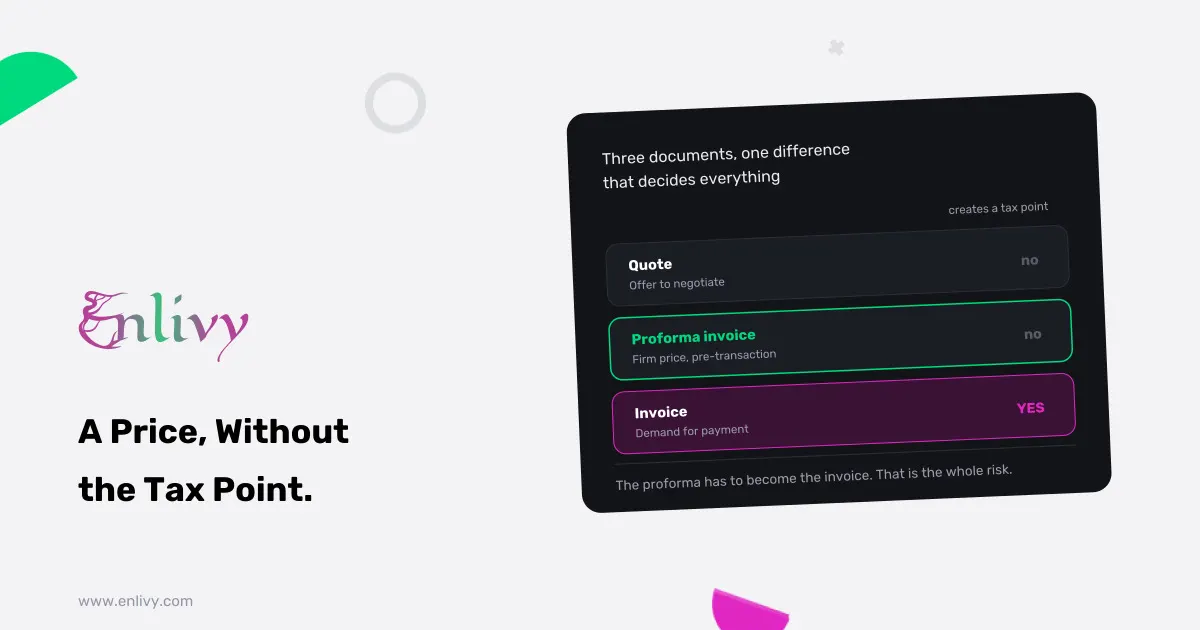
The tax treatment is decided twice. The proposal assumed one VAT position and the invoice assumes another, typically because a different person prepared each and the client’s registration status was never recorded in one place.
Each of these is small. Together they are why an invoice becomes a negotiation.
The cost is not the typing
Ten minutes per invoice is worth having back, but it is not the reason to fix this.
The real costs are slower. A disputed invoice takes days to resolve and damages a relationship you spent months building. An invoice that does not match the agreement is weak evidence if the disagreement ever gets serious. And a business where every invoice is hand-built cannot delegate billing, because the knowledge of what each client actually agreed to lives in one person’s memory.
That last one is the constraint that stops small service businesses from growing past their founder.
The fix: the proposal should become the invoice
Not inform it. Become it.
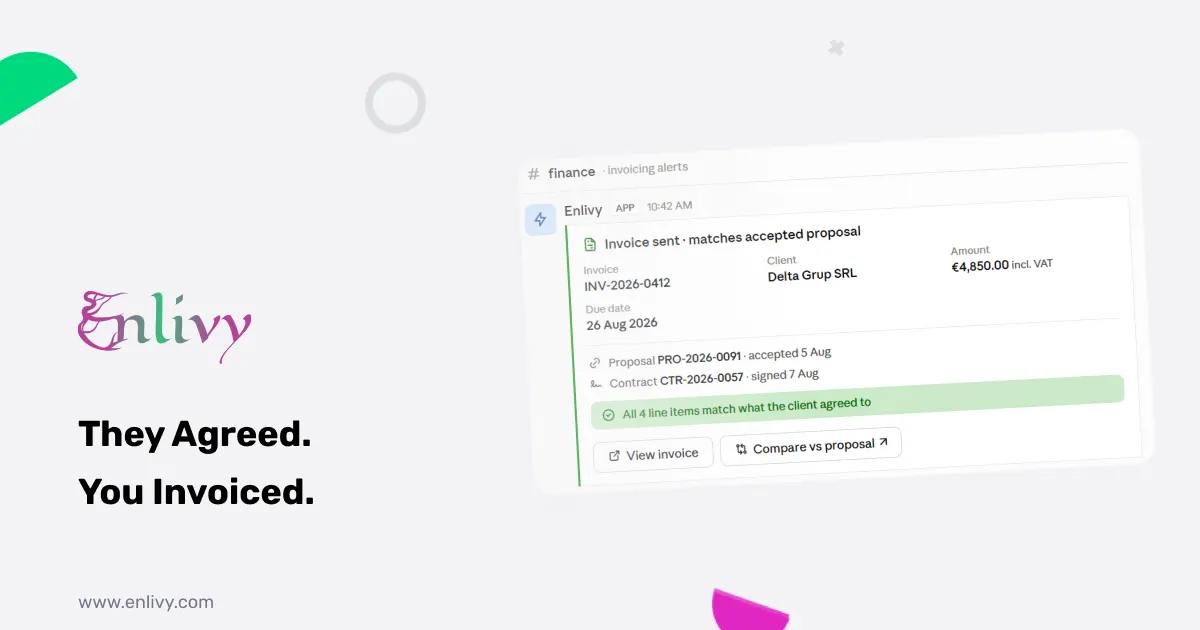
If the accepted proposal is a record with line items, quantities, rates and a tax position, then issuing the invoice is a state change rather than an act of authorship. There is nothing to retype because nothing needs to be written twice.
That is what turning a won opportunity into a proposal the client can accept and pay is for: the proposal is connected to the products, the prospect and the invoice rather than being a PDF that exists on its own.
Three things make the handoff hold.
Define what you sell once
If the line item is typed fresh each time, it will drift by definition. Keeping each service in a product catalog with its rate means the proposal and the invoice quote the same wording and the same number, because they are reading the same record.
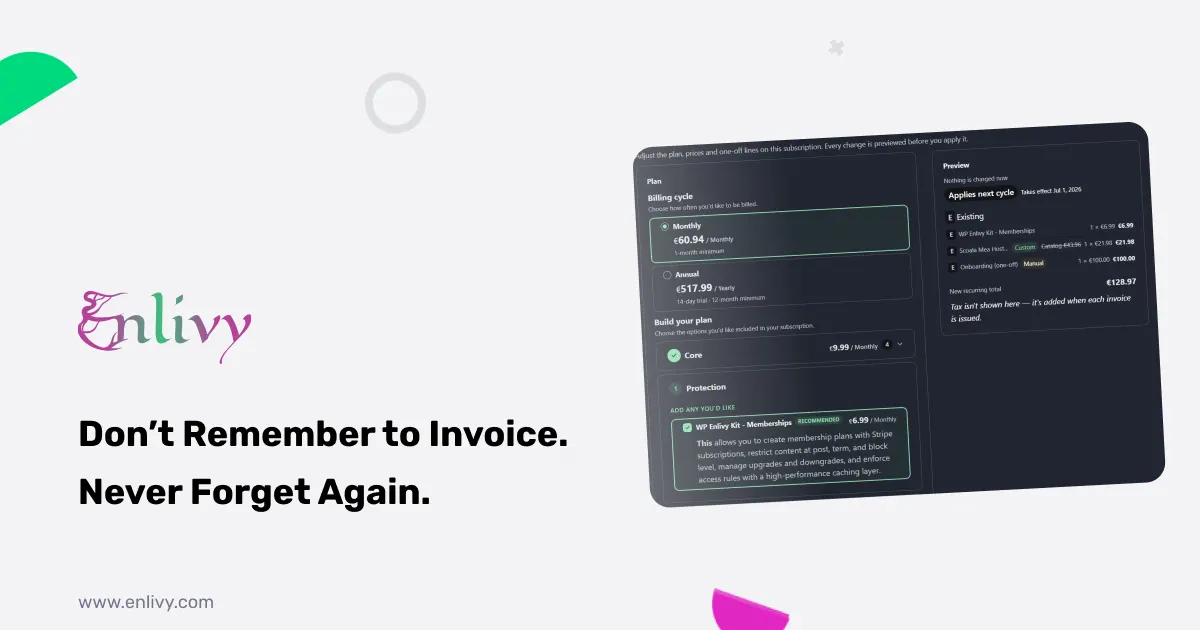
This is also what makes a price change deliberate. You update the rate in the catalog, then on each running schedule, instead of discovering that two clients are still on last year’s.
Let the contract carry the same terms
Between acceptance and invoice there is usually a signed contract. If that contract was rebuilt from a template rather than from the accepted proposal, you have introduced a second opportunity for the scope to change.
It is worth knowing what makes an online signature hold up, and if several people need to approve, routing it to each signer beats emailing a PDF around and hoping the last version is the signed one. For repeat clients the rebuild disappears entirely: the terms sit in a master service agreement and each engagement becomes a short statement of work.
Resolve tax from the client record, not per document
The correct VAT treatment depends on where the client is and whether they are registered, which is a property of the client rather than of the invoice. Resolving it from tax rules per country and status removes the most common silent error in cross-border service work.
What happens after the invoice exists
The handoff does not end at issuing. Two more things have to be true before it is finished.
In the EU, an invoice is increasingly not valid until it has been transmitted through the right network. Romania requires it through ANAF today and other member states are following on their own timetables. Enlivy sends the invoice to ANAF e-Factura when a Romanian company invoices a Romanian client, with one click or by auto-push 1 to 4 days after issue if you turn it on, and for other countries it exports a PEPPOL BIS 3.0 file or a national e-invoice XML that you submit yourself.
And the payment has to be matched back. Linking bank transactions to the invoice they settle is what turns “the client says they paid” into a fact you can see.
If a total is ever questioned, the event trail on the invoice shows who changed what and when, which is a better answer than anyone’s recollection.
A test worth running this week
Take the last three invoices you sent. For each one, find the document the client accepted and put them side by side.
Do the line items match? Do the descriptions match? Does the total break down the same way?
If any of the three fails, you have a handoff that runs on memory. It has not cost you anything yet, which is exactly why it is worth fixing before it does.
Where this sits in the wider chain
Proposal to invoice is one link in the contract-to-cash workflow. Upstream of it is the pipeline that produced the deal; downstream, if the work repeats, is recurring billing and the practical mechanics of billing a retainer client.
Clients can also see their own accepted documents and invoices in a client portal, which removes most of the “can you resend that” traffic.
Enlivy connects the whole chain and sells it as separate feature packs, so closing this one handoff does not require replacing everything else. If you are currently doing proposals in a document tool, the PandaDoc comparison covers what changes, and Ignition is the closest match if your billing already starts from proposals. You can start free and run one deal through it end to end.