You issued an invoice with the wrong price. The client returned half the order. A service was billed and never delivered.
In each case the instinct is to edit the invoice or delete it and start again. Neither is available. An issued invoice is a tax document, and the record has to show what happened rather than what you wish had happened.
A credit note is the instrument that fixes it: a document that reverses some or all of an invoice, while leaving the original in place.
Why you cannot just edit the invoice
Two reasons, and both are structural.
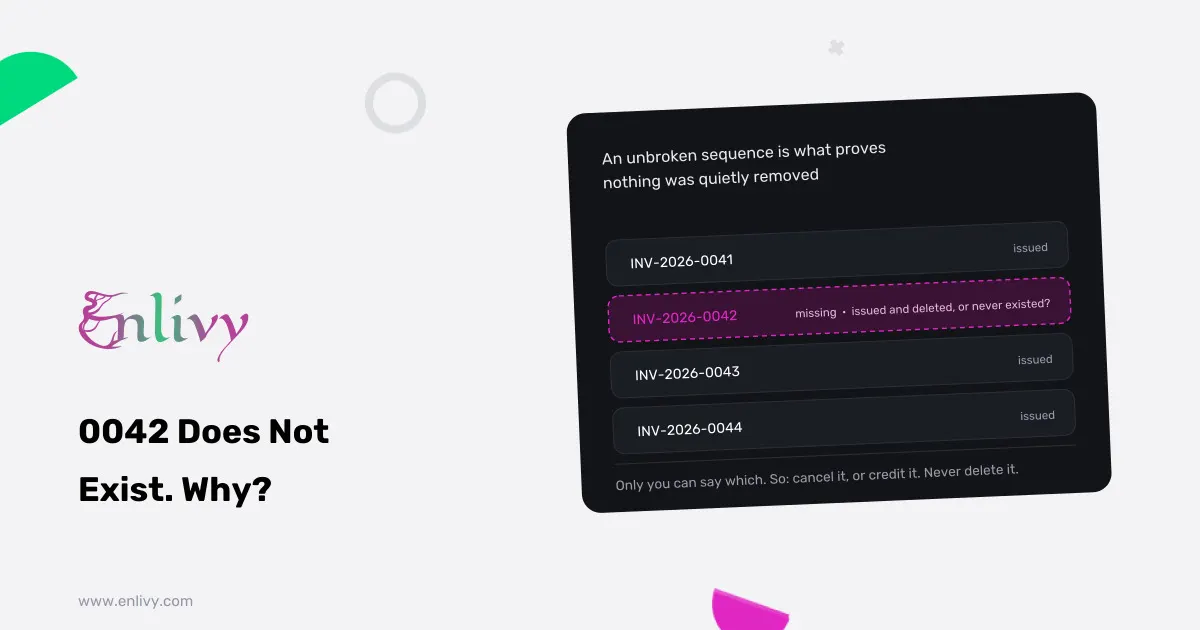
The sequence has to stay unbroken. Deleting an invoice leaves a hole in the numbering, and a hole is indistinguishable from a document you removed on purpose. That is the whole argument for sequence integrity, covered in invoice numbering.
The invoice may already exist elsewhere. Your client has booked it. In much of the EU it has been transmitted through an e-invoicing network and received by a system you do not control. Editing your copy changes nothing about theirs.
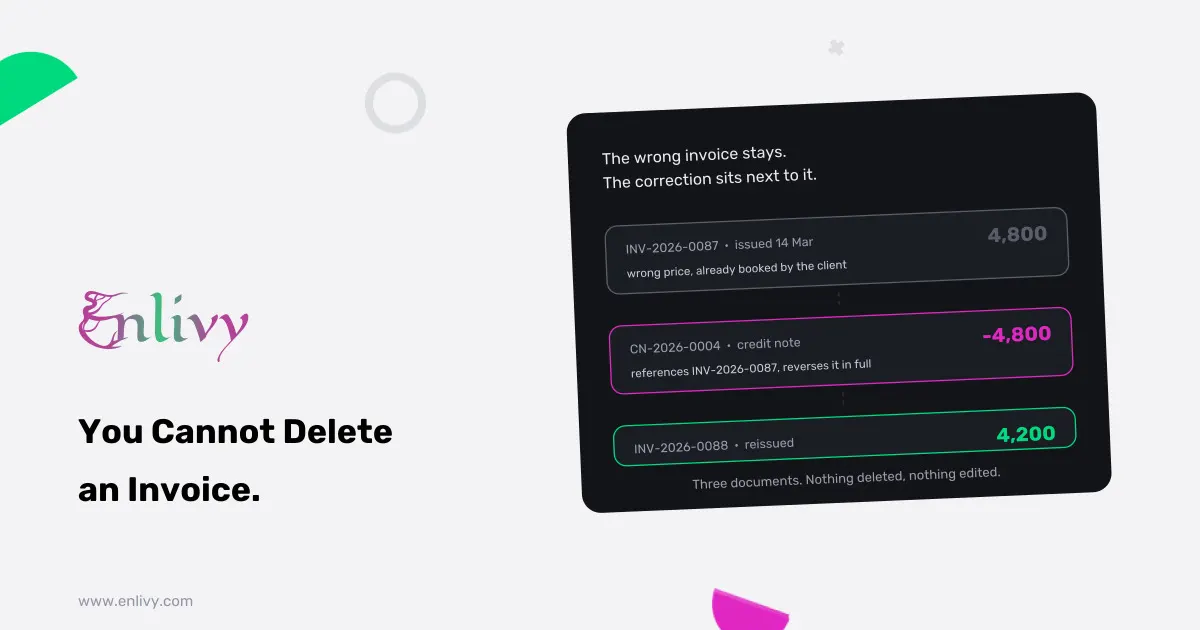
So the correction is additive. The wrong invoice stays, the credit note reverses it, and the two together are the truth.
When to issue one
The invoice was wrong. Price, quantity, tax rate, or the wrong legal entity billed. Anything that changes the amount or who owes it.
Goods came back. Full or partial return, credited for what was returned.
The service was not delivered. Billed in advance, then cancelled.
A discount was agreed after issue. Negotiated late, or a goodwill reduction. Credit the difference rather than asking the client to pay a number that does not match their copy.
A contract was terminated. Invoices covering a period that no longer applies get reversed.
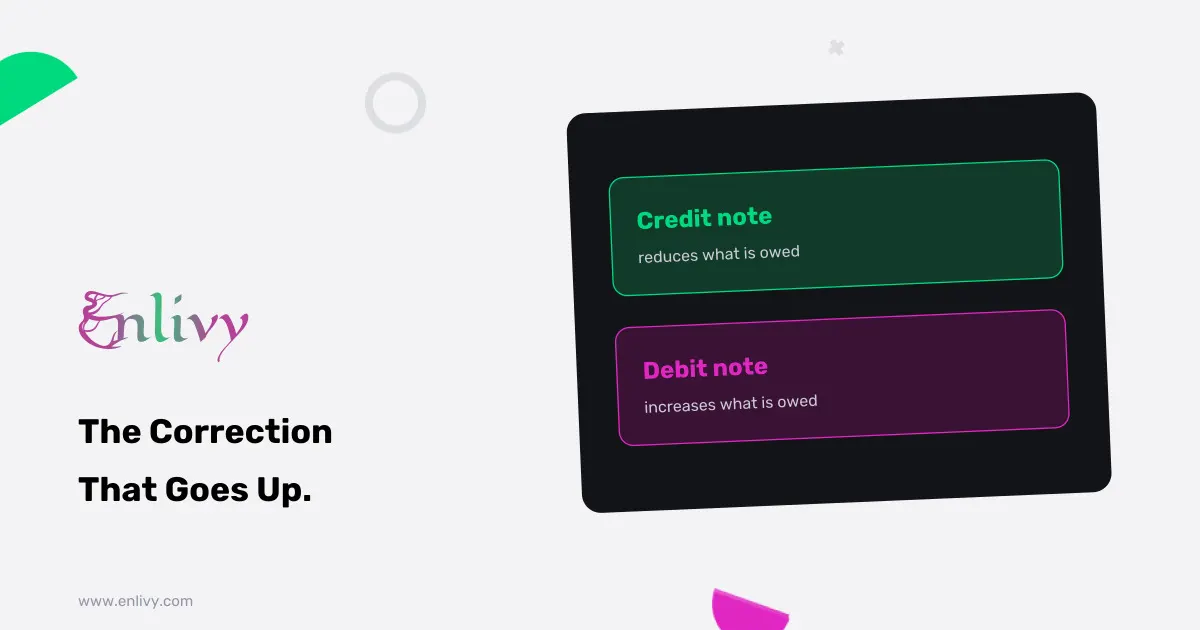
A credit note only moves the balance downward. When the correction runs the other way, because a line was left off or the price applied was too low, the document you need is a debit note.
What a credit note is not for: a client who simply has not paid. That is a collections question, not a document question, and the sequence for it is in what to do when an invoice is not paid. Crediting an unpaid invoice to tidy your ageing report writes off revenue you are still owed.
Full or partial
A full credit note reverses the entire invoice. Every line at the original value, negative. Used when the invoice is wholly wrong or the transaction was cancelled. Usually followed immediately by a correct invoice, which gets a new number in the normal sequence.
A partial credit note reverses part of it. Only the affected lines or quantities appear. Used for returns, agreed reductions, and single-line errors.
The instinct to credit fully and reissue is often right even for a small error, because two clean documents are easier to explain in a year than one invoice carrying a partial reversal of an amount that no longer appears anywhere.
What it has to contain
Most of what the original invoice needed, plus the part that makes it a correction.
- The words “Credit Note”, clearly. Not “Invoice” with negative numbers.
- Its own sequential number, from a credit note series rather than the invoice series
- A reference to the original invoice: its number and its date. This is the field that makes the document work, and the one most often left off.
- Both parties’ details, matching the original
- The date of issue, which is today rather than the original invoice’s date
- The lines being reversed, with amounts as negatives
- The tax reversed, at the rate originally applied
- Ideally, the reason
The tax point is the credit note’s own date, not the original invoice’s. A March invoice credited in May affects your May return.
Credit note, debit note, refund
Three things that get used interchangeably and are not the same.
| What it does | Who issues it | Money moves? | |
|---|---|---|---|
| Credit note | Reduces what the client owes | You, the supplier | Not necessarily |
| Debit note | Requests an increase, or flags a claim | Either party | No |
| Refund | Returns money already received | You | Yes |
A credit note is a document. A refund is a payment. They frequently accompany each other, and they are recorded separately. If the client already paid and you credit the invoice, you owe them money. The transfer that settles it produces its own record, which is where matching payments and the difference between an invoice and a receipt both matter.
If the client has not paid, the credit note alone is enough. Nothing moves; the balance simply drops.
In the EU, the correction has to travel too
If the original invoice went through an e-invoicing network, the credit note goes through the same route. It is a tax document with the same obligations and the same deadline, and it carries the reference to the original so the receiving system can match them.
This is also why the reference field is not optional in practice: a correction with no stated original is, to an automated system, an unexplained negative document. In Enlivy, a Romanian organization crediting a Romanian client sends the credit note to ANAF eFactura, by hand or with auto-push turned on; for other countries Enlivy exports a PEPPOL BIS 3.0 file or national e-invoice XML that you submit yourself. The tax treatment has to mirror the original rather than today’s rate.
Where this sits in the wider chain
A credit note is a repair on the money side of the path from agreement to cash. The path itself, and where it leaks, is the contract-to-cash workflow.
Most credit notes trace back to something upstream: an invoice that did not match what the client accepted, a scope that changed without an amendment, or a description written from memory rather than from the catalog. Reducing how often you need one is mostly work done before the invoice, not after.
Enlivy issues the correction against the document it corrects and sells the pieces as separate packs. You can start free.
If you are comparing how tools handle corrections, the write-ups on QuickBooks, Xero and FreshBooks cover where each of them stops.