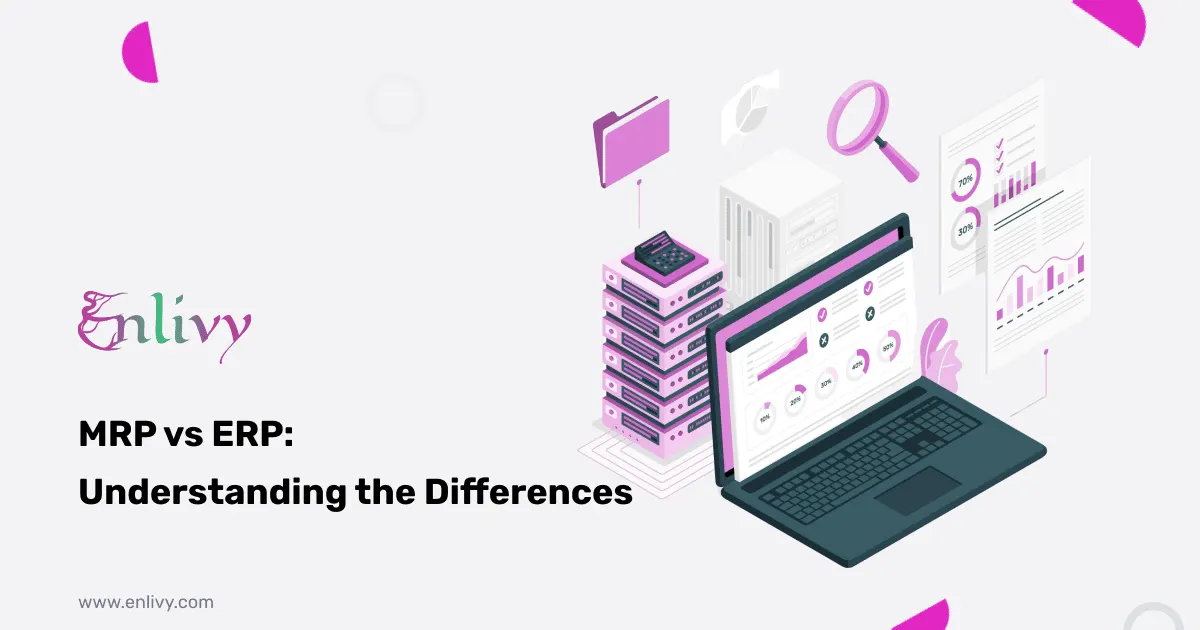
It always surprises me how often people confuse MRP vs ERP. Honestly, it can be a little frustrating—especially when clients assume they’re the same thing. I get it, though. The names are similar, and both are important for businesses. But they’re designed for very different purposes: MRP (Material Requirements Planning) focuses on managing production needs, while ERP (Enterprise Resource Planning) is all about integrating and simplifying every part of a business.
That’s why I decided to write this article—to clear up the confusion around MRP vs ERP, introduce the concept of MERP, and help small and medium-sized businesses figure out which solutions make sense for them. Let’s break it all down and finally set the record straight.
What is MRP?
MRP, or Material Requirements Planning, is a tool built with manufacturing-focused businesses in mind. At its core, it’s all about making sure production runs smoothly—materials are available when needed, inventory stays at just the right level, and schedules line up perfectly with demand. It’s the behind-the-scenes organizer that keeps production on track.
Key Features of MRP Include:
- Inventory Control: Managing stock to meet production goals without over-purchasing.
- Demand Forecasting: Planning based on anticipated customer needs.
- Production Scheduling: Ensuring resources and time are allocated efficiently.
MRP’s Role: It answers production-related questions like:
- What materials are needed?
- When should orders be placed?
- How much inventory is required to meet demand?
What is ERP?
ERP, or Enterprise Resource Planning, is like the central nervous system of a business. It ties everything together (production, finance, HR, and more) into a single solution. It’s designed to keep all the moving parts of a company connected and running smoothly, so nothing falls through the cracks.
Core Features of ERP Systems Include:
- Company-Wide Integration: Unites all departments under a single platform so they can work together easily.
- Real-Time Insights: Provides data-driven decision-making tools.
- Scalability: Adapts as businesses grow, accommodating increased complexity.
While MRP systems are specifically designed to address the unique needs of production, ERP systems offer a broader solution that covers all areas of a business, including customer relationship management (CRM), financial planning, and supply chain management. MRP systems are essential for optimizing production, whereas ERP systems integrate all business functions into a unified platform.
How Does MERP Fit In?
MERP, or Manufacturing ERP, is the best of both worlds: a blend of MRP and ERP. It combines MRP’s production-focused tools with ERP’s ability to manage the entire business. For manufacturers, it makes a big difference, offering everything needed to keep production on track while also managing all the other moving parts of the business. It’s the kind of solution that makes life so much easier when you need full control and visibility across the board.
MRP vs ERP: Breaking Down the Differences
| Aspect | MRP | ERP |
|---|---|---|
| Primary Function | Production management | Business-wide management |
| Scope | Inventory and materials focus | Comprehensive integration across departments |
| Best For | Manufacturing-specific needs | Managing the whole enterprise |
| Integration | Limited | Fully integrated, including CRM, HR, and more |
While MRP focuses on the factory floor, ERP encompasses the entire enterprise, making it indispensable for scaling businesses.
CRM vs ERP: A Key Comparison
For a full understanding of ERP, it’s essential to differentiate it from CRM (Customer Relationship Management). CRMs specialize in managing customer interactions, sales, and marketing efforts. While ERP includes CRM functionality, it also integrates other vital areas like inventory, finance, and production. In Enlivy that CRM layer is the sales pipeline, and a won deal moves from there into a contract and an invoice without leaving the platform.
To dive deeper, check out our article CRM vs ERP: What’s the Difference? for a detailed comparison.
Where Enlivy Fits for SMEs
I’ve seen it happen countless times: businesses getting confused between MRP and ERP systems. Some even think ERP is just another version of MRP, focused only on production and inventory management. But that’s where things get mixed up. So, to be clear about where Enlivy sits: it is not an MRP or a full ERP. It runs sales, contracts, invoicing and banking for small and medium-sized businesses (SMEs), without inventory, production planning or a general ledger.
Over the past three years, we’ve meticulously developed Enlivy as an API-powered SaaS platform to simplify business administration and drive efficiency.
What Sets Enlivy Apart?
User-Friendly Dashboard
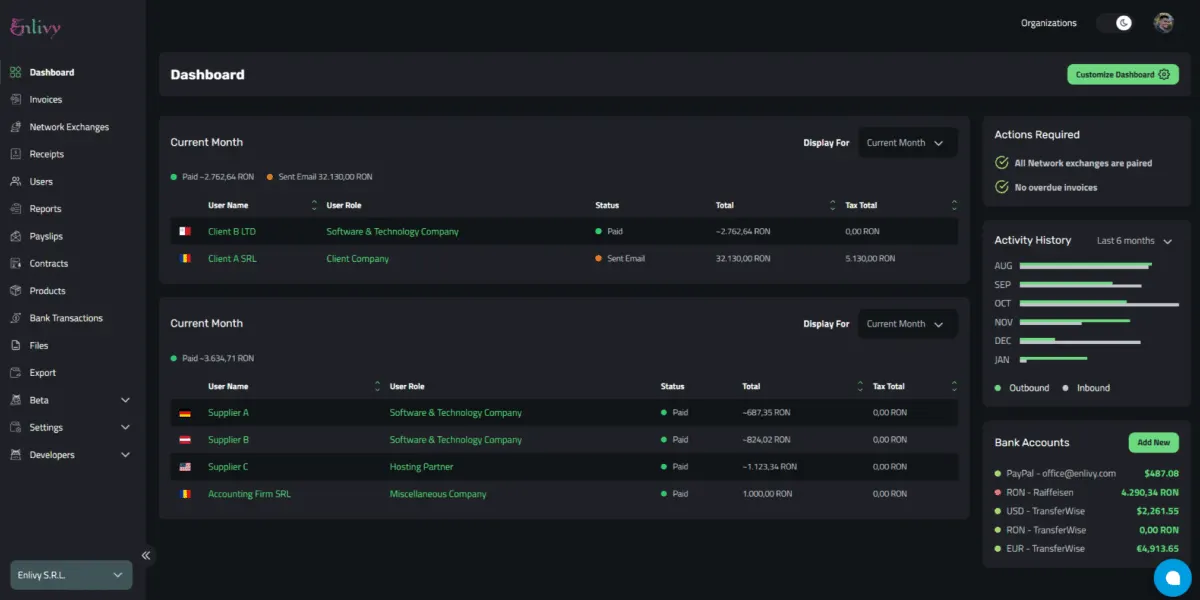 Screenshots of the main dashboard in Enlivy.
The Enlivy dashboard serves as your command center, offering customizable views of key metrics. Quickly manage invoices, track expenses, and access activity history with a few clicks, so you always know where your business stands.
Combined Functionality
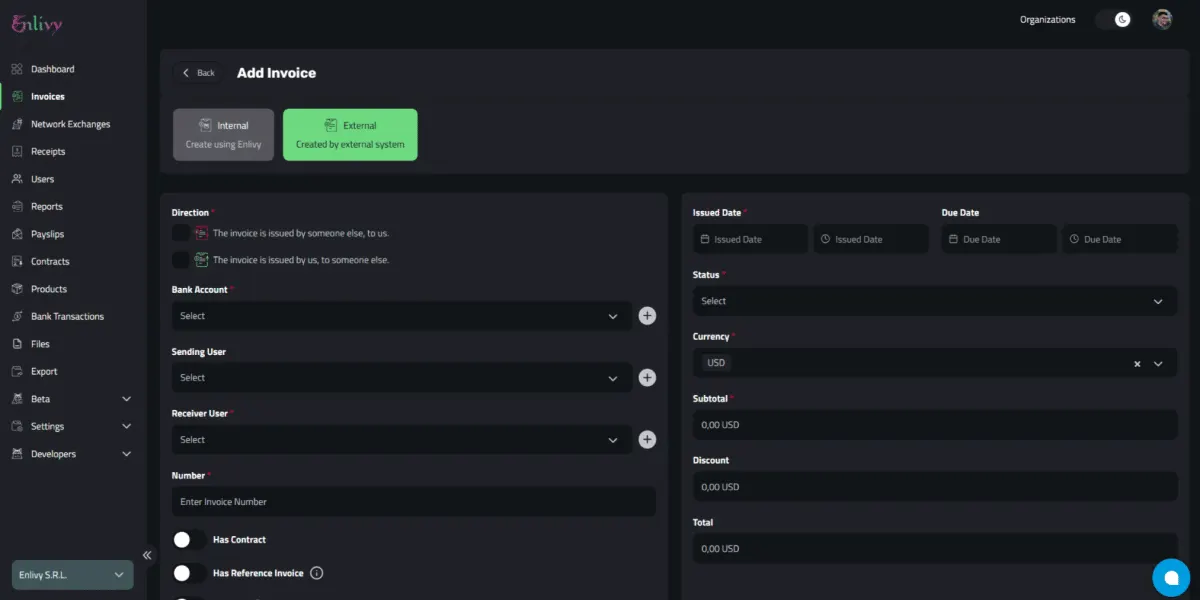
Screenshots of Adding an Invoice Feature in Enlivy.
Unlike MRP systems that focus on production processes, Enlivy covers the commercial side of the back office. Proposals, contracts, invoicing and bank transactions live on one platform, with team report forms in the Reports pack, while inventory, production and bookkeeping stay with the tools built for them.
Bank Transaction Management
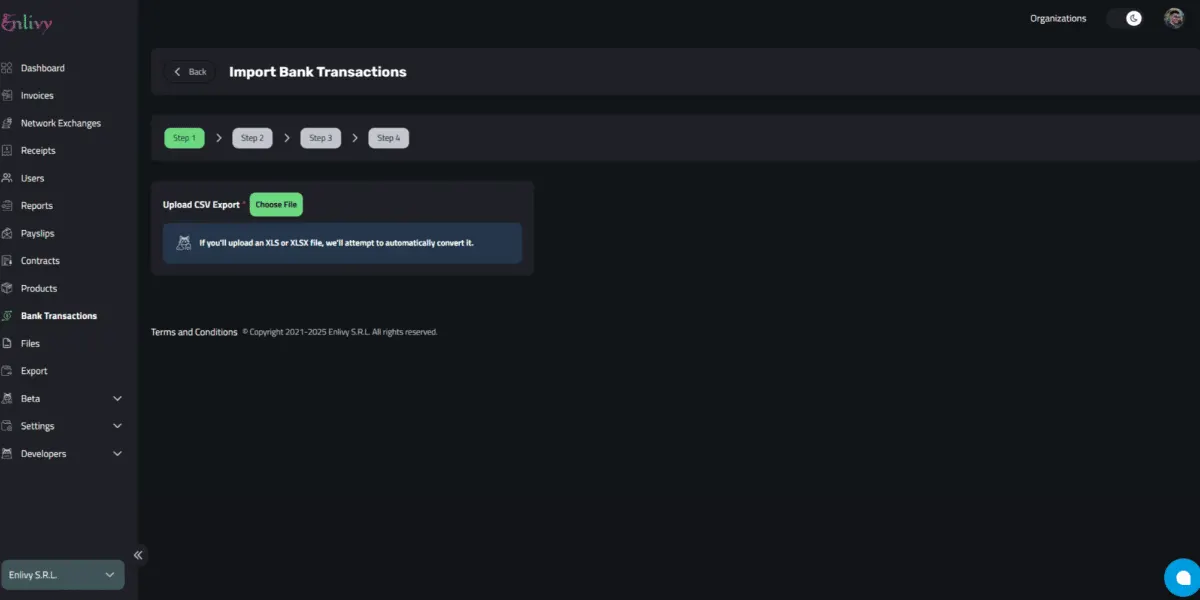
Screenshots of Import Bank Transactions Feature in Enlivy.
Enlivy simplifies financial tracking with bank transaction imports from CSV uploads, or bank sync through Nordigen with the Banking pack. Transactions are easily categorized and linked to invoices, providing an accurate financial snapshot.
API-First Design for Easy Integration
Enlivy’s API-powered architecture lets you integrate it with your existing tools and systems. This approach not only enhances compatibility but also supports scalability as your business grows, since anything the interface does can be driven from the API once your processes get specific enough to need it.
Why Enlivy
- On-the-Go Access Access Enlivy anytime, anywhere, from any web-enabled device. Whether on your desktop, laptop, or phone, Enlivy ensures you’re always connected to your business operations.
- Cost-Effective for Growing Businesses Enlivy is priced for SMEs looking to modernize their operations without stretching their budget. You pay for the feature packs you actually use; users are free, and only Helpdesk charges for extra seats.
- Flexibility and Scalability From a startup to an expanding enterprise, Enlivy grows with you. Its scalable features and integration options make it a future-proof choice.